Washington Post Columnist Botches Key Fact from Dolly Parton’s Life to Make a Political Point


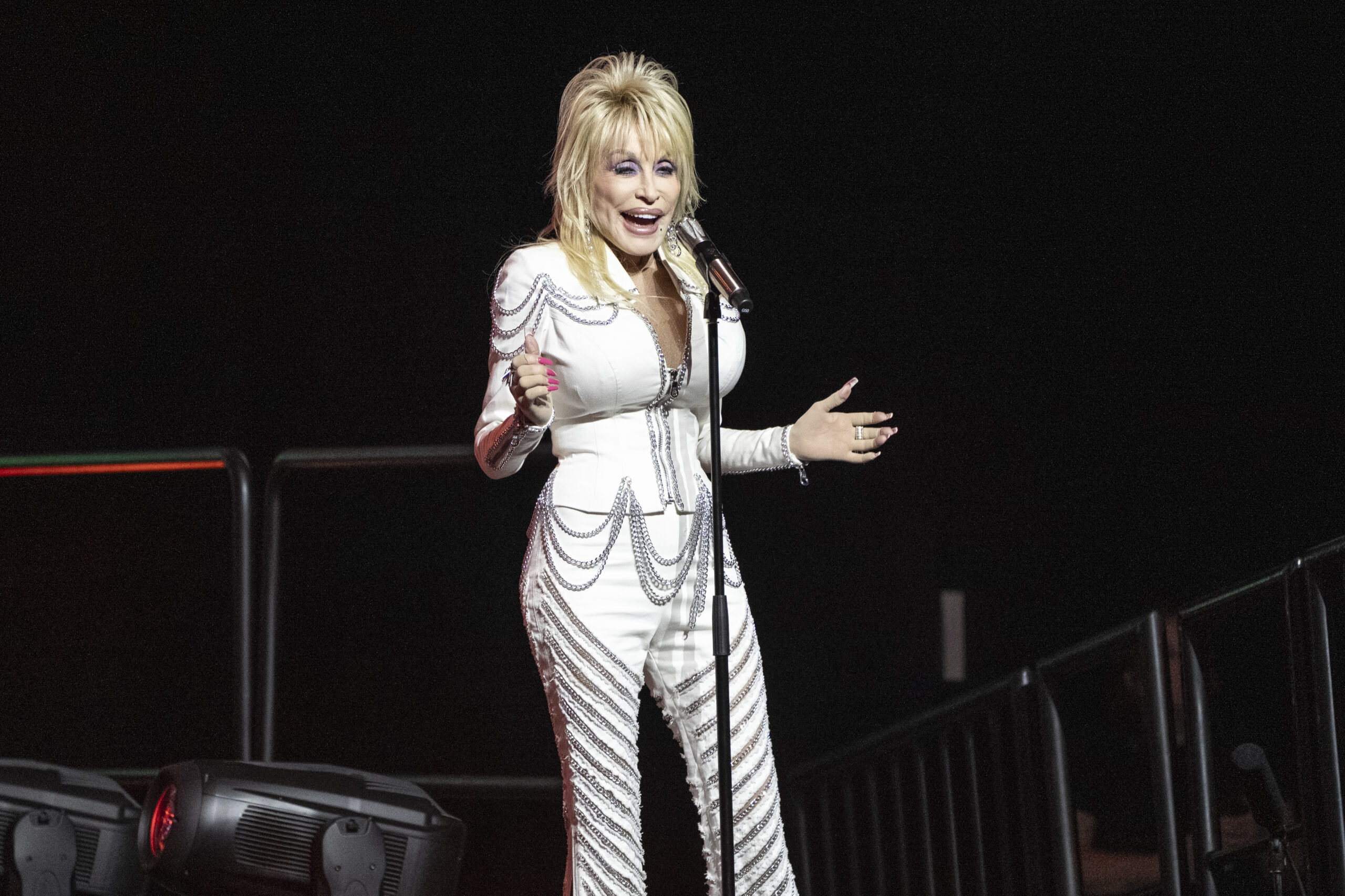
Photo by Amy Harris/Invision/AP
Dolly Parton, the songwriter and singer from Locust Ridge, Tennessee, died Tuesday, Aug. 25. Her death sparked a tsunami of support and reflection from the media, her family and friends, colleagues, and her fans.
When someone lives a life as loudly and publicly as Parton did for 80 years, it’s of little surprise that that person will be written about for days, weeks, and years to come after their death. But one article about Parton from The Washington Post is getting a lot of attention — and it’s because its author missed a crucial detail of the singer’s life.
“Dolly Parton’s lack of children demonstrated that the world could in fact love a woman who wasn’t a mother,” the Post wrote on X — a statement that’s already fairly outrageous. The message continued, “But more importantly, she was proof that a person could be an advocate for children while personally choosing against parenting.”
In her column, Ashley Fetters Maloy wrote that she loves Parton “for the same reasons everyone loves Dolly Parton.” For Maloy, that list includes that her “songs are undeniably powerful, her joy infectious, her hair magnificent” and her “quietly subversive jokes about her boobs and her fashion sense will never not be funny, or poignant.”
(I feel compelled to note here that people loved Parton for many, many more reasons — for example, those of us who also grew up in small Southern towns and who have been on the receiving end of a whole lot of judgement for that have often been buoyed by Parton’s take-no-prisoners approach to being true to who she was, where she was from, and what that meant culturally over the decades.)
Maloy then wrote:
But in my adult life, Parton, who died on Tuesday at age 80, has come to mean a lot to me for a much more specific reason: She was a vocal nonparent who nevertheless cared greatly about kids, as a population and a part of our world.
To describe Parton, who never had children with her late husband, Carl Dean, as a “vocal nonparent” isn’t inherently wrong. Parton spoke frequently about not having children, often described herself as a mother to everyone, and made it clear that her various generations of nieces and nephews gave her joy, and that those relationships often approximated motherhood.
Maloy also noted Parton was “plainspoken from early on” about “her decision with Dean not to have children.” And, again, that’s true: Parton gave many interviews in which she was asked about having children and explained she and Dean didn’t “want” to.
“To me, Parton’s lack of children demonstrated that the world could in fact love a woman who wasn’t a mother,” Maloy wrote. “But more importantly, she was proof that a person could be an advocate and friend for children while personally choosing against parenting.”
It’s there — in those last four words — that many are taking issue with Maloy’s interpretation of Parton’s life.
As many a Parton fan knows, she and Dean very much wanted to have children early in their marriage. In 2014, Parton told Billboard, “Early on, when my husband and I were dating, and then when we got married, we just assumed we would have kids. We weren’t doing anything to stop it. In fact, we thought maybe we would. We even had names if we did, but it didn’t turn out that way.”
Parton added, “Now I say, ‘God didn’t mean for me to have kids so everybody’s kids could be mine.’ I’m very close to my family — five of my younger brothers and sisters lived with me and Carl for many years — and we’re very close to our nieces and nephews. Now that Carl and I are older, we often say, ‘Aren’t you glad we didn’t have kids? Now we don’t have kids to worry about.'”
Parton was diagnosed with endometriosis in the 1980s and eventually had a partial hysterectomy to treat the condition. Per the Mayo Clinic, endometriosis, which is the name for the condition that causes uterine tissue to grow outside of the uterus, can cause any number of problems pertaining to fertility; it’s also typically very painful and can cause debilitating periods.
Many people first find out they have endometriosis when they’re struggling to conceive. Parton never revealed if that was the case for her. But per The Irish Times, she did tell The Boston Globe in 2007 that she fell into a deep depression after she had the hysterectomy, and that her Rhinestone costar Sylvester Stallone helped pull her out of it.
“It was an awful time for me… Every day I thought, ‘I wish I had the nerve to kill myself,'” Parton said. “Even though the movie didn’t do that well, that was one of my greatest projects because Stallone was so full of life and so crazy and funny, and he made me laugh a lot, which was really healthy for me. That got me back on track.”
It might seem a little too nitpicky to take issue with Maloy’s column. At the end of the day, Parton, as she was known to do, took lemons and made lemonade out of the situation. She was unable to conceive biological children, so she pivoted, and in the end she created a life that she loved and was proud of, and ultimately didn’t regret any part of it. That life included caring for children related to her and children all around the country, either through her Imagination Library or other causes.
But there is a distinction between actively choosing not to have children on purpose, which appears to be where Maloy is coming from, and not having children because biology just worked against you. She also writes that she and her husband “are not planning” to have children, and offers no indication that is a decision they arrived at under duress, or due to medical complications.
I’ll be fully transparent about my interest in the topic: I have one child, a son that I gave birth to at age 24. At the time, I absolutely imagined and believed I would have at least one, if not two more kids (I still often say I would have been happiest with five or six of them running around). That’s not due to any specific religious or political affiliation. I would never say I regret raising an only child, but I wouldn’t want a well-meaning columnist to describe me as an advocate for families who intentionally only have one child (which is a movement just as serious as the Childfree).
Raising my son has been a beautiful experience; I’m enormously proud of him, and at this point (many years later), I’ve made peace with all of it. But that’s a position that took me years to arrive at. It no longer hurts that I didn’t have more children, but there will always be a part of me that wonders what might have been, and it’s something that I still think about, 17 years later.
At this point, it’s impossible to speak for Parton. Fortunately, she, more than most of us, had the opportunity to share her thoughts broadly and freely. It does very much seem that she and Dean were happy with the life they built together, and the opportunities they had to impact the lives of several generations. But just as it would be a mistake for a conservative outlet or writer to assume Parton harbored a secret sadness that she never experienced parenthood and to make her a pronatalist icon, it’s a mistake for anyone to assume she didn’t, and to turn her into the face of the intentionally Childfree, or voluntarily childless.
The truth is, we’ll never know, and that’s clearly the way Parton wanted it to be.
This is an opinion piece. The views expressed in this article are those of just the author.
New: The Mediaite One-Sheet "Newsletter of Newsletters"
Your daily summary and analysis of what the many, many media newsletters are saying and reporting. Subscribe now!

Comments
↓ Scroll down for comments ↓