Media Rushes To Charge Racism In Gary, Indiana Power Outages — But Cannot Make the Connection


screengrab
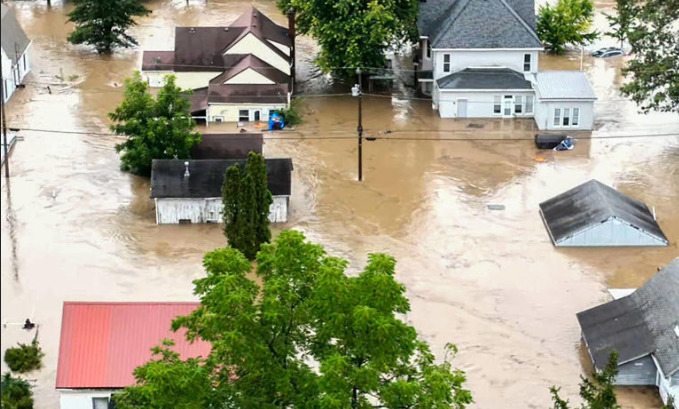
News outlets could not contain themselves with storm coverage when accusations of racism began circulating in northern Indiana. Following severe storms hitting the region on Aug. 11, power outages extended into this week. When the town of Gary, Indiana, was highlighted as among the most affected, the news coverage basically wrote itself.
Many complaints emerged accusing political bias and even “environmental racism.” (The weather, we suppose, is bigoted.) The city has a racial makeup of roughly 75% Black residents, so it became quite easy for the networks to steer headlong into the accusatory coverage. The problem was that in order to sell this racism narrative, the familiar ploy of omitting details had to be used.
The Associated Press detailed the challenge in the city, mentioning how the state government was also getting involved to look into the matter. Noting it is “mostly-Black” area, the outlet had no shortage of speculation on the plight of the lower-class residents.
Likewise, NBC News strode in with the rote reporting of those “hardest hit” by the outages. The details that were left out of these reports say just as much. The local power company, Northern Indiana Public Service (NIPSCO), reported that over 370,000 residents spread across three counties lost their power. However, Gary was the primary focus of strife.
While the hints and direct charges of racism were thrown about, few wanted to address who it was in positions of power and responsibility in the area. Mayor Eddie Melton appeared with Don Lemon to deliver heavy implications of racial bias leading to his city having prolonged outages.
But Melton is a Black mayor, and most of those in the municipal government are as well. Then you have the power company itself. The NIPSCO top officers are also – you will be surprised to learn – mostly POC individuals. So while it is facile to dredge up the practiced reporting of racial causes, pinning the blame is a lot more difficult in this instance.
And then there is another disqualifying detail that the major networks could not find room to cover in their reporting. While many stories of the individual residents and their hardships were told, as well as their pasts, what was avoided were the impacts on the repair work being completed. Many trees and other obstructions slowed the repairs in Gary. So did the gunfire.
That’s right – as repair crews were coming into the Gary district, one vehicle came under attack, with bullets striking the vehicle. While fortunately it did not lead to injuries, this too delayed the deployment of scout teams and repair crews into the areas until the safety of those workers could be more assured.
NBC used three reporters in its report on the power outages. Yet, while they could lean heavily on the racism components, none of the trio managed to glean that little nugget about the delays due to the armed attacks on workers? Seems a questionable allotment of reporting energy.
Or, it was a case of tracking down the easier angle. And even that enterprise failed to deliver. So while racism was the obvious focus, with so many of those in positions of power being Black, we never actually get told who was actually making racist decisions.
This is an opinion piece. The views expressed in this article are those of just the author.
New: The Mediaite One-Sheet "Newsletter of Newsletters"
Your daily summary and analysis of what the many, many media newsletters are saying and reporting. Subscribe now!

Comments
↓ Scroll down for comments ↓