BBC Seeks Access to January 6 Documents to Defend Against Trump’s Defamation Lawsuit

Press Association via AP Images
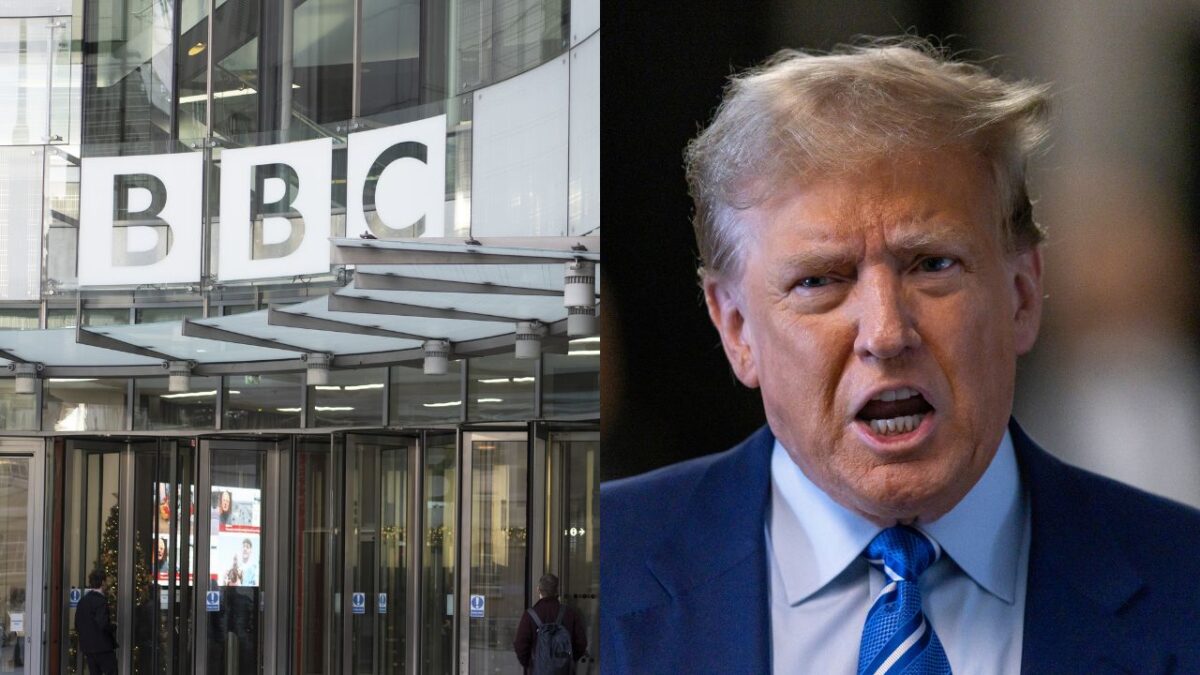
The BBC is seeking access to documents related to Jan. 6 as part of its defense against a defamation lawsuit filed by President Donald Trump, and its lawyers are striking directly at the narrative the president and his supporters have tried to construct about that day.
The controversy stems from a 2024 BBC Panorama documentary that used an edited clip of Trump’s speech on Jan. 6, 2021 that immediately preceded the violent riot at the U.S. Capitol, as his supporters stormed the building to disrupt the certification of the Electoral College votes for President Joe Biden.
The edited clip had Trump saying: “We’re gonna walk down to the Capitol and I’ll be there with you and we fight. We fight like hell, and if you don’t fight like hell, you’re not gonna have a country anymore.”
However, that was a combination of different sections of his speech. That specific phrase as Trump said it that day, near the beginning of his remarks, was: “We’re gonna walk down, and I’ll be there with you, we’re gonna walk down, we’re gonna walk down any one you want but I think right here, we’re gonna walk down to the Capitol and we’re gonna cheer on our brave senators and congressmen.”
The part where Trump said, “And we fight. We fight like hell. And if you don’t fight like hell, you’re not going to have a country anymore,” was closer to the end of his speech. A video and transcript of Trump’s full speech can be reviewed here, as posted by NPR.
In the aftermath, BBC Director General Tim Davie and News chief Deborah Turness resigned, and Trump’s lawyers sent a letter to the public broadcaster threatening to sue for a whopping $1 billion unless the BBC met three demands: issue a “full and fair retraction” of the documentary, apologize to Trump, and “appropriately compensate President Trump for the harm caused.”
The BBC did issue a correction and apology but refused to offer any sort of payment, and last December he sued the British public broadcaster, claiming $10 billion in damages.
The discovery process kicked off a few months ago and a trial date is currently scheduled for February 2027.
On Tuesday, U.S. Magistrate Judge Enjoliqué Lett ruled that because Trump was claiming damages to his businesses, the BBC had the right to demand access to documents and information about said businesses.
Trump’s legal team had attempted to drop the business damage part of his claims and argue they were merely asserting damage to his personal reputation, but the BBC’s lawyers argued that [y]ou cannot separate the man and his reputation from his operation of his businesses,” noting, for example how he had run for president “on a platform of The Art of the Deal.”
Lett said during the hearing that as a magistrate she lacked the power to drop the business damages from the complaint, and ruled that Trump would have to turn over detailed information about his companies and their finances.
“All of President Trump’s brand, properties and businesses are impugned or said to have been impugned,” said Lett. “Reputational, economic damages, all of that is now at issue in this case.”
“The hearing could serve as a reminder to Trump that the headline-grabbing lawsuits he’s fond of filing against media outlets are a two-way street, giving the press added leverage to pry into his business dealings and controversial episodes he might prefer to consign to history,” wrote Politico senior legal affairs reporter Josh Gerstein.
To that end, the BBC is pushing to take Trump’s sworn deposition, and their lawyers told the court Tuesday that Trump’s lawyers were “dragging their feet” on setting a date.
The BBC is also seeking, in a separate action filed with the U.S. District Court for the District of Columbia, more information about January 6, specifically Trump’s efforts to claim executive privilege and block his staffers from testifying, and filed a brief on Wednesday spelling out their arguments for why the court should order the release of these documents.
In a five-page memorandum of law, the BBC smacked back at what it called the Trump administration’s “erroneous arguments” and argued that proving the implication that he “fomented the violence” at the Capitol was in fact true would destroy his claim of defamation (citations omitted):
President Trump claims the BBC defamed him by editing his speech at the White House Ellipse on January 6, 2021 in a manner that he claims conveyed the allegedly false implication that he fomented the violence that followed at the Capitol. Thus, as the BBC explained, and the government does not dispute, President Trump cannot prevail in his case if he cannot establish the falsity of that alleged implication. That is why the BBC has sent discovery requests to President Trump, served subpoenas on third parties, and issued Touhy requests to government agencies seeking to obtain the same evidence the Special Counsel gathered and described as “evidence establish[ing] that the violence was foreseeable to Mr. Trump, that he caused it, that it was beneficial to his plan to interfere with the certification, and that when it occurred, he made a conscious choice not to stop it and instead to leverage it for more delay.” That includes, for example, evidence of President Trump’s communications with his advisors during the three-hour period between his Ellipse speech and his message calling on the rioters to disperse.
Truth is one of the key defenses to a defamation lawsuit; a plaintiff cannot sustain a claim for defamation for true statements, only ones that are false.
New: The Mediaite One-Sheet "Newsletter of Newsletters"
Your daily summary and analysis of what the many, many media newsletters are saying and reporting. Subscribe now!





Comments
↓ Scroll down for comments ↓