‘That is Misinformation!’ CBS’s Brennan Battles Trump’s CDC Chief in Fiery Brawl on Vaccines and Trust in Public Health

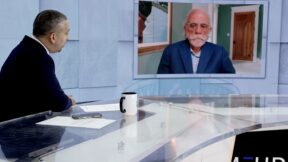
CBS’s Margaret Brennan battled acting CDC Director Dr. Jay Bhattacharya in a heated debate over the state of public health during the Trump administration.
The fiery discussion ramped up when Brennan confronted Bhattacharya about the August 2025 shooting at CDC headquarters in which Atlanta police officer David Rose was killed.
“You were down in Atlanta this past week. This is one year since that horrific shooting at CDC headquarters. Officer David Rose was honored this past week. He was killed last year protecting CDC employees from a gunman. And we should note he was a combat veteran, a United States Marine who had just graduated five months prior from the police academy. Three kids left behind. The shooter was motivated by misinformation about the COVID vaccine. That is why he shot over 100 bullets into the windows of the CDC. Is enough being done to counter this kind of misinformation?”
Bhattacharya did not engage with the question.
“I want to focus attention on Officer Rose because …I think what the shooter did was horrific, and…you can talk about why shooters do things, but really fundamentally—,” Bhattacharya said, before Brennan interjected.
“Well, his father said he was brainwashed about the COVID vaccine and thought it was making him suicidal,” Brennan said.
“I mean the thing is…to talk about the shooter puts the…emphasis on somebody who, I think, we shouldn’t be putting our emphasis on,” Bhattacharya said.
“No, I am on misinformation about vaccines,” Brennan said.
The acting CDC chief finally entertained the query, but did so by attempting to shift blame to the media and the Biden administration.
“The key thing is there’s a loss of public trust in public health that happened in part because of a lot of- frankly, even on this network and on other networks, there was a particular single point of view put across during the Covid pandemic about how… that led to things that really did cause harm to people,” Bhattacharya said.
“This is not a productive line of claims,” Brennan said. “We covered Covid in depth on this program, like no other Sunday show did.”
“I’m not blaming you specifically,” Bhattacharya replied. “What I’m saying is, you want to talk about misinformation? The kinds of decisions and sort of the public sort of face of public health during the pandemic led to many people losing trust in public health.”
The conversation spiraled from there:
MARGARET BRENNAN: The Trump administration officials.
DR. BHATTACHARYA: No, I mean- I mean, like Biden. So Biden, for instance, censored me–
MARGARET BRENNAN: The pandemic began under the Trump administration, and we put those officials on our air.
DR. BHATTACHARYA: But- but during the- during the- just so we’re clear, the Biden administration censored me, right? They censored- they sent out direct attacks on people who disagreed on- on- on the COVID- on- on sort of whether the COVID vaccine stopped–
MARGARET BRENNAN: RFK Jr. called the COVID vaccine the deadliest vaccine ever made.
[CROSSTALK]
MARGARET BRENNAN: That is misinformation, and we’re not being clear about that. And I think that is dangerous. Wouldn’t you agree?
DR. BHATTACHARYA: People lost their jobs, Margaret, because the- the Biden administration censored people and said, “Look, you can’t even talk about COVID vaccine harms.–
MARGARET BRENNAN: –We’re talking about a shooting.
DR. BHATTACHARYA: Yeah, and I’m talking about why you have the the kind of distrust that’s led to the kind of sort of problems that you’re talking- we were talking about earlier in public health. That distrust was not caused by President Trump, it wasn’t caused by Bobby. It was caused by a lot of- sort of really fundamental–
MARGARET BRENNAN: Misinformation–
DR. BHATTACHARYA: Yeah, but often spread by the government itself regarding natural immunity, closures of schools, closures- of mask mandates, people lost their jobs because of these vaccine mandates that didn’t make any public health sense. So, if you want to talk about public trust, you have to embrace that fully, right? You can’t just talk about it in a narrow political way.
MARGARET BRENNAN: I’m talking about a shooting at the CDC and an officer, you said you just went to honor. That’s what I was talking about. You’re talking about something else entirely.
DR. BHATTACHARYA: No, no, you’re trying to- you’re trying to- just to be blunt–
MARGARET BRENNAN: I also asked you about the shoring up public [inaud]–
DR. BHATTACHARYA: –What you’re talking about is you’re trying to blame the shooting on Bobby.
MARGARET BRENNAN: No, I’m not. I’m reading you what his father said.
DR. BHATTACHARYA: No, what you’re reading, what you’re- what you’re saying- what you’re implying is that somehow the lack of public trust
MARGARET BRENNAN: I’m not talking about him. I’m talking about your visit.
DR. BHATTACHARYA: Yeah.
MARGARET BRENNAN: And is enough being done.
DR. BHATTACHARYA: I think it’s really unfortunate–
MARGARET BRENNAN Since you want to restore public trust, tell me what you’re doing now, because the Washington Post and Bloomberg reported the White House is preparing an executive order on vaccines and autism. What is it going to prescribe? What is it going to do? Why are we seeing another announcement here when I know you are launching research into a plethora of issues that are contributing factors potentially to autism. Why would the White House be saying only look at this thing?
DR. BHATTACHARYA: Well, I don’t- I mean- I would have to ask the president about the specifics–
MARGARET BRENNAN: Because that is going to–
DR. BHATTACHARYA: –of the executive order. I tell you want we’re doing–
MARGARET BRENNAN: Do you think that’s restoring trust in vaccines?
DR. BHATTACHARYA: The- the purpose of the- whatever the- I mean I- you can ask the president about the executive order, but I’ll tell you what the- the focus of the president has been–
MARGARET BRENNAN: You don’t know about the executive order?
DR. BHATTACHARYA: I- I don’t- I won’t be able to tell you specifically what’s on it because I don’t think it’s done yet. But you can ask the president about it. What I can tell you is that the president cares deeply, as does Bobby, about the rise in autism. I know you do as well. There’s so many families around the country that- that have- that have had, you know, have faced the–
MARGARET BRENNAN: Yes.
DR. BHATTACHARYA: –issues of this, right?
MARGARET BRENNAN: Yes, and they want real information.
DR. BHATTACHARYA: And so I, as NIH director, have been focused on making sure that we have science that addresses that- that very complicated question about why we’ve seen a rise in autism. It’s not going to be a simple answer. And I- last year I authorized something called the Autism Data Science Initiative. We’re going to have a big, sort of, early, sort of- sort of, results from it in a couple of weeks from the- the dozen and more scientific teams that have been funded to look at this, with a mandate of thinking very broadly, not just genes, not- not just environmental exposures, but potential interactions. We don’t know- if you ask me as a scientist, do I know why we’ve seen this rise in autism? I’ll tell you, I don’t know the answer to that question.
Watch above, via CBS.
New: The Mediaite One-Sheet "Newsletter of Newsletters"
Your daily summary and analysis of what the many, many media newsletters are saying and reporting. Subscribe now!




Comments
↓ Scroll down for comments ↓