
Gaza-Based Journalist Fears Israel Targeting Reporters: ‘I Don’t Know Whether I Will Survive the Next Time’

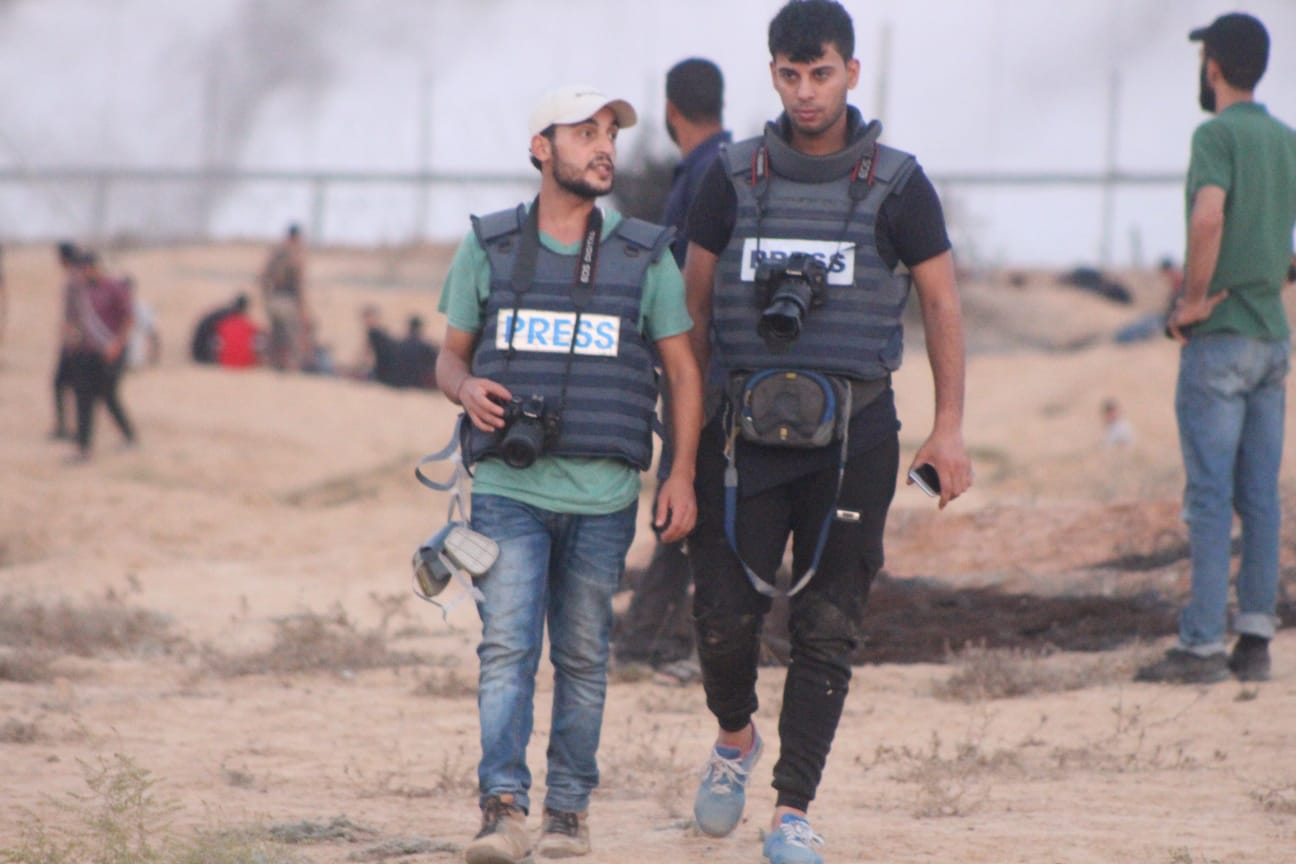
Gaza-based photojournalist Fadel Mghari and his friend, the journalist Sari Mansour, who was killed in an Israeli airstrike last month.
“I have escaped certain death many times and I do not know whether I will survive the next time,” said Fadel Mghari, a Gaza-based photojournalist I have been in regular contact with since the start of the Israel-Hamas War.
“At the least the story will be published,” he added. “Today we are the narrators and tomorrow we may be part of the story.”
Mghari is a freelance journalist based in the Gaza Strip, which has come under siege by Israel since the October 7 attack by Hamas that killed more than 1,200 people and took hundreds others hostage in the densely-packed enclave. Israel launched a bombing campaign and invasion in an effort to destroy Hamas and rescue the hostages. In the months since, around 20,000 people are reported to have been killed in Gaza. Mghari has used his camera to capture harrowing scenes from inside, where foreign journalists are not allowed to enter freely.
The war has also been an extraordinarily dangerous one for journalists. 68 have been killed so far, according to the Committee to Protect Journalists. On Sunday night Palestinian journalist Haneen Ali Al-Qutshan was killed in an Israeli airstrike on her home in the Nuseirat refugee camp in Central Gaza.
“More than 20 citizens were killed in an airstrike on the family home of journalist Haneen Ali Al-Qutshan,” Mghari said. He photographed the aftermath of the bombing, showing a pile of rubble and clothes covered in ash — a haunting reminder of where a family once lived.
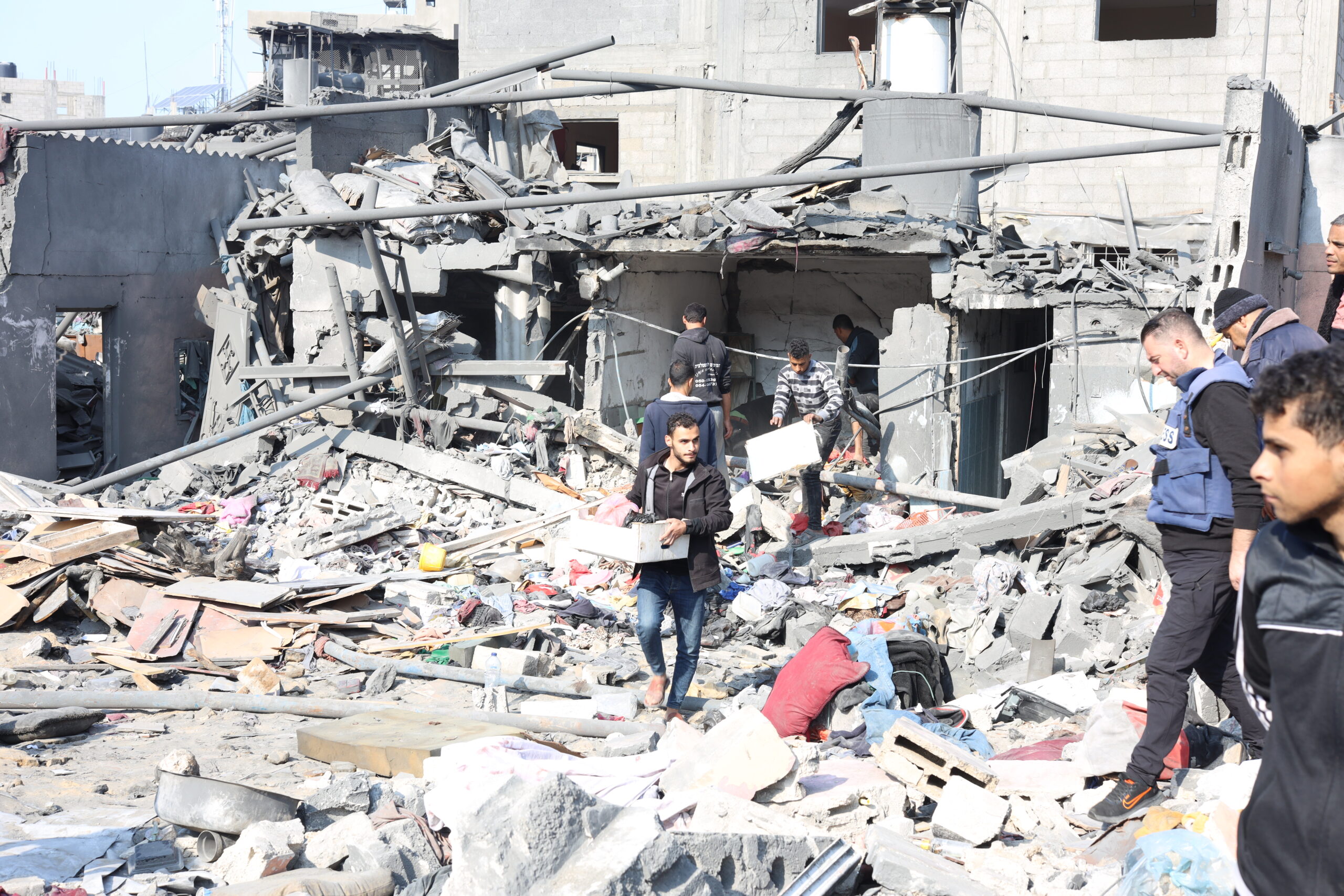
Photo by Fadel Mghari
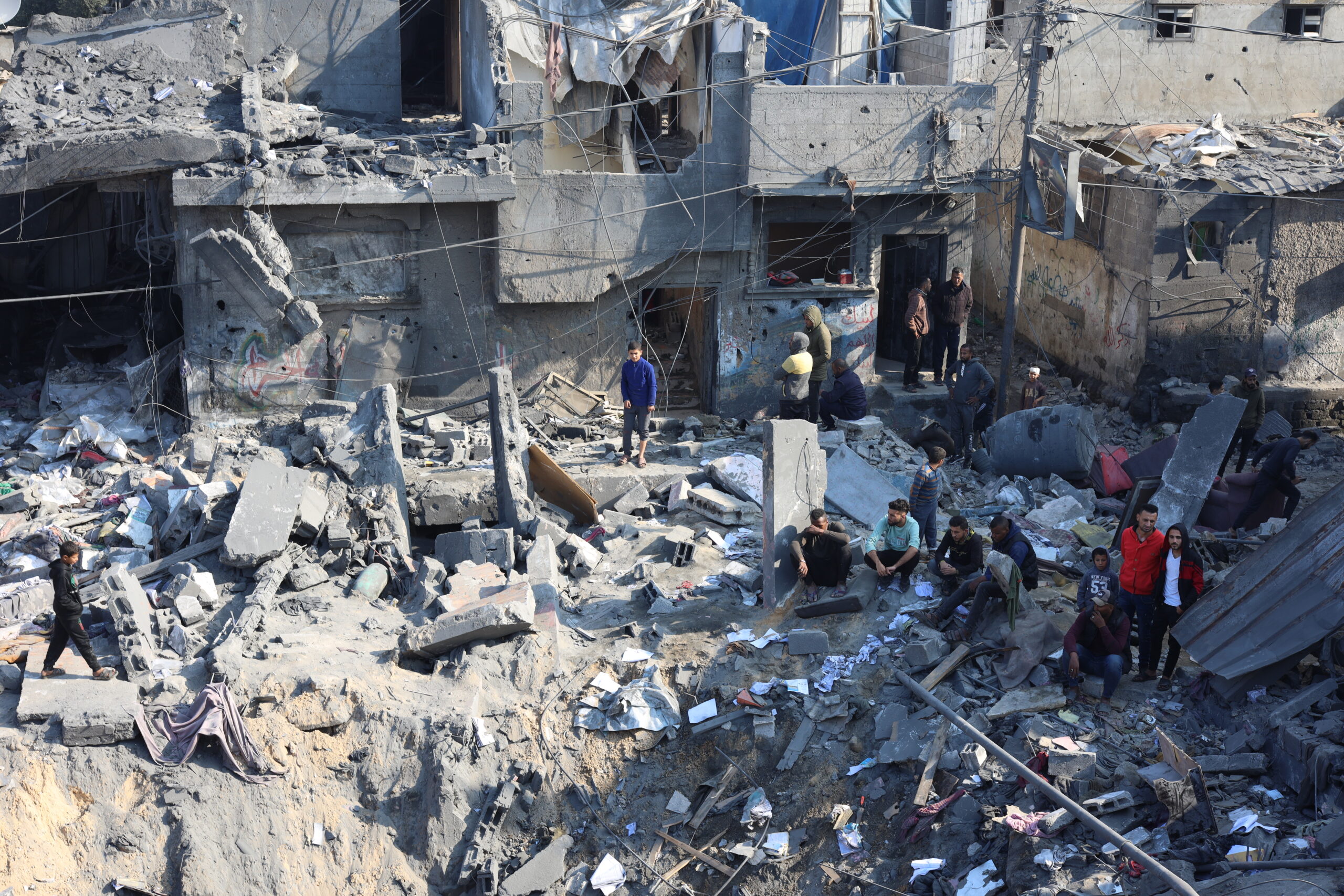
Photo by Fadel Mghari
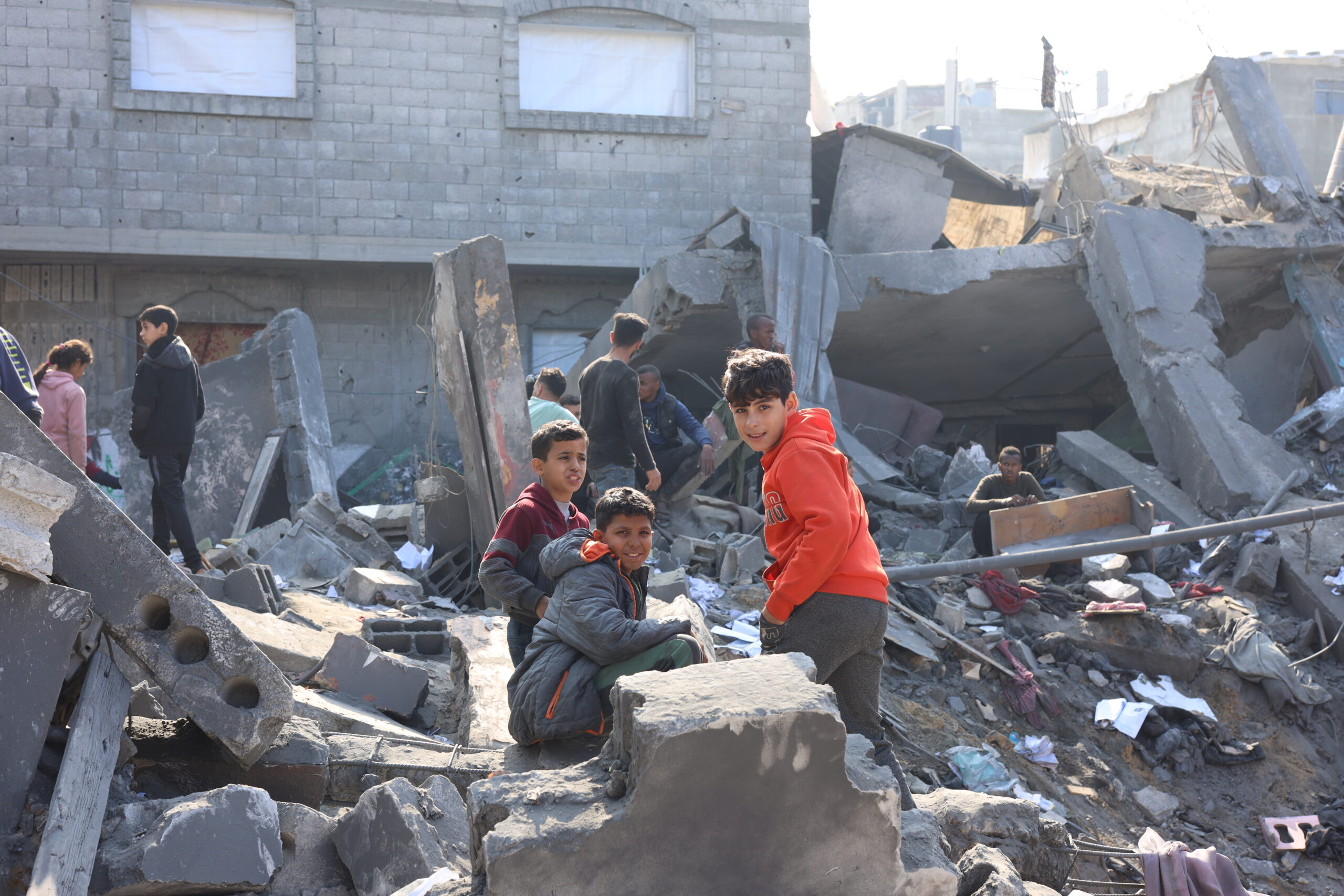
Photo by Fadel Mghari
It’s been a bloody week for journalists in Gaza. Days before the killing of Qutshan, television journalist Mohammed Balousha was shot and wounded. He told the Washington Post he was wearing a press badge and helmet, and that he believes he was shot by an Israeli sniper. Al Jazeera cameraman Samer Abu Daqqa was killed and Gaza bureau chief Wael al-Dahdouh was wounded in an Israeli drone strike on Dec. 15. Al-Dahdouh became one of the faces of endangered journalists during the war when his wife, teenaged son, daughter and grandson were all killed in an Israeli airstrike in October.
Mghari alleged that journalists in Gaza are being targeted by Israel Defense Forces. “Any one who publishes stories and exposes [the IDF’s] crimes is a target for them, and they are killed directly by targeting them in their homes,” he said. “This happened with my colleague Sari Mansour [director of the Hamas-affiliated Quds News Network], who was bombed in his home.”
The IDF denied targeting journalists in a statement to Mediate: “The IDF takes all operationally feasible measures to protect civilians and to facilitate freedom of the press. The IDF has never, and will never, deliberately target journalists. Covering active combat areas is inherently dangerous, and unintended casualties are a tragic possibility. We also note that the IDF has confirmed that certain ‘journalists’ who were reportedly killed were active terror operatives and were directly participating in hostilities. The IDF will continue to take measures to avoid civilian harm, whilst Hamas continues to pursue it.”
Mediaite asked the IDF to provide evidence for the claim that some journalists killed were terrorists. “We cannot elaborate. We sent our statement on the topic,” a spokesperson replied.
Mghari countered the claim: “Entering areas of conflict and filming does not mean that they are participating [in terror] — like the American journalists who entered Gaza,” he said. “Can I accuse them [of being terrorists]? It is well known that being a journalist is a risky profession and in order to take pictures may be very close to danger.”
The IDF has been accused of targeting journalists in the current war. Reuters investigated the Israeli shelling that killed Reuters journalist Issam Abdallah and wounded six reporters as they were filming from the Lebanon border on Oct. 13.
The investigation found the reporters were wearing blue flak jackets marked “press,” and found the tank rounds were shot from within Israel. When Reuters reached out to the IDF for comment on its findings, the IDF replied with a terse statement: “We don’t target journalists.”
Reuters editor in chief Alessandra Galloni condemned the killing and called for “Israel to explain how this could have happened, and to hold to account those responsible for his death.”
In response to the IDF’s statement to Mediaite, CPJ Middle East and North Africa Program Coordinator Sherif Mansour said the “CPJ documented a deadly pattern in which Israeli officials accuse journalists of terrorism without evidence and push a false narrative against them to try to evade responsibility for their killing.”
He pointed to CPJ’s report from before Oct. 7, “Deadly Pattern,” which found that of the twenty journalists killed by Israeli military fire in the last 22 years, at least thirteen, were identified as members of the media and/or inside vehicles that identified them as press when they were killed.
The CPJ report, Mansour said, “finds that probes into journalist killings at the hands of the IDF follow a routine sequence. Israeli officials discount evidence and witness claims, often appearing to clear soldiers for the killings while inquirers are still in progress. The IDF’s procedure for examining military killings of civilians such as journalists is a black box, notes the report. There is no policy document in describing the process in detail and the results of any probe are confidential. When probes do take place, the Israeli military often takes months or years to investigate killings and families of the mostly Palestinian journalists have little recourse inside Israel to pursue justice.”
Human Rights Watch alleged this month that the Israeli airstrikes on October 13 “were apparently deliberate attacks on civilians, which is a war crime.” HRW’s Lebanon researcher Ramzi Kaiss said, “This is not the first time that Israeli forces have apparently deliberately attacked journalists, with deadly and devastating results. Those responsible need to be held to account, and it needs to be made clear that journalists and other civilians are not lawful targets.”
While Mghari fears for his safety, he said it is “my duty to spread the truth to stop the suffering of the children, my people, my family and my neighbors so that the world can see what is happening to us in terms of collective aggression.”
The photojournalist acknowledged the very real risk of moving throughout the densely populated enclave in order to capture the events of the war as it unfolds.
As Mghari attempts to stay safe, he is faced with other wartime challenges. He said he is running out of food and clean water.
“I started saving a loaf of bread for two days and have gone days without food. I saved a loaf of bread for two days.” He and his family take small pieces of the bread to sustain themselves, unsure when they will be able to eat again.
“We eat crumbs. Things are difficult. It is very hard to fetch water and it is not drinkable at times,” he said.
Mghari ended the conversation as he made the short but dangerous three-mile trek from al-Aqsa Hospital in Deir Al-Balah, located in the middle of the Gaza Strip, to his home in Al-Bureij camp on his bicycle.
He said he had to make the trip “before the road becomes more dangerous and there is no internet. The road from Al-Aqsa Martyrs Hospital, where I am now, to my home in the Al-Bureij camp when the night falls anything that moves at night is bombed by planes. So I must move now before darkness falls.”
Comments
↓ Scroll down for comments ↓