JD Vance Is the Least Qualified VP Candidate in Modern American History

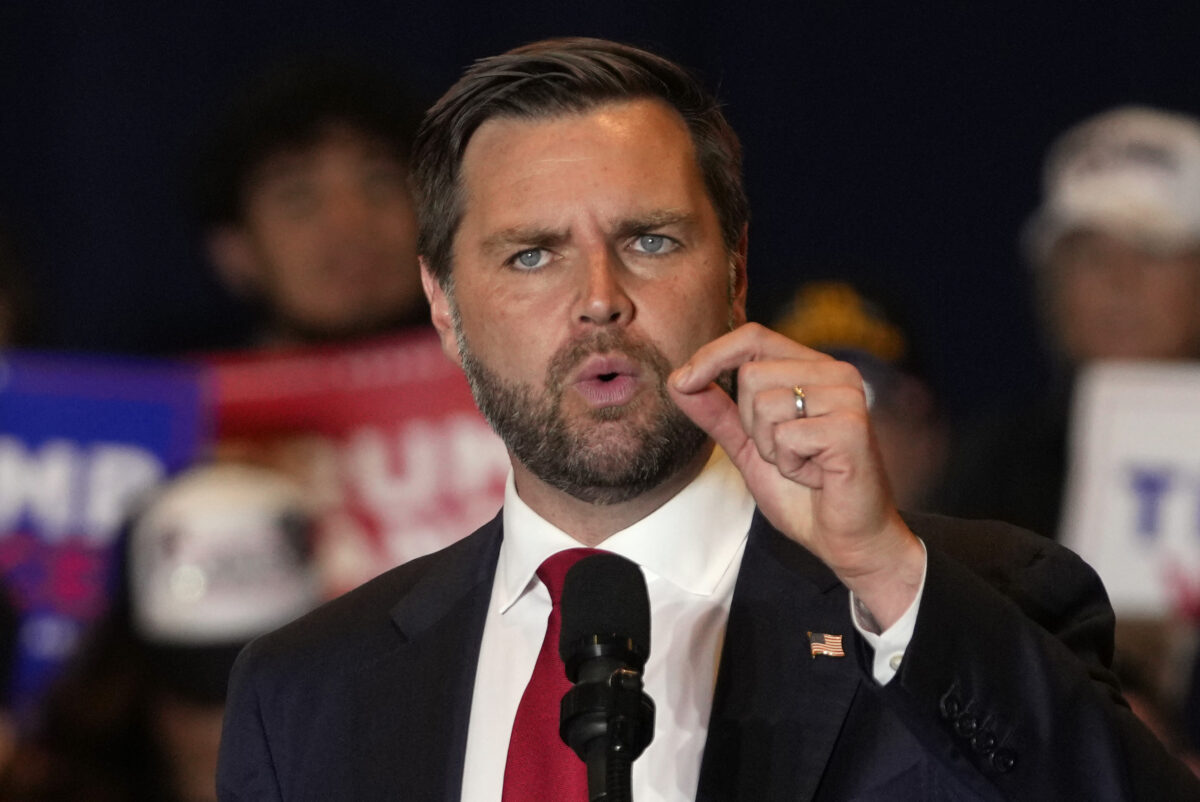
AP Photo/Matt York
When a first term Senator from Illinois named Barack Obama ran for president in 2008, there were countless articles lamenting his lack of experience for the nation’s highest elected office. But Obama had at least had three terms in the Illinois State Senate prior to his 2004 election to the U.S. Senate. Now in 2024, when another first-term Senator, this time Ohio’s JD Vance, is running to be a heartbeat away from the presidency, there has been a curious lack of interest to an even thinner résumé.
“One of these things is not like the others”
Just like the lyrics to the beloved Sesame Street song, Vance just “doesn’t belong” among his predecessors. Let’s start by looking back at the records of the major party vice presidential nominees at the time they ran, starting with President Jimmy Carter’s era (the candidate on the winning ticket is listed first for each year):
1976
Walter Mondale (D): Attorney General of Minnesota (1960-1964), U.S. Senator from Minnesota (1964-1976)
Bob Dole (R): Kansas House of Representatives (1951-1953), County Attorney (1953-1961), U.S. Representative from Kansas (1961-1969), U.S. Senator from Kansas (1969-1996)1980
George H.W. Bush (R): U.S. Representative from Texas (1967-1971), U.S. Ambassador to the United Nations (1971-1973), RNC Chairman (1973-1974), CIA Director (1976-1977)
Walter Mondale (D): see above1984
George H.W. Bush (R): see above
Geraldine Ferraro (D): Assistant District Attorney for Queens County (1974-1978), U.S. Representative from New York (1979-1985)1988
Dan Quayle (R): U.S. Representative from Indiana (1977-1981), U.S. Senator from Indiana (1981-1989)
Lloyd Bentsen (D): U.S. Representative from Texas (1948-1955), U.S. Senator from Texas (1971-1993)1992
Al Gore (D): U.S. Representative from Tennessee (1977-1985), U.S. Senator from Tennessee (1985-1993)
Dan Quayle (R): see above1996
Al Gore (D): see above
Jack Kemp (R): U.S. Representative from New York (1971-1989), Secretary of Housing and Urban Development (1989-1993)2000
Dick Cheney (R): White House Deputy Chief of Staff (1974-1975), White House Chief of Staff (1975-1977), U.S. Representative from Wyoming (1979-1989), Secretary of Defense (1989-1993)
Joe Lieberman (D): Connecticut State Senate (1971-1981), Attorney General of Connecticut (1983-1989), U.S. Senator from Connecticut (1989-2013)2004
Dick Cheney (R): see above
John Edwards (D): U.S. Senator from North Carolina (1999-2005)2008
Joe Biden (D): U.S. Senator from Delaware (1973-2009)
Sarah Palin (R): Wasilla City Council (1992-1996), Mayor of Wasilla (1996-2002), Chair of Alaska Oil and Gas Conservation Commission (2003-2004), Governor of Alaska (2006-2009)2012
Joe Biden (D): see above
Paul Ryan (R): U.S. Representative from Wisconsin (1999-2019) — including chairing House Budget Committee, House Ways and Means Committee, and Speaker of the House (2015-2019)2016
Mike Pence (R): U.S. Representative from Indiana (2001-2013), Governor of Indiana (2013-2017)
Tim Kaine (D): Richmond City Council (1994-2001), Mayor of Richmond (1998-2001), Lieutenant Governor of Virginia (2002-2006), Governor of Virginia (2006-2010), DNC Chairman (2009-2011), U.S. Senator from Virginia (2013-present)2020
Kamala Harris (D): San Francisco District Attorney (2004-2011), Attorney General of California (2011-2017), U.S. Senator from California (2017-2021)
Mike Pence (R): see above
Many on that list had both legislative and executive job titles on their résumés; some held attorney general or foreign policy roles as well. All had far more years experience than Vance when former President Donald Trump picked him to be his running mate after moving on from Pence after that whole sordid Jan. 6 situation.
This year’s Democratic vice presidential nominee, Minnesota Gov. Tim Walz (D), has held that office since 2019 and previously served as a U.S. Representative from Minnesota from 2007 to 2019.
In contrast, Vance has held only one political office in his life, getting elected to the U.S. Senate from Ohio in 2022. He just turned 40 years old last month and his tenure in office can best be described like we talk about toddlers’ ages: in months not years (21 months to be precise, an age at which most children still aren’t quite ready for potty training).
During his short political career, Vance has thrown some toddleresque tantrums in floor speeches, cable news hits, and right wing podcasts ranting about culture war issues. That’s been enough to get Trump’s attention and favor — and led to Vance getting tapped as veep nominee and attack dog for the campaign — but none of it amounted to any actual legislative accomplishments.
The Marjorie Taylor Greene of the Senate
An analysis of the congressional records shows that Ohio’s freshman Senator has sponsored a meager 34 bills and two resolutions in his 21-month career. None of these bills even passed the Senate, much less became law. Only one received a committee vote. Scrolling through the list of bills he sponsored, many of them are red meat MAGA bait like the “Dismantle DEI Act” or the “Fixing Administrations Unethical Corrupt Influence Act” aka the “FAUCI Act,” a swipe at former NIAID Director Dr. Anthony Fauci, a favorite target of the Trumpian right angry about Covid-19 pandemic restrictions.
Vance has co-sponsored 195 bills brought forward by other senators. Eight of those passed the Senate and then stalled in the House. Two others passed the House and Senate but then were both vetoed by Biden. He is also one of forty-plus co-sponsors on two bills reauthorizing funding for Alzheimer’s research and treatment that passed the House and Senate and were sent to the president’s desk last week.
Vance is essentially the Rep. Marjorie Taylor Greene (R-GA) of the Senate, stomping and shouting but getting nothing done.
Since she was first elected in 2020, Greene has sponsored just 33 bills and 29 resolutions. One bill to rename a federal courthouse in her district in memory of a judge passed the House in March and was sent to the Senate, where it’s languishing in committee. She also sponsored the resolution attempting to impeach Homeland Security Secretary Alejandro Mayorkas that flopped on its first try in the House, passed on the second, and was shot down immediately when it was sent to the Senate.
That’s it. If you’ve seen Greene’s name in a headline, it’s for her squabbles with other MAGA world denizens like Rep. Lauren Boebert (R-CO) or Laura Loomer, not for anything to actually improve the lives of the constituents in her rural north Georgia district.
As for Vance, he can’t get a bill passed but he’s made enough creepy comments about childless cat ladies that the world’s most famous one, Taylor Swift, endorsed Harris right after her triumphant debate against Trump earlier this month. He’s also largely at fault for launching the baseless claims that Haitian migrants in Springfield, Ohio were eating pets, claims he’s refused to take back even after admitting he was “creating a story.”
Ohio’s Absentee Senator
Overall, Vance has “missed 81 of 596 roll call votes, which is 13.6%,” according to GovTrack, describing this attendance record as “much worse than the median of 2.9% among the lifetime records of senators currently serving.” His absences began spiking even before he got the nomination in July, with Vance missing 21.6% of the votes from April to June and a whopping 79.2% from July through September. This sort of rising absenteeism is common among those running for the White House, but they’ve usually already established résumé lines other than inspiring Cat Ladies for Kamala t-shirts and bringing their own constituents a deluge of bomb threats and harassment.
It’s true that the Democrats currently have majority control of the Senate, but plenty of other minority party Senators have found a way to co-sponsor bipartisan legislation, offer meaningful amendments to bills, or have an impact through their committee work. Obama notably managed to sponsor several bills and contribute significantly as co-sponsor to others that passed a GOP-majority House and Senate and were signed into law by Republican President George W. Bush. Likewise, when Walz served in Congress, the Center for Effective Lawmaking (a joint project between the University of Virginia and Vanderbilt University) gave him high marks for being able to move bills forward even when he was a minority member, ranking Walz twice as effective than the average House Democrat during his last term.
If billionaire tech bro Peter Thiel hadn’t bought Vance his seat by pouring $15 million to boost his fledging campaign to a primary win, it would be a nigh impossible task to find a single thing that would have been different in the U.S. Capitol in Vance’s absence these past 21 months.
It’s a big deal for any candidate asking the American people to put them one heartbeat away from the presidency, and it’s all the more urgent when the guy at the top of the ticket is an obese septuagenarian with an infamous disdain of exercise and love of fast food, and who himself had zero political experience (other than a quixotic three-month bid for the Reform Party presidential nomination in 2000) when he rode down the Trump Tower escalator to enter the race in June 2015.
Why isn’t there more media coverage?
So why isn’t this getting more attention? There was a little flurry of stories in the lead-up to Trump picking Vance, with former Rep. David Jolly (R-FL) assessing Ohio’s junior senator as “completely unqualified” compared to the other veep shortlisters, Sen. Marco Rubio (R-FL) and North Dakota Gov. Doug Burgum (R), and pollster Nate Silver dunking on Vance as “the worst” of Trump’s possible running mates. After Vance was announced, Democrats and MSNBC panelists predictably bashed Vance as too inexperienced for the gig.
But it’s hardly a topic that has dominated headlines. Google searches for various phrases like “jd vance qualifications” or “jd vance experience” mostly bring up the “Who Is JD Vance?” articles that many media outlets post to theoretically inform their audience but deploy more as a strategic SEO play. There has been only scattered coverage delving into the reality facing America of the statistically significant possibility that Trump could get re-elected and then his McNugget-based diet could put him on the wrong end of the actuarial tables, propelling a man who has never passed a bill anywhere and never been a governor or even a small town mayor to be our next commander-in-chief.
“The thing about an understudy is that they could at any moment take on the starring role,” wrote The Bulwark’s Hannah Yoest on Monday, nailing the crux of the matter when she urged Walz to make the case “either subtly or directly” at Tuesday’s debate: “Do Americans want someone with almost no executive experience to be one Big Mac away from the most powerful job in the world?”
Among the other limited reporting that exists are a July 16 Business Insider article that noted that Vance “brings very little elected office experience to Trump’s ticket” with a “short tenure [that] has been marked by Trump loyalty, opposition to Ukraine aid, and populist gestures;” a July 16 Politico Magazine piece that pondered how Vance’s “shocking inexperience” had “turned into an asset” in the Trumpified GOP; a July 19 Spectrum News article that reported how Vance “has not sponsored or co-sponsored any legislation that became law” but “has used his platform, however, to spread his ideas;” and a Washington Post report from last week that was headlined “JD Vance has been MIA in the Senate. Does it matter?” Vance seems likely to “come under scrutiny” at the vice presidential debate against Walz Tuesday night, the Post reported, because several of those skipped votes dealt with “key issues” to the campaign, like “expanding the child tax credit,” “creating a right to in vitro fertilization,” and “a funding extension to avoid a partial government shutdown.” Still, the article noted, “There haven’t been any close votes where the party needed Vance.”
Poverty porn and fake hillbillies
There was also a Rolling Stone column published Monday that accused Vance of cynically crafting a “false credential of poverty” in his 2016 memoir, Hillbilly Elegy, fabricating the “rags” part of his “rags-to-riches tale” by packaging his middle class suburban Ohio upbringing as Appalachian destitution.
Vance’s bestselling book turned Netflix movie has been criticized elsewhere as “poverty porn” for giving upper class elites a permission slip to look down with condescension at America’s poor for failing to pull themselves up by those ever-elusive bootstraps. But what Vance did in the book was far more deceitful, wrote Tim Dickerson, describing how the future Senator “emerges in the pages of Hillbilly Elegy as a rich person’s idea of a poor person,” someone who complained multiple times in the text of not being able to afford Abercrombie & Fitch clothes “[u]nless I received them for Christmas.” (As a Gen Xer a few years older than Vance, I can attest many of my cohort never had any Abercrombie clothes, not even for Christmas, and still wouldn’t have considered ourselves “poor.”) Vance’s relatives certainly had a string of drug, alcohol, and stability problems, but anecdotes like the one where his Mamaw bought him a $180 graphing calculator or when he recalls taking golf lessons in high school from “an old golf pro” after a generous uncle gifted him some new clubs, a “nice set of MacGregors,” don’t exactly scream impoverishment.
“In truth, it seems, J.D. wasn’t a real hillbilly. And he wasn’t really poor,” wrote Dickerson, quoting a professor who dissed Vance by calling his book a “shell game” by a “self promoter” — “almost like he puts on poverty like you put on makeup.”
Vance’s attacks on childless cat ladies, false claims of pet-devouring migrant hordes, and unfounded rumors of having sex with a couch lend themselves to far more salacious headlines than congressional bill analyses, but those stories may be dominating because there’s so little else in Vance’s record to cover. To borrow from William Shakespeare: “full of sound and fury, signifying nothing,” indeed.
He wasn’t a real hillbilly. He wasn’t really poor. He’s barely been a U.S. Senator. But JD Vance wants America to elect him vice president to serve with a president who would hit the octogenarian mark before his second term was half over. He has some impressive college degrees, served as a public relations officer in the Marines, and is an entertaining writer. That might qualify him to head something like The Daily Wire’s film production division, not run the country.
The CBS News moderators for Tuesday night’s vice presidential debate, Norah O’Donnell and Margaret Brennan — as well as any other reporters who encounter Vance on the campaign trail between now and November 5 — owe it to the American people to ask him why voters should trust him to run the country with so little experience.
This article has been updated with additional content.
This is an opinion piece. The views expressed in this article are those of just the author.
New: The Mediaite One-Sheet "Newsletter of Newsletters"
Your daily summary and analysis of what the many, many media newsletters are saying and reporting. Subscribe now!


Comments
↓ Scroll down for comments ↓