

ANGELA WEISS/AFP via Getty Images
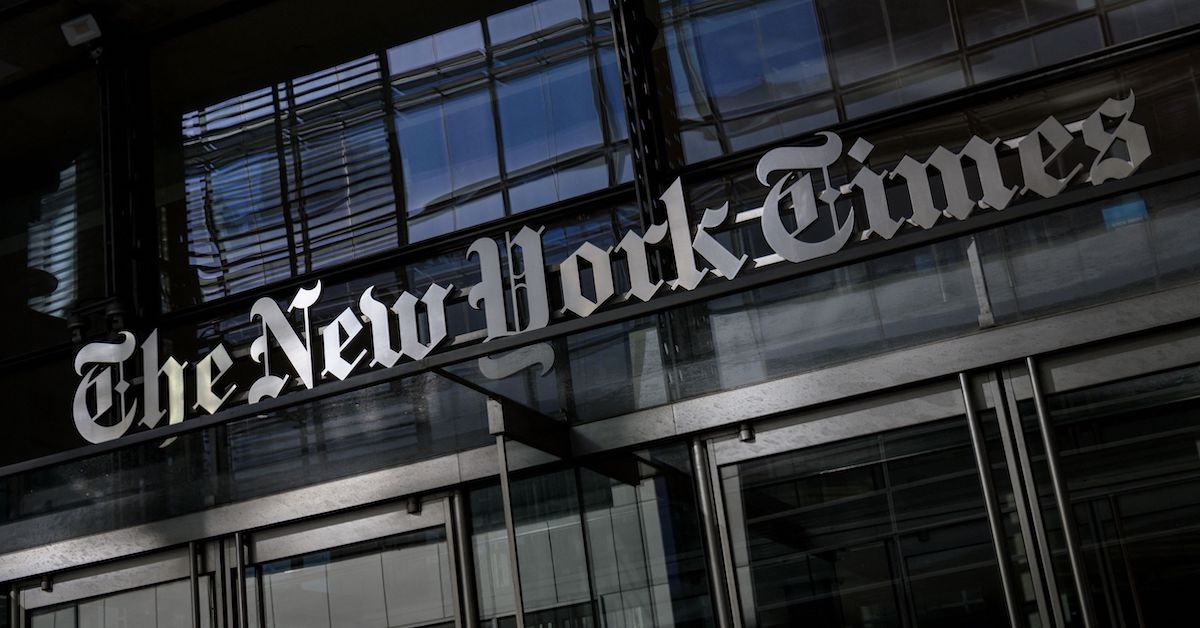
The New York Times issued a correction this week. Additionally, yes, the sun also crested the horizon, but this quotidian event was notable as it signified another rote practice by the Paper of Record.
Get this: They unnecessarily trashed Israel.
There is a very real chance that announcement elicits a blank stare, or a shrug. The fact that this news could be regarded as a non-event or boring news is the very issue, and the significant problem.
What happened this time concerns a report from Israel about a motion picture that recently debuted at the Venice Film Festival. The film NAZA is a documentary about Israel’s military activities in Gaza, with recorded admissions by anonymous soldiers and intelligence officials about some of the actions taken in that region. This has roiled the authorities in the IDF as well as the Office of the Culture Minister.
While this content is especially charged, what has The New York Times back on its heels was a passage from its correspondent, Isabel Kirschner. That segment was not about the basis of the film, but landed as more of a personal position taken on the activity that sparked the entire conflict.
The New York Times issued this Editor’s Note:
Because of an editing error, an earlier version of this article included a statement that was intended to convey Israelis’ perception of the government’s military response to the Oct. 7 terror attack in relation to the attacks, but inadvertently suggested that Israelis’ experience as terror victims was a matter of perception. It has been removed from the article.
This was the passage that Kirschner included that needed to be addressed: “But Israelis still largely view themselves as the victims of Oct. 7.” There is quite a lot that gets revealed in the dozen words comprising that phrase.
The mere suggestion that there is a debatable element to the October 7 attacks being waged against Israel is rather astounding. There is no other way to perceive the events on that fateful date. There were not multiple targets that can be jostling for victimhood status.
Hamas sent a swarm of insurgents into Israel, and they killed over 1,200 and kidnapped well over 200 hostages. You might disagree with the actions over the ensuing years in the Israel-Hamas war, but October 7 is a clear and direct storyline. The victim status on that date is not up for conjecture.
But just throwing out this passage alone indicates a fractured approach to the whole issue of Israel’s conflict. If you, as a journalist, see a need to stir up the marl and cloud the waters concerning the attacks that day, it indicates a mindset that is biased.
But this also applies to The New York Times as a whole. The paper is indicating that this line from Kirschner had to be struck, but that was the case only after receiving blowback after publication. They try to sell this as an “editing error,” but it is more than that.
How did this get by the editors initially? Your reporter is actually suggesting that Israel is “claiming” to be the victim on October 7, as if there is deliberation taking place. It is a farcical proposal, and yet when editors looked that over, they nodded along and approved the piece for publication.
That indicates more than a reporter acting with a lone slanted view. The editorial team saw no issue with that statement, and it was only when those outside of the paper showed the fractured thinking on display that they went ahead with altering things.
This has been the displayed practice at The New York Times since that October day when Israeli citizens were – yes – the victims of an attack. Frequently, the paper has had to issue corrections of this nature, and those always seem to trend in a one-way manner.
This is also the outlet that has platformed Nicholas Kristof’s article pushing the wild claim that Israeli defense forces had routinely used “rape dogs” on detained Palestinians. Kristof’s accusations were rooted in numerous reports from international agencies that were based on nothing more than anecdotal claims made by Palestinians, primarily in pro-Hamas media. No actual evidence of this has ever emerged.
You get the sense of how errant Kristof’s journalism had been that no other news outlet picked up or expanded on his reporting. It has since led to nothing further being established. And yet, the paper stood by Kristof’s wild libel with multiple statements.
Try to conjure up a time when the Times had to issue a correction of this type regarding a negative report on the Palestinians. There may have been adjustments made to factual details or data points, but when has an editorial correction been issued due to a negative portrayal of Gaza that was in error?
It has long been the case that The New York Times has been willing to move forward with claims and perceptions casting Israel in a harsh light, only to have to pull back when the accurate elements arise. Assuming Israel is in the wrong appears to be in The New York Times Style Guide.
This is an opinion piece. The views expressed in this article are those of just the author.
New: The Mediaite One-Sheet "Newsletter of Newsletters"
Your daily summary and analysis of what the many, many media newsletters are saying and reporting. Subscribe now!

Comments
↓ Scroll down for comments ↓