Fair Use: Okay, Let’s Talk About It

 It is a pet peeve of mine when people throw around arguments citing “Fair Use” and yet fail to actually explain what a fair use argument actually is. So it was mostly for that reason that I was annoyed by Jeff Bercovici’s misleading, poorly-reasoned post yesterday on AOL’s Daily Finance. So let’s start over again and talk about what “Fair Use” – as defined by U.S. Code § 107, which actually governs the matter.
Put simply, the doctrine of “Fair Use” applies to content republished from copyrightable material and how much of that content is, literally, fair to use. There is no bright-line rule — fair use is about an argument you make, not a rule you break — but rather four specific questions creating a “balancing” test — that is, balancing the personal, proprietary interests of the copyright holder (designed to incentivize creativity and innovation) with the public-good interests of the public in having that information more widely disseminated (designed to further the aggregate societal good). Here are those questions, verbatim from the U.S. Code, plus the preamble, emphasis added:
Notwithstanding the provisions of sections 106 and 106A, the fair use of a copyrighted work, including such use by reproduction in copies or phonorecords or by any other means specified by that section, for purposes such as criticism, comment, news reporting, teaching (including multiple copies for classroom use), scholarship, or research, is not an infringement of copyright. In determining whether the use made of a work in any particular case is a fair use the factors to be considered shall include—
(1) the purpose and character of the use, including whether such use is of a commercial nature or is for nonprofit educational purposes;
(2) the nature of the copyrighted work;
(3) the amount and substantiality of the portion used in relation to the copyrighted work as a whole; and
(4) the effect of the use upon the potential market for or value of the copyrighted work.
Let’s take each of these in order.
(1) The Purpose and Character of the Use
This is where “news value” comes in, as per the bolded section above. Even before we apply that test, we must note how the notions of “news value” has changed in the Internet era. What makes something “news”? We all know by now that the posts that generate the most clicks are not necessarily the ones that are considered “newsworthy” in the classic sense, which is why Mel Gibson’s crazy racist rants last month got far more play than the Washington Post’s expose on the CIA. This sub-segment of the debate could spawn it’s own sub-series of posts but for the sake of argument let’s concede that the Web assumes a broad definition of “newsworthy.” We all know about Jenny the Dry Erase Board Girl for a reason.
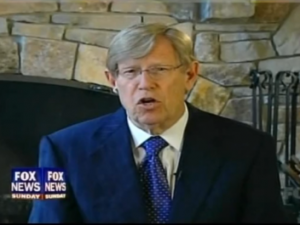 Bercovici cites Lloyd Jassin, a copyright and intellectual property lawyer, who said, “It’s unclear if they are in the news business or business of critiquing the news business.” Well, it’s both. (Is the NYT a news business or a Dowd-screed business or a Wedding announcements business? You get my drift.) Jassin is quite right that the position is strengthened the more that is added to the copyrighted content used — that’s true across copyright law (see the University of Minnesota: “The more transformative a particular use is the less significant the other factors will be as they weigh against fair use”). Mediaite is a for-profit site (read: commercial use) but it’s also a for-public-good site — that is to say, about getting information out there for the purpose of debate and discussion, commentary and education. For example, last week when I wrote about Ted Olson‘s amazing explanation of the gay marriage ruling on Fox News Sunday, I included the full clip of the segment because I thought it was so important and illuminating. I also wrote extensively about it, but even if it had just been “This clip is amazing. Watch it and be smarter,” that would still provide grounds for a fair use argument, though obviously a detailed explanation of why is better. At the most basic, the news-aggregation part of the site is meant to aggregate news, and does so as part of a long-standing tradition in media. As New York Times Co.’s general counsel, Ken Richieri, commented to UCLA professor Doug Lichtman last year in a similarly-themed discussion, “there have been many years, when for years I’d get up in the morning, I’d turn on the radio, and you hear, The New York Times is reporting today that, blank….that was a mainstay of television and radio reporting of news.” News, information-sharing, attribution. And speaking of attribution, I read that quote in an article on Nieman Lab by Zach Seward.
The flip side: While the “this is news” argument could conceivably be made about anything that ever gets traffic, really, there’s “cool” and “uncool” as well (not legal terms). While doing a search in my Gmail for “fair use,” I came upon this highly-amusing sentence: “I think we could cross the ‘Fair use’ line with ‘Laser Cats.’” The context? Posting newsworthy SNL clips after air, as they are blowing up Twitter but before they air on the West Coast. For an SNL nerd like me, the return of “Laser Cats” may seem as newsworthy than a politically-skewering cold open. But the “news value” argument is considerably weaker, especially when it hasn’t aired in other markets. More on “markets” in #4.
 (2) The Nature of the Copyrighted Work
Is it a factual report or a creative, artistic presentation? Copyright protects expression, not facts, which is why you can say “this happened” – attribution is for credibility (i.e. how you know that) and also for credit (i.e. this wasn’t my work) (related but separate from fair use is the doctrine of “hot news” – that news orgs should have a window of exclusivity in which to protect their scoops). Frankly, the web blurs that all the time — “Look at what happened in this awesome clip!” becomes “look at this awesome clip!” be it Lady Gaga at the Grammys or Glenn Beck’s latest sniffle-fest or that awesome moment from 30 Rock. For video clips, you can always assume that there is a creative component since you are literally dealing with production values. But is it a straight headline read or is it OperaMan? This hearkens back to “Laser Cats” above. That one’s sorta hard to find a news peg for. Onward.
(3) The Amount/Proportion of the Copyrighted Work Used
Here’s the thing about clips: They are usually short, and usually represent a portion of the larger work. (That’s literally what the word “clip” is meant to denote.) So, generally, if you use a small piece of the larger work, you can make a stronger argument for fair use. Again, like all these rules, they are circumstance-dependent – maybe you have to use a longer clip to get across the full power of the point you wish to make. (See above re: me and Ted Olson.) Conversely, even a small amount could be seen as infringing if it’s deemed to encapsualate the “heart of the work” (that’s “substantiality” mentioned above).
 In the case of clips from TV programs and events, what constitutes “the whole?” The whole hour-long show, or the whole 7-minute segment? In the case of SNL, you’ve got a program divided into smaller segments; so, too, with a Hugh Hefner interview on CNN’s “Reliable Sources,” as cited by Bercovici. The language of the statute refers to “the copyrighted work as a whole” which creates a rebuttable presumption that individual news segments for a program are not individually-copyrightable works (though certainly that case could be made). Per the Publishing Law Center: “One criterion that courts frequently evaluate is to make certain that the user of the copyrighted material has taken no more than was necessary to achieve the purpose for which the user copied the materials.” Was the purpose to provide news? To provide context? Oh look, we’re back to question 1.
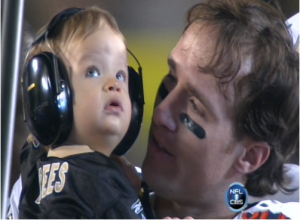
Researching this post has been fun for me because I’ve gotten to go back to posts I enjoyed – like this one: “Pink, Wet & Naked High Above The Grammy Stage.” Is it news that Pink performed seminaked in a sling hanging over the Grammy audience as water was poured over her? For fans of Pink/music/seminaked performance art, yes. Was it the only news to come out of Grammy night? No way. Here’s another example: We posted the full Superbowl Half-Time Show this year, featuring The Who. That’s the whole, at least of the half-time show (other news moments from that night, remember: Letterman/Leno/Oprah; Tim Tebow & his mom; the Saints winning; Peyton Manning sucking an egg). Was that necessary? Here would be my case: Yes, because I did all sorts of analysis based on the full performance (“How do you think he does it? I don’t know!”), yes because it was news, yes because no sane person would come to my coverage at Mediaite if they actually wanted to watch the Superbowl. Which brings us to the all-important #4.
 (4) The Effect of the Use on the Market for the Work
This, in my view, is the most critical element of fair use as applied to the Internet. Because the Internet is a totally different platform, but paradoxically as more and more classic TV outlets become multi-platform, more and more provide embeddable code and send out their content to be hosted across any and every nook and cranny of the internet, just to be seen. Remember back in the day, when skittish media companies would yank clips off YouTube, whether or not they were augmenting the fan base? (NBC, I’m lookin’ at you.) Now their publicists send you emails with links, transcripts and embed codes. On NBC, MSNBC and Hulu, you can size and cut clips to whatever length you want. Do online clips affect the TV market? I’m guessing not really. Do online clips affect the online TV market? That’s a way more solid argument – and why, as Colby Hall pointed out in his post yesterday, Mediaite embeds whatever network player is available, including any pre-roll ads they may have – or, if the clip isn’t initially available, swaps in the network clip when it gets online.
This prong of the fair use test is about deleterious effects on the market for the original work – but there’s a flip side. Simply put, Internet clip culture” has actually created an entirely new market. The next-day life of SNL clips has been a huge boon to that show, which now sees almost all its sketches – plus some web extras – available and embeddable by early a.m. Sunday. And per David Carr in January, about the Late Night Leno/Conan battle:
It’s worth considering that some of the young ones on Team Conan don’t even own televisions. “Gawker tv’s most essential service: letting me keep up with the late night wars even tho i don’t have a tv,” said @mattbuchanan on Twitter.
Getting in on that market is a reason that many of these sites – CNN, Fox, NBC, MSNBC – regularly encourage sites like Mediaite (and Gawker TV, and HuffPo, and yes AOL) to pick up its clips. Which brings us to…
PERMISSION!
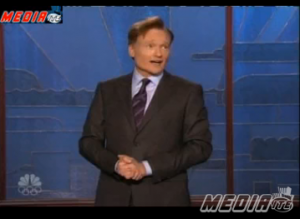 All of the above applies in the case of a disputed use. They’re the reasons why use which “does not appear to be authorized” is nonetheless permissible and, presumably, of value under the law. Which is why those factors are always considered – news value, providing editorial context and framing, using only part of the whole, and being mindful of the market for the work – when we post clips on Mediaite. (Late night is actually a great example, because of how crazy-newsworthy the Conan/Leno coverage was. Throw in Letterman and you remember how much news fodder clips from late-night shows provided last year.)
Permission vitiates the entire argument above, renders the whole thing moot – because if the use is permitted, then there’s no reason to quibble in the first place. That’s why I could do a post right now inviting you all to watch Short Circuit. (“Number 5 is alive!”) Yes, that’s right, the entire movie, right here. Why else would Hulu provide me with the embed code, plus ways to share to Twitter, Facebook, Reddit, Delicious, Digg, StumbleUpon and even MySpace? Yes – MySpace.
But – the converse is not true: the lack of permission does not automatically knock out fair use. So, for example, just because Comedy Central declined to provide a clip of Donald Trump at the roast of Joan Rivers (and I did ask) doesn’t mean that I shouldn’t post it anyway (The Donald is always news). Sometimes, there is a good and compelling reason not to use the version provided by the networks (and a good and compelling reason to post when they don’t want anything posted at all). For those times, that’s when you think about U.S. Code § 107, and what it’s designed to protect — on both sides.
The media world is so different than even just a few years ago, when YouTube exploded on the scene with the anyone-can-embed-it video that suddenly changed everything. But what’s sort of amazing, even amidst this shift to “clip culture” – is how well-built and adaptable the Fair Use provision has shown itself to be, applying rationally and with relevance to an evolving mediasphere, and its evolving models. Perhaps one of these days, Bercovici will catch up.
Related:
Lloyd Jassin: A Practical Guide to Fair Use [Copylaw]
Understanding the Four Factors of Fair Use [University of Minnesota Libraries]
What Would Fair Use Look Like in an Online Era? [JSchool]
CBS Removes Letterman Sex/Extortion Segment From YouTube…Almost [Mediaite]
Except for Jeff Bercovici’s prior Twitter image, which for some reason I had on my hard drive, all images are from my ‘Screengrabs’ file, from clips I worked on for posts. I tried to find a way to use this one. Next time.
This is an opinion piece. The views expressed in this article are those of just the author.
New: The Mediaite One-Sheet "Newsletter of Newsletters"
Your daily summary and analysis of what the many, many media newsletters are saying and reporting. Subscribe now!





Comments
↓ Scroll down for comments ↓