»» Columnists

A New York Times First? Wikipedia Cited as a News Source

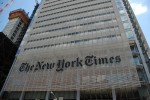
new-york-times-buildingThe New York Times Magazine this weekend features a profile about three generations of the comedic Elliott family. But one aspect of the writing of the story seems a bit funny:

Chris’s father is Bob Elliott, one half of the legendary radio comedy team Bob and Ray. Bob’s wife’s first husband was Raymond Knight, a radio comedian of the 1930s who was born in 1899, which means that Abby Elliott is heir to, as Wikipedia points out, “a comedic lineage that spans across three centuries.”

Before you rail on the Times for hypocrisy or a loosening of its editorial standards, take a look at the chronology that got us here. This isn’t actually the first time the Times has cited Wikipedia as a source. Paul Krugman referred to the site as a resource for a 2006 column. Yet no news story, to my knowledge, has included Wikipedia in its reporting.

That doesn’t mean the writing wasn’t on the wall. A 2007 Times story documents how often judges turn to the “collaborative online encyclopedia” as a source in their decisions:

“Wikipedia is a terrific resource,” said Judge Richard A. Posner of the United States Court of Appeals for the Seventh Circuit, in Chicago. “Partly because it so convenient, it often has been updated recently and is very accurate.” But, he added: “It wouldn’t be right to use it in a critical issue. If the safety of a product is at issue, you wouldn’t look it up in Wikipedia.”

That was clearly not done here — indeed, the fact cited is just that, a fact, independently verifiable (and presumably independently verified). But beyond that, per Posner, it’s not surprising to discover that Times reporters might rely on Wikipedia for research for their articles. In fact, if a reporter were to discount the site in the name of journalistic integrity he or she could face scrutiny for overlooking potential information or leads. For an article about the Elliott family of comedians, writer Ed Zuckerman couldn’t possibly have imagined a better Web site to learn the basics about his subjects than Wikipedia.

Here’s the difficulty that arises, though: Often the site will provide the most succinct and digestible way to describe the topic at hand. That seems to be the case for Zuckerman when he cited something as innocent as “a comedic lineage that spans across three centuries.” Is an attempt to put that sentiment in alternative terms worth the risk of sounding lengthy, clunky or confusing?

Rather than just borrow Wikipedia’s language – or try to package the message some other way – Zuckerman makes the right choice in citing it to the page where he found it. Unless there’s a NYT policy against this specific practice (which there doesn’t seem to be), Zuckerman acted ethically and responsibly. If there needs to be a larger and longer discussion about whether the Times should permit its writers to use Wikipedia at all, that has no bearing on how Zuckerman covered this particular piece.

What’s complicated about Zuckerman’s decision, however, is the fact that you can track down the user who made this change on Raymond Knight’s page. A click of the “history” button reveals his user name as “Woohookitty” and the date (January 2, 2009) he edited it. His profile page says that he’s the eighth-best Wikipedia user in the system, according to number of edits to the overall site. He also appears to take this work seriously, saying:

“My main goal on Wikipedia is to make it as clean and concise as possible. I’ve created a few pages, but for the most part, I do a lot of copyediting and cleanup work.”

While there’s no other identity attached to Woohookitty’s profile, this should be enough to warrant recognition for his contribution to Zuckerman’s research. He sounds as credible as you could wish under the circumstances. If citing Wikipedia as a source becomes standard procedure, we should go to the effort of crediting those who wrote the material being quoted. Reliability aside, attributing something to Wikipedia is akin to citing a forum, message board, or other online discussion. There’s a person behind the post, edit, or suggestion who deserves the pat on the back, not the site that made it possible.

When the New York Times credits “Woohookitty” — well, that’s when you’ll know things have really changed.

EmailTwitterFacebookDiggRedditStumble UponYahoo BuzzLinkedInTumblrDelicious


18 comments

  • m m says:

    It’s bound to happen. It’s such an incredibly focal point for information from all types of people. Journalists are human beings too. I don’t think quoting Wikipedia is necessarily a bad thing, but Wikipedia serves itself best when you consider it a springboard, not an encyclopedia.

  • ImNotBlue ImNotBlue says:

    LAAAAAAAAAAAAAAAAAZY

  • Vidiot Vidiot says:

    not as lazy as replying with an all-caps one-word response to a pretty nuanced post, but then again look who we’re dealing with here.

    The headline here is a bit misleading; as Groner points out, Zuckerman quoted Wikipedia’s (or Woohookitty’s, to be more accurate) phrasing, assigning full credit. Zuckerman didn’t cite Wikipedia as a source for the fact. As the post says, Wikipedia had it more concisely than you could make it by paraphrasing it or writing around it, so why not avoid clunkiness and quote from the Wikipedia entry?

    I do agree, though, that the NYT should’ve quoted the actual author, something like “…that Abby Elliott is heir to, as Wikipedia editor Woohookitty points out, ‘a comedic lineage that spans across three centuries.’” I hate it when I see things on television credited to YouTube or Flickr, as users explicitly keep their rights when they upload content. Google/YouTube and Yahoo!/Flickr don’t have the copyright or other rights, and for news organizations to credit them when they’re simply the delivery channel is shoddy and unfair. (I have thousands of pictures on Flickr, and some have been used by news organizations with and without permission. If someone uses an all-rights-reserved photo or if they use a licensed image without providing proper credit, either scenario is an infringement on my legal rights.)

  • Danny Groner Danny Groner says:

    Vidiot,

    Flickr is a great site with which to compare. If it’s your work, it should remain your work through and through. Even if you offer it up in the “Creative Commons” world of Wikipedia.

  • Vidiot Vidiot says:

    Thanks. I see YouTube video used on TV news All. The. Time. and it’s very rare that it’s credited with anything other than “Courtesy YouTube” or “From YouTube”, instead of “From XYZVideoGuy/YouTube” or something similar. (And don’t get me started on how many news organizations trample all over fair use doctrine when they grab whatever photos and video they can find and slap it all over their air.)

    And the Creative Commons was what I was thinking of. If someone uses a Creative Commons-licensed picture of mine, they are obligated (under the terms of the license that I’ve selected) to provide me with attribution. And “From Flickr” just doesn’t cut it, nor does running it without attribution. And as the license itself notes, failure to comply with all the restrictions of the license means that the license is revoked in that circumstance.

  • ImNotBlue ImNotBlue says:

    Vidiot says:
    November 30, 2009 at 1:44 pm

    Okay, I’ll clear up my post… apparently because I’m on par with the New York Times… *rolls eyes*

    Here we go:

    It is lazy journalism that thinks it can cite something like “Wikipedia,” instead of doing original research, or referencing the actual quote cited by Wikipedia. A lazy reporter, taking the easy way out. Perhaps next time, they’ll reference “The World Book,” or ” Encyclopedia Britannica.” Sure, that stuff wouldn’t be allowed in a middle school book report… but apparently it’s okay in the NYTimes.

    How’s that, Vidiot. I thought taking the lazy way out and writing, “LAAAAAAAAAAAAAAAAAZY” made the same point… in an appropriately lazy way… but perhaps you missed that. But then again, “look who we’re dealing with here,” so I shouldn’t be surprised.

  • Vidiot Vidiot says:

    It is lazy journalism that thinks it can cite something like “Wikipedia,” instead of doing original research, or referencing the actual quote cited by Wikipedia.

    But that’s not what Zuckerman did. Zuckerman quoted from the Wikipedia entry directly, using words written and arranged by Woohookitty. Zuckerman didn’t grab a quote that Wikipedia or its editors grabbed from somewhere else. Zuckerman probably used the Wikipedia article as research (which isn’t a sin — lots of reputable organizations use Wikipedia, but reputable ones don’t use it as a sole source. They use it as a jumping-off point and a quick way to find some more solid sourcing), and liked the way Woohookitty phrased the line, and decided it wasn’t worth paraphrasing. He gave due credit (though as I noted, I agree with Groner that he should have noted the Wikipedia editor individually rather than collectively crediting Wikipedia), and there’s no foul.

    See, the lazy thing would have been to misread the original article and not go to the Wikipedia page and the NYT article to see what’s there. That’s what you did, apparently. Research…what a crazy concept!

  • CRZ CRZ says:

    You guys get paid by the word, right? ;-)

  • Sunnyr Sunnyr says:

    I thought the NY Slimes had canned all their bogus “journalists.” The Hacks are Back……….I will continue to ignore this irrelevant fish wrapper as a source of “news.”

  • ImNotBlue ImNotBlue says:

    Vidiot says:
    November 30, 2009 at 2:35 pm

    Zuckerman quoted from the Wikipedia entry directly,

    THE END. He sourced Wiki… it doesn’t matter who Wiki sourced for the line, only that he provided Wiki as the source! If he referenced the place that Wiki referenced, fine… there’d be less controversy. But, he didn’t… he referenced Wiki!

    A lot of what you say “happened,” you have no idea, and are simply making up to rationalize why using Wiki as a PRIMARY SOURCE is acceptable. It’s not. It’s lazy journalism… why are you attempting to rationalize it?

  • Vidiot Vidiot says:

    Look, I don’t know how to say this so you’ll understand, so I’m going to type this very slowly and clearly:

    Zuckerman quoted from the Wikipedia entry directly.

    it doesn’t matter who Wiki sourced for the line, only that he provided Wiki as the source! If he referenced the place that Wiki referenced, fine… there’d be less controversy.

    You’re not making any sense here. Did you READ the Wikipedia entry? The line quoted in the NYT is not something that Wikipedia quotes from somewhere else. That’s why your statement of “it doesn’t matter who Wiki sourced for the line” doesn’t apply, because Wikipedia editor Woohookitty wrote it. You talk about “the actual quote cited by Wikipedia”, but that’s wrong, because Woohookitty wrote what Zuckerman quoted. Zuckerman used Woohookitty’s words, properly quoted and attributed, to describe what is a checkable (and presumably checked) fact. There is no way that Zuckerman could “reference the place that Wiki referenced”, because Wiki didn’t reference anything….Woohookitty, writing on Wikipedia, neatly summed up the Knight/Elliott comic dynasty, and Zuckerman quoted from that summation.

    The words in question originated with Woohookitty, and not with someone that Woohookitty was quoting.

    I didn’t say I knew what Zuckerman did, but I did provide my conjecture of what “probably” happened.

    And please point out where I say that it’s acceptable to use Wikipedia as a primary source. I don’t think that’s the case. As I said, Wikipedia is very useful indeed, but reputable journalists don’t use it as a sole source. Rather, its utility lies in providing background information and pointing the journalist to other sources very quickly.

    You may wish to work on your reading-comprehension skills, especially before you go off half-cocked like this.

  • ImNotBlue ImNotBlue says:

    Vidiot says:
    November 30, 2009 at 4:07 pm

    A few questions:

    1) How do you know that Woohookitty wrote it? Looking at the page, I don’t see any author credits… so how do you know it was this person?

    Hmm… I guess it was just the one.

    Anyway, what does it matter? Quoting Wikipedia is not a responsible journalistic way to do business! It is no different than quoting the editors of “The World Book” or “Encyclopedia Britannica” or another encyclopedia! It’s lazy!

    What I don’t understand (other than how you know who wrote it), is why you care this much… but to each his/her own, I suppose.

    And please point out where I say that it’s acceptable to use Wikipedia as a primary source.

    If you approve of quoting Wiki, you apparently approve of it being a primary source. Simple as that.

  • Danny Groner Danny Groner says:

    Blue,

    I tried to explain this in the piece but i guess you missed it. If you hit “history” at the top of the Wiki page, it gives you a rundown of all the edits made to that page. You can compare the current edition to any former version of the page.

    The other thing that makes this difficult is that at any time that page could be edited to remove the quoted section. With a quote from a different source – while possible – it’s much less likely to disappear. Zuckerman trusted that it would remain as it was between when he last checked and when the article was published. It could very well have been removed since, however. though, based on Woohookitty’s ranking, the writer would probably put it back the way it was immediately afterward. At a time when Zuckerman decided to go this way, he wound up with the right enforcer behind him.

  • Vidiot Vidiot says:

    How do you know that Woohookitty wrote it?

    From the post we’re ostensibly discussing, above: “What’s complicated about Zuckerman’s decision, however, is the fact that you can track down the user who made this change on Raymond Knight’s page. A click of the “history” button reveals his user name as “Woohookitty” and the date (January 2, 2009) he edited it. . .While there’s no other identity attached to Woohookitty’s profile, this should be enough to warrant recognition for his contribution to Zuckerman’s research.”

    Did you read that?

    Anyway, what does it matter? Quoting Wikipedia is not a responsible journalistic way to do business!

    Really? I confess that this responsibly working journalist doesn’t see the harm in it. Now, before you start cherry-picking what I say and taking things out of context, let me reiterate what I’ve said numerous times above, but what you’ve apparently failed to apprehend: Zuckerman quoted a line that contained some facts, all of which were independently verifiable. I’m assuming that those facts were all verified by the NYT. If Woohookitty phrased that in a tidy way that would have been clunkier for Zuckerman to paraphrase, I see no problems in his quoting his/her work as long as proper attribution was given. (Which it (partly) was.)

    What I don’t understand. . .is why you care this much.

    Ach, I don’t, really — it’s just that you don’t seem to understand what I’m saying, or seem to be able to read a blog post, a newspaper article, or a Wikipedia entry without making misstatements about their content. So I feel forced to correct them. At least you seem to have now quietly backed off from your prior claim that Wikipedia was quoting someone else, after I’ve rebutted that. Twice.

    And silly me, but I thought it was important for journalists to care about getting things accurate. So when you’re pushing an inaccurate line, I felt the need to note what the aforementioned blog post, newspaper article, and Wikipedia entry actually said.

    If you approve of quoting Wiki, you apparently approve of it being a primary source. Simple as that.

    But, in fact, it’s not that simple. If someone quotes Wikipedia’s words that contain a verifiable fact (especially one of this sort: a fact that’s also an extrapolation from looking at the birthdates and bloodlines of the Knight/Elliott clan), that’s an endorsement of Wikipedia’s wording. That’s very different from relying on the research contained in a Wikipedia article as one’s only source. (I was always taught that “primary source” has a separate, distinct meaning, which is why I’m shying away from that phrasing here.) One of the greatest advantages of Wikipedia as an encyclopedia, aside from its comprehensiveness and timeliness, is that editors are asked to cite their sources.

    I have nowhere suggested that Wikipedia be used as a sole or primary source, and have in fact argued against just that. Twice. In this same thread. See why I question your reading skills? You really should take up thatching, since you seem to like making straw men.

  • ImNotBlue ImNotBlue says:

    Danny Groner says:
    November 30, 2009 at 10:54 pm

    Interesting… I did miss that in the original story.

    HOWEVER… I’m afraid (unless I’m reading this wrong)… Woohookitty is NOT responsible for the edit.

    In fact, Woohookitty never wrote that line or anything close to it.

    Woohookitty’s paragraph from 08:57, 2 January 2009:
    During [[World War II]] Knight was the national production manager for [[American Broadcasting Company|ABC]]. He was a contributor to ”[[Woman's Day]]” and other magazines. In the early 1950s, he wrote for [[Bob Elliott (comedian)|Bob Elliott]] and [[Ray Goulding]]’s ”[[Bob and Ray]]” show. In 1953, he died on his birthday, February 12. Bob Elliott later married Knight’s widow.

    -VERSUS-

    Pepso2’s paragraph from 11:33, 2 January 2009:
    During [[World War II]] Knight was the national production manager for [[American Broadcasting Company|ABC]]. He was a contributor to ”[[Woman's Day]]” and other magazines. In the early 1950s, he wrote for [[Bob Elliott (comedian)|Bob Elliott]] and [[Ray Goulding]]’s ”[[Bob and Ray]]” show. In 1953, he died on his birthday, February 12. In 1954, Bob Elliott married Knight’s widow, Lee, creating a comedic lineage that spans four generations, from Raymond Knight and Bob Elliott to [[Chris Elliott]] and his daughter, [[Abby Elliott]].

    However, this wasn’t the final revision of this paragraph… Pepso2 changed it to its current version about 2 minutes later:

    Pepso2’s paragraph from 11:35, 2 January 2009:
    During [[World War II]] Knight was the national production manager for [[American Broadcasting Company|ABC]]. He was a contributor to ”[[Woman's Day]]” and other magazines. In the early 1950s, he wrote for [[Bob Elliott (comedian)|Bob Elliott]] and [[Ray Goulding]]’s ”[[Bob and Ray]]” show. In 1953, he died on his birthday, February 12. In 1954, Bob Elliott married Knight’s widow, Lee, creating a comedic lineage that spans across three centuries and four generations, from Raymond Knight and Bob Elliott to [[Chris Elliott]] and his daughter, [[Abby Elliott]].

    Here’s the comparison between the final current edit, and Woohookitty’s edit before then:
    http://en.wikipedia.org/w/index.php?title=Raymond_Knight_%28radio%29&action=historysubmit&diff=261437062&oldid=261421896

    though, based on Woohookitty’s ranking, the writer would probably put it back the way it was immediately afterward.

    Well, I checked that too… Pepso2 apparently has no Wiki page, and his ranking is #2588.

    Perhaps all this confusion is why it would have been better to quote the ACTUAL source, not “Wikipedia,” or not to quote anything from “Wikipedia” at all. Especially in this case, where it was simply the phraseology… not a fact or bit of evidence, just the wording. In retrospect, it seems completely unnecessary.

    ______

    Vidiot says:
    November 30, 2009 at 11:20 pm

    Two things, real quick:

    1) Please read the above stuff… I’m sure you’ll be interested.
    2) This is all foolish. He didn’t reference any facts on Wiki… he just wanted to borrow their wording. But why? Why even bother referencing Wiki, or why not shift the words around? The fact that he took something so innocuous out of Wiki says to me, that he use Wiki for a good portion of his research. There was no reason to take this line from them… no reason at all. It was simply laziness. He could have wrote his own version of that line… it would have been easy enough. But he didn’t… and that’s the point.

  • Vidiot Vidiot says:

    That is interesting. I’m not a Wikipedian, and I’m not sure I’m reading that correctly, but I agree that it does look like Pepso2 is responsible for the phrase in question.

    And yes, Zuckerman could’ve written differently, but didn’t. But I still fail to see the huge sin in quoting a nice turn of phrase from someone and passing credit along.

  • J Baustian J Baustian says:

    Some folks say you should never trust the accuracy of Wikipedia. Other folks say the same thing about the NY Times. I tend to side with the first group.

  • kraut kraut says:

    Better question: Why didn’t Mr. “clean and concise” leave out the word “across”? The word “spans” already includes that notion within it. The original phrasing contains a redundancy. The Times writer should not have reproduced the statement, on grammatical/stylistic grounds.

  • If you would like to comment, please login or register:

    » Login » Register

    » Or connect with your Facebook account:

    A Collection of Sports Illustrated March Madness Covers

    On Sunday the NCAA announced the 65 teams that will play for college basketball's championship, affording some teams the opportunity of a lifetime while bitterly disappointing others. In recent years, to celebrate the occasion of one of America's most beloved sporting events, Sports Illustrated has produced annual March-Madness-themed covers that cram in pictures of at least one person from every team in the tournament. See more after the jump. (At left: March 2008, featuring Kansas' Brandon Rush).

    Newsweek’s Daily Obsession: Health Reform’s Final Push

    video

    Hey have you heard? Lawmakers are discussing different ways to reform the current health care system. Turns out, the mainstream media has been spending a little time covering it.


    © 2010 Mediaite, LLC | About Us | Advertise | Newsletter | Privacy | User Agreement | Disclaimer | Power Grid FAQ | Contact | Archives | Dan Abrams, Founder | Hosting by Datagram | RSS