
Why Didn’t The Media Report the Names of the Chiefs Parade Shooting Suspects?

AP Photo/Nick Ingram
Who has time to Google when there are conspiracy theories and racial animus to spread?
The day after the deadly shooting at the Kansas City Chiefs’ Super Bowl victory parade, police announced they had detained two juveniles and charged them with multiple offenses related to the use of guns and resisting arrest. The fact that the two juvenile suspects’ identities have been kept private has fueled a lot of rampant online speculation — much of it racially-based.
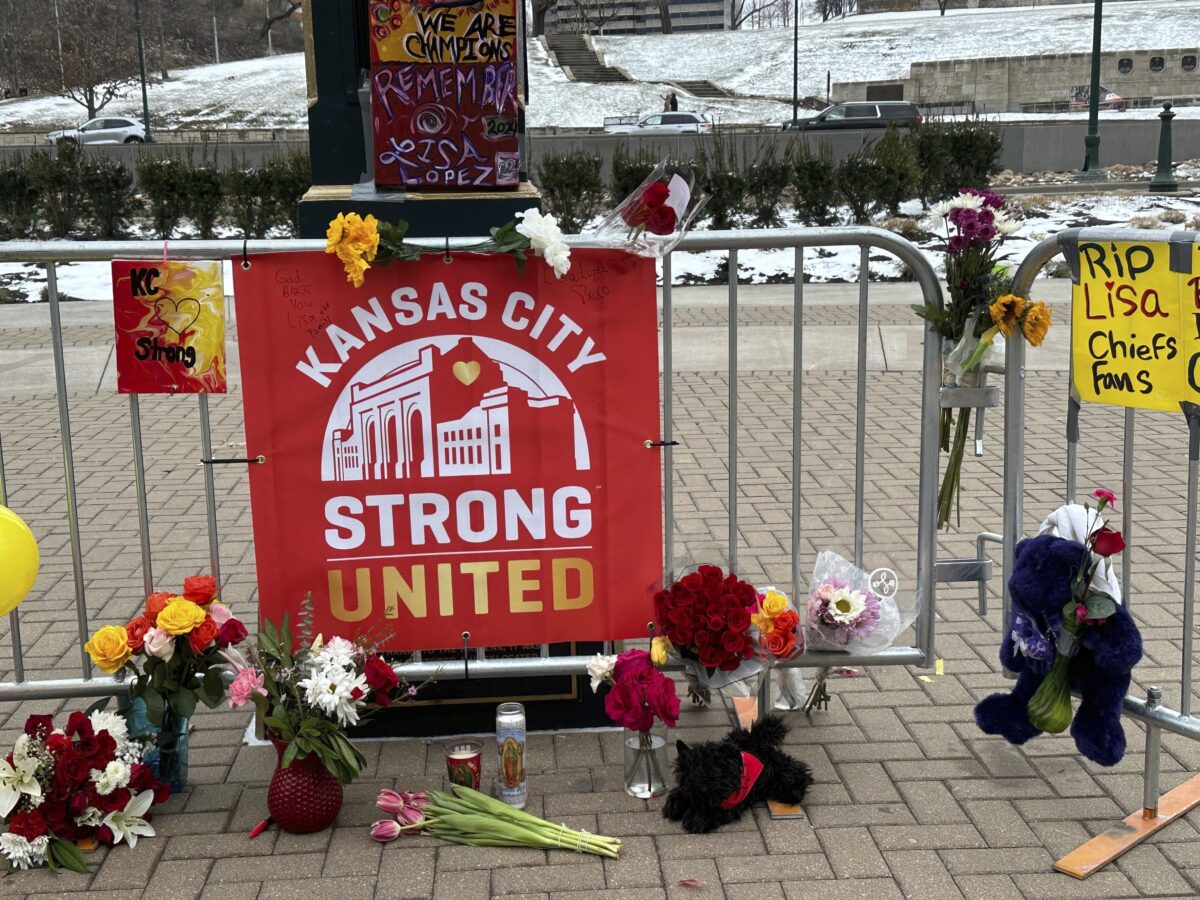
The Feb. 14 shooting killed one woman, Lisa Lopez-Galvan, and wounded at least 22, at least half of whom were children. The shooting occurred near the Union Station parking garage as the parade was concluding and fans were in the process of leaving the area. Authorities have said that they believed the shooting was sparked by a dispute between several individuals and was not related to terrorism or violent extremism.
Tuesday afternoon, prosecutors announced that two adults were charged with multiple crimes for their roles in the shooting, according to The New York Times. The names of these two men, Dominic Miller and Lyndell Mays, were released. According to authorities, the two men were arguing as the parade ended and the conflict “quickly escalated when both men pulled out guns and began firing at each other,” reported the Times. Local news outlets reported additional details, noting that both men faced identical charges (second-degree murder, two counts of armed criminal action, and unlawful use of a weapon) and were being held on $1 million bond each.
Miller and Mays were wounded in the ensuing gunfire and remain hospitalized for now. Prosecutors have said that additional arrests, as well as additional charges for the various suspects, are possible as the investigation continues.
Back to the two juvenile suspects, last week Ann Coulter was among those who speculated about the reason their identities were being kept private in an appearance on Real Time with Bill Maher.
In response to host Bill Maher commenting, “we don’t know who did this shooting, by the way,” Coulter replied, “We have some idea.”
“What?” said Maher.
“If it were a White man shooting, we’d know,” she said. Van Jones, sitting next to Coulter, flashed an awkward grin and looked at his fellow guests for their reactions.
“That’s how we know it’s not a White man, I can tell you that much,” Coulter added, listing several other past shootings and commenting “the longer they go without telling you, it’s not a White male!”
Maher replied that as of the time and date they were filming — Friday evening, Feb. 16 — “we don’t officially know,” joking that maybe “you [Coulter] know, you have special powers.”
This clip got a lot of traction among online right-wingers agreeing with Coulter’s comments. Searching The Platform Formerly Known as Twitter for various word combinations related to the shooting and names or photos of the suspects similarly brings up many tweets complaining about their identities not being disclosed, and ascribing nefarious motivations to the authorities for withholding this information from the public.
Fox News host Jesse Watters had a similar view as Coulter, complaining Monday evening that it had been five days since the parade shooting “and we still don’t know the identities of the shooters.”
“Why?” Watters demanded, adding that bystanders had tackled the suspects and held them until police handcuffed them, but “since then, nothing.” He did acknowledge that the police had announced that the suspects “are minors, so they can’t speak about it.”
Watters then launched into a rant about the Kansas City mayor criticizing the suspects being called “thugs” by the Missouri governor and suggested that this was about race, saying that the mayor’s comments “just told us more about the suspects than the police have: they’re minorities. We don’t know that for a fact, but if they were White, I don’t think the Black mayor would be mad that they were called thugs. What does he prefer, disadvantaged youths? We don’t know.”
The Fox host then continued complaining about how America was supposed to fight crime if we weren’t allowed to talk about it, couldn’t talk about criminals, how they became criminals, and so on, and accused journalists of not even pursuing the story, not being interested in who the shooters were, how they got the guns, or “their immigration status.”
“They’re protecting narratives more than lives,” said Watters as he cued up the clip of Coulter on Maher’s show.
Kyle Rittenhouse, who was acquitted of criminal charges after he shot three people (two fatally) during the August 2020 civil unrest in Kenosha, Wisconsin, weighed in as well, complaining that the government had been “quick to reveal my name after I defended myself, but they still haven’t released the names of the Kansas City shooters.”
The reason the identities of the Kansas City shooting suspects have been kept confidential is very simple, and easily found: that’s the law in Missouri regarding juveniles. In contrast, the identities of Miller and Mays, both adults, were immediately released concurrent with the announcements of the criminal charges against them.
According to KTVQ, Mays was charged Saturday and Miller was charged Monday evening, and the charges were unsealed Tuesday after the court denied Mays’ request for the case to be sealed and made the charges against both men public.
A press release from the Jackson County Family Court Division that announced the charges against the two juveniles stated that they were “currently detained in secure detention at the Juvenile Detention Center on gun related and resisting arrest charges,” and that it was “anticipated that additional charges are expected in the future as the investigation by the Kansas City Police Department continues.”
“Pursuant to Missouri law, hearings are not open to the public as this alleged offense involves juveniles,” the press release concluded. “This is the extent of the information that the Office of the Juvenile Officer can release at this time.”
To recap: the juvenile suspects’ identities remain confidential due to Missouri law. The identities of the adult suspects remained confidential for a short period (since Saturday in Mays’ case and since Monday evening in Miller’s case) to allow the court to review and rule on a request to seal the case. Once that request was denied, the adult suspects were identified along with the charges against them. All of this was done in compliance with Missouri law.
Laws that shield from the public the names, photographs, and identifying details about juveniles involved in the court system vary widely from state to state, where the majority of criminal cases are adjudicated. Rittenhouse’s name was released after he was charged with fatally shooting two people and wounding a third, even though he was only 17, because that is what Wisconsin law allows. It’s not one monolithic “the government” taking these actions, as Rittenhouse’s tweet implies, but entirely separate states enforcing their own entirely separate systems of laws, criminal procedure rules, and juvenile justice procedures.
There’s certainly an argument to be made that the Wisconsin laws do not adequately protect juvenile criminal defendants (and even the harshest critic of Rittenhouse’s actions should be able to acknowledge he did face threats and harassment), but the reason for the difference in treatment is the existing laws in the states in which these incidents occurred, period.
A long list of local and national media reports on the story mention the fact that there was a legal requirement to protect the identities of the juvenile suspects. Standard Google searches bring up dozens of relevant links with this information included. A sampling (emphasis added):
A news release from the Jackson County Family Court said the juveniles are being detained in the county’s Juvenile Detention Center on gun-related and resisting arrest charges. Additional charges are expected as the investigation continues.
No further information was released. Defendants age 17 and under in Missouri are typically adjudicated through the juvenile system, which is far more private than the system for adults. Names of the accused are not released, nor are police documents such as probable cause statements.
In cases involving serious crimes such as murder, juveniles as young as 12 can be certified for trial as adults, said Lynn Urban, a professor who chairs the Criminal Justice and Criminology Department at the University of Central Missouri.
KCUR, the local NPR affiliate:
Jackson County’s Office of the Juvenile Officer charged two people under 18 with gun charges and resisting arrest on Thursday, in connection with the shooting at the end of the Chiefs parade and rally at Union Station.
They are not charged in adult court because the two are juveniles — which also means officials are not releasing their names.
KMBC, the local ABC affiliate:
In a statement, a spokesperson for the Family Court Division said the teens have been detained at the Juvenile Detention Center “on gun-related and resisting arrest charges.”
The spokesperson went on to say that it is anticipated that additional charges will be filed in the future as the Kansas City Police Department investigation continues.
Because of their status as juveniles, no other information can be released.
KCTV, the local CBS affiliate:
The teens remain behind bars at the Juvenile Detention Center on gun-related charges as well as resisting arrest. Additional charges are expected as the investigation by the Kansas City, Mo., Police Department continues.
The teens were arrested following the shooting on Wednesday…The Court noted that no further information, including the names of the suspects, has been released as the suspects are juveniles.
Another AP article from last week reviewing the state’s gun laws noted that “Missouri has some of the most expansive guns rights among states as a result of a series of measures passed by the Republican-led Legislature over the past few decades,” including “no age restrictions on gun use and possession, although federal law largely prohibits minors from carrying handguns.”
“Republican Rep. Lane Roberts — a former police chief from southwestern Missouri who later joined the Legislature — last year proposed limiting children from openly carrying guns in public without parental supervision in an effort to combat rising crime in St. Louis,” the article reported. “The bill failed by a 104-39 vote. Only one Republican voted in support of it.”





Comments
↓ Scroll down for comments ↓