‘Locked My Grandfather Up!’ Cuban-American CNN Anchor Holds DSA Co-Chair’s Feet to Fire Over Fidel Castro Tribute

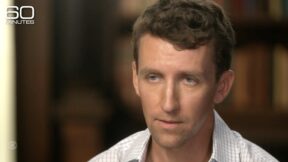
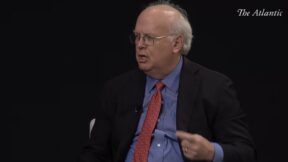
CNN’s Boris Sanchez grilled Democratic Socialists of America (DSA) co-chair Ashik Siddique over a new party statement commemorating Cuban dictator Fidel Castro.
Things got heated between Sanchez and Siddique in a Wednesday interview. Sanchez at one point brought up the fact that his own grandfather was a victim of Castro’s political persecutions while pressing Siddique on how many Cubans who have fled the country he’s actually engaged with.
“I do wonder whether you understand why a statement like that lauding Fidel Castro may not just turn people off from your platform, but offends people who suffered for decades under his dictatorship,” Sanchez told Siddique.
Siddique then slammed the United States while calling for an overhaul in U.S. policy on Cuba.
“I came of age after Iraq was invaded by the United States, after Afghanistan was, and democracy did not expand there. If we want to expand free and fair elections anywhere in the world it’s about expanding a more open policy toward the whole world,” Siddique said.
At issue is a new statement from DSA that described Castro as an “organizer” and “fighter” who “endures as a stalwart symbol of anti-imperialist struggle and self-determination for the Global South.” The party said they stand by Cuba and their “revolution.”
They called for an end to Cuban blockades and for Secretary of State Marco Rubio to be prosecuted for “crimes against humanity,” accusing him and President Donald Trump of waging an “indiscriminate war” against Cuba.
Castro had a long history of human rights abuses as the leader of Cuba, known for political persecutions, forced labor, and more.
Sanchez told Siddique he understands his criticism of U.S. policy, but pressed him on how “lauding” a dictator is going to win progressives any votes, especially in a state like Florida with a heavy Cuban population.
“Many people, especially younger Americans now, are looking at the history of what happened in Cuba and what it was like before the Cuban Revolution, where it was one of the most unequal societies in the Western hemisphere,” Siddique said.
Sanchez repeatedly pressed the DSA co-chair on whether he’s spoken to people who suffered under Castro’s regime. Siddique said he’s mostly spoken to second and third-generation Cubans, and Sanchez then shared his grandfather’s story.
He said:
I get your criticism of foreign policy. As I said, it’s not an uncommon one. But lauding Fidel, Castro is a different story. You talk about what things were like before the revolution in Cuba. I’ll give you a personal example. My grandfather was a revolutionary in Cuba during that time. He was affected by a previous dictator, Fulgencio Batista, having his friends disappeared in the street for speaking their minds. My grandfather found that revolution, hoping to bring democracy to Cuba. And then what happened? Fidel Castro locked my grandfather up, sentenced to 20 years for doing what you’re doing now on live TV, for speaking his mind, for expressing himself freely, for trying to organize politically. So I wonder again how you think that lands with people who suffered under that dictatorship who now you were trying to court as voters when your organization comes out and lauds 100 years of Castro.
Siddique again went after the United States in response, saying many here are suffering under inequality.
“So putting out a statement about Fidel Castro courts those people?” Sanchez asked.
“We want to expand democracy everywhere in the United States, in Cuba, and everywhere else. And that does not come at the barrel of a gun. It doesn’t come under the threat of economic blockade. That limits democracy everywhere,” Siddique said.
“And Fidel Castro was a beacon of democracy?” Sanchez asked.
“I wouldn’t say that,” Siddique said. I think that the revolution in Cuba led to an expansion of things like universal healthcare. That’s actually been a model. Cuba exports medical care to countries that have very poor infrastructure themselves.”
He then laid out the “brutal” living conditions in Cuba and blamed them on U.S. sanctions, which Sanchez pushed back on, saying, “depending on what economists you speak to, there is some disagreement about conditions in Cuba. How much of it is the embargo? How much is the incompetence of the Cuban government?”
He added, “I would suggest that perhaps we should have more conversations with folks who have fled that regime and what they think about these statements and the position of the DSA.”
Watch above via CNN.
Jason Cohen contributed to this report.
New: The Mediaite One-Sheet "Newsletter of Newsletters"
Your daily summary and analysis of what the many, many media newsletters are saying and reporting. Subscribe now!




Comments
↓ Scroll down for comments ↓