Rules For The Radical Right? An Interview With Alinsky’s Biographer

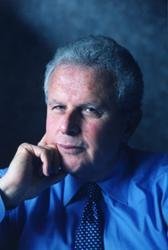 Though he’s not exactly a household name, Saul Alinsky has come to have a defining influence on the politics of our time. The founder of modern community organizing and the author of the hugely influential Rules for Radicals, Alinsky has long been associated with the left — Hillary Clinton wrote her senior thesis at Wellesley on Alinsky, and Barack Obama‘s first job out of college was as a community organizer for an Alinsky-influenced group in Chicago. Alinsky’s name used to be a dirty word among conservatives, but he’s lately experienced a renaissance among right-wing activists and bloggers, some of whom see his media-savvy, attention-grabbing tactics as their best shots at reclaiming power.
Mediaite recently interviewed Sanford D. Horwitt, the national chairman of the Saul Alinsky Centennial Committee and the author of the definitive biography of Alinsky, Let Them Call Me Rebel: Saul Alinsky: His Life and Legacy. Mr. Horwitt’s last book was Feingold: A New Democratic Party, published in 2007. We spoke about Alinsky’s influence on tea parties, town halls, and 9/12, Obama as our first community organizer-in-chief, and James O’Keefe‘s war on leprechauns:
Mediaite: Where do you think [the right’s] fascination with Alinsky comes from? Do you think there is an affinity between what they’re trying to do and Alinsky’s methods?
Horwitt: I think the fascination comes from the very strong link between Alinsky and Barack Obama. And I think that a good part of the political right is just astonished that Obama was able to win the Democratic nomination and then the presidency … I have been following the blogosphere closely for the better part of the last two years. There is a big portion of that conservative blogosphere that believes that Alinsky, to this day, is masterminding the Obama White House from the grave. So I think that’s part of it. I think it’s the unlikely Obama success that got a lot of the people on the right thinking and they think that the key to Obama’s success was his Alinsky community organizing background. And I think to some extent maybe a large extent that they’re right.
By the way, The Washington Post did a poll in August, and they asked people whether they thought that Obama — which of Obama’s previous careers have influenced him the most in the White House, being a lawyer or a teacher or a community organizer. And far and away, the response was his background as a community organizer. So the perception of Obama coming out of this great Alinsky tradition is not only prevalent on the political right but I think that‘s how a lot of Americans see him, even those who don’t know the name Alinsky. So that’s the first part of my answer to your question. What was the second part of your question?
M: When a lot of these modern conservatives, particularly in the blogosphere, say OK, we’re taking back Alinsky’s playbook, how possible do you think that is?
H: Well, I think that Alinsky’s rules, so to speak … are a little bit like the rules Aristotle wrote about when he wrote Rhetoric, his handbook, one might say, on how to be successful as a persuader. And Aristotle made it pretty clear in that rhetoric itself was a moral, it was a system of rules — really, insights — that could be used for good or not-so-good ends. I think to that extent, what Alinsky sketched out and applied names to using certain kind of tactics can also be used by people who don’t necessarily share his goals. And I think that’s how a lot of the people on the right see the contemporary importance of Alinsky’s tactical brilliance.
As someone who’s been watching this, I’m quite amazed that they became this creative, because it was sort of this two-step process. I think you know the way people on the right, some of the self-appointed theoreticians on the right viewed this Obama-Alinsky connection. At first, they tried to paint it as very sinister, because Alinsky was this nasty guy. But then a good number of those folks on the right decided that no, wait a second, this thing that Alinsky created is a body of knowledge that we can use for our own ends.
>>>NEXT: Buckley, tea parties, and 9/12
Helen Zhang helped transcribe this interview.
New: The Mediaite One-Sheet "Newsletter of Newsletters"
Your daily summary and analysis of what the many, many media newsletters are saying and reporting. Subscribe now!








Comments
↓ Scroll down for comments ↓