JUST IN: Two Federal Judges Rule Trump Admin Must Fund Food Stamps — At Least Partially

On Friday, federal judges in Massachusetts and Rhode Island issued rulings that could soon bring relief to millions of Americans whose Supplemental Nutrition Assistance Program (SNAP) benefits are set to expire on Nov. 1, requiring the Trump administration to fund the program, at least partially while the legal proceedings continue.
The SNAP program, commonly referred to as food stamps, is among many government programs affected by the ongoing shutdown, and has been one of the most contentious issues as Republicans and Democrats spar over how to move forward.
Because Congress has not yet passed its regular appropriations bill for Fiscal Year 2026, the funding for SNAP benefits lapsed on Oct. 1, and Agriculture Secretary Brooke Rollins controversially announced that the benefits would be cut off to the 42 million Americans who receive them as of Nov. 1.
A few days ago, 25 states and the District of Columbia (a group of those led by Democratic governors and attorneys general) the Department of Agriculture over the looming SNAP benefits deadline, arguing that the federal government had a legal obligation to fund food stamps and should be required to tap into USDA emergency funds to do so.
On Friday, two U.S. District Judges — Judge Indira Talwani in Massachusetts and Judge John McConnell in Rhode Island, both Obama appointees — ruled within minutes of each other in favor of the plaintiff states that the federal government was required to use those USDA emergency funds to cover SNAP benefits, at least partially.
“The shutdown of the government through funding doesn’t do away with SNAP, it just does away with the funding of it,” said McConnell when issuing his ruling.
The USDA fund has $5.3 billion in it, according to the agency, and SNAP benefits cost about $9 billion each month nationally, so this is only enough to cover just over half the benefits for November.
Talwani issued a 15-page opinion that added that the government could “supplement” these emergency funds “by authorizing a transfer of additional funds…to avoid any reductions” in the SNAP benefits.
Even with these rulings, SNAP recipients may face delays in getting their benefits, CNN reported, because “[i]t will take time for the Department of Agriculture and states to get the money flowing again.”
In the conclusion of Talwani’s opinion, she wrote that the plaintiffs’ Motion for a Temporary Restraining Order “remains under advisement,” and required the federal government to respond to the court by Monday, Nov. 3, to “advise the court whether they will authorize at least reduced SNAP benefits for November and, if so, their timeline for determining whether to authorize only reduced SNAP benefits using the Contingency Funds or to authorize full SNAP benefits using both the Contingency Funds and additional available funds.”
Notably, the options Talwani listed did not include the federal government continuing to refuse to pay SNAP benefits during the shutdown, and she had noted that the plaintiffs “are likely to succeed on their claim that Defendants’ suspension of SNAP benefits is unlawful,” meaning if the government still refuses to pay on Monday, she is expected to issue the TRO and require them to at least provide the partial benefits.
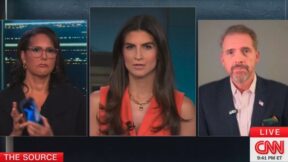
Watch the clip above via CNN.
New: The Mediaite One-Sheet "Newsletter of Newsletters"
Your daily summary and analysis of what the many, many media newsletters are saying and reporting. Subscribe now!







Comments
↓ Scroll down for comments ↓