Two Cops Charged in George Floyd Killing Still Eligible For Their Pensions, Derek Chauvin Could Get More Than $1.5 Million

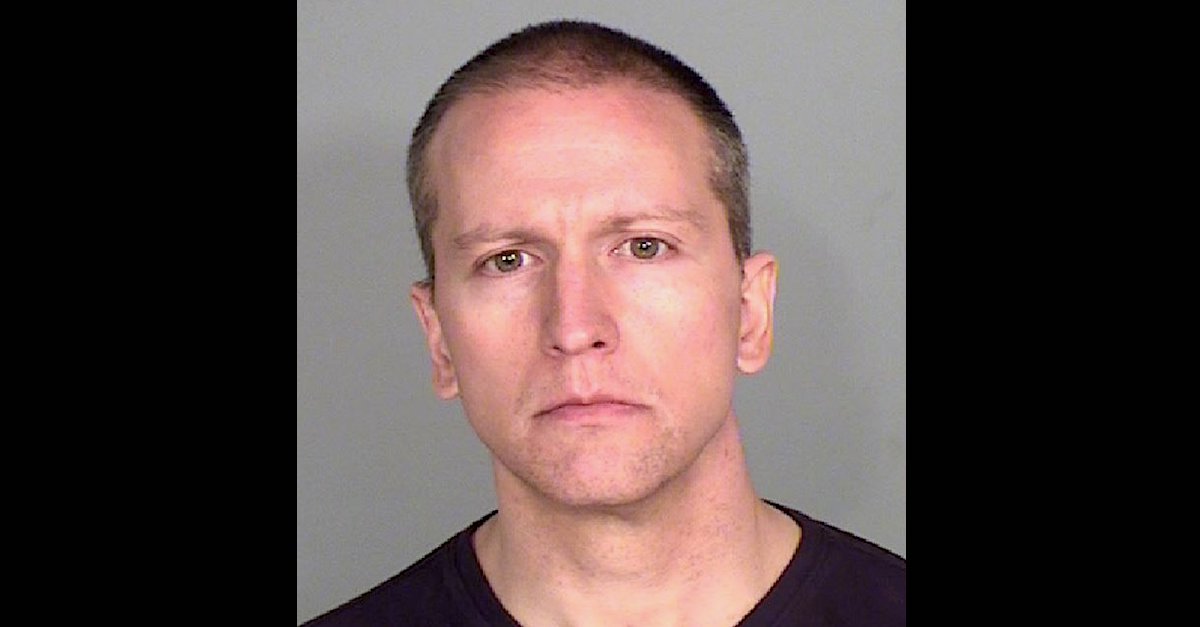
When Minneapolis police officer Derek Chauvin was videotaped kneeling on the neck of George Floyd for eight minutes and 46 seconds, it resulted in a wave of nationwide protests against racism and police brutality, felony charges being brought against Chauvin and the other three officers who participated in Floyd’s arrest, and the end of Chauvin’s two decade career. But apparently it did not bring about the end of his eligibility for a generous pension partially funded by taxpayers — potentially more than $1.5 million.
When reached for comment by CNN, the Minnesota Public Employees Retirement Association confirmed that Chauvin remained eligible to file for his pension with the Minneapolis Police Department as early as age 50. He is currently 44 years old.
“Neither our Board nor our staff have the discretion to increase, decrease, deny or revoke benefits,” said a spokeswoman for the MPERA. “Any changes to current law would need to be done through the legislative process.”
Several states have passed laws that forfeit pensions for public employees who are convicted of felonies related to their work, but not Minnesota. Less than half of the states strip pension for police convicted of felonies, and some others do so for those convicted of specific crimes like corruption or sexual crimes against minors.
Taking away a pension for a police officer convicted of using excessive force is a relatively rare phenomenon, and even the laws currently in effect would not affect officers who are not convicted or even charged with a crime.
MPERA officials said that the current policy states that employees terminated for cause — like Chauvin and the other three former officers, Tou Thao, J. Alexander Kueng, and Thomas K. Lane — remain eligible for future benefits, unless they elected to forfeit them and receive a refund of personal contributions made during their employment.
Kueng and Lane were still rookies and in training — a fact that their attorneys are using as the foundation of their legal defense — but Thao had been with the MPD for several years and also remains eligible to receive a pension, although not as generous as Chauvin’s.
CNN analyzed Chauvin’s tenure with the MPD, and publicly available data about MPD payroll, contract details, pension plans, and salary schedules, determining that he could receive over $1.5 million in benefits over a 30-year period, not including any cost-of-living increases.
Chauvin’s annual payments could be significantly higher if he worked a lot of overtime hours during past years.
Pensions for public employees are funded through a combination of taxpayer funds from local governments, contributions from the workers themselves, and investment returns.
Public safety employees like police have among the most generous pensions in the country, a cause for debate as they’ve presented an increasing strain on local and state budgets — not to mention the optics of generous payments for public employees fired for wrongdoing, like Chauvin and Thao.
The protests that have continued for weeks after Floyd’s death have led to calls for a number of legal reforms, some already in the works.
Louisville, Kentucky just banned no-knock raids in response to the death of Breonna Taylor, who was shot to death while sleeping in the apartment she shared with her boyfriend. Local governments around the country have discussed increasing funding for body cams, deescalation techniques, and other training and policing strategies. Other activists have called for an outright abolishment of police departments as they have been traditionally organized, or a diversion of some of their funding to education and social welfare benefits.
The generous payouts of police pensions were already part of the discussion in many of these communities. The debate is likely to heat up even further with the knowledge that Chauvin could put his knee on the neck of an unarmed, handcuffed, restrained man for nearly nine minutes, nonchalantly with his hand in his pocket, while Floyd and multiple bystanders begged for mercy, continuing on long after Floyd lost consciousness — and he could be convicted of murder for these acts — but still collect over one-and-a-half million dollars.
Floyd was accused of attempting to make a purchase with an allegedly counterfeit $20 bill.
New: The Mediaite One-Sheet "Newsletter of Newsletters"
Your daily summary and analysis of what the many, many media newsletters are saying and reporting. Subscribe now!






Comments
↓ Scroll down for comments ↓