BREAKING: Trump DOJ Withdraws Subpoenas Sent to NYT Journalists After Judge Threatens Sanctions

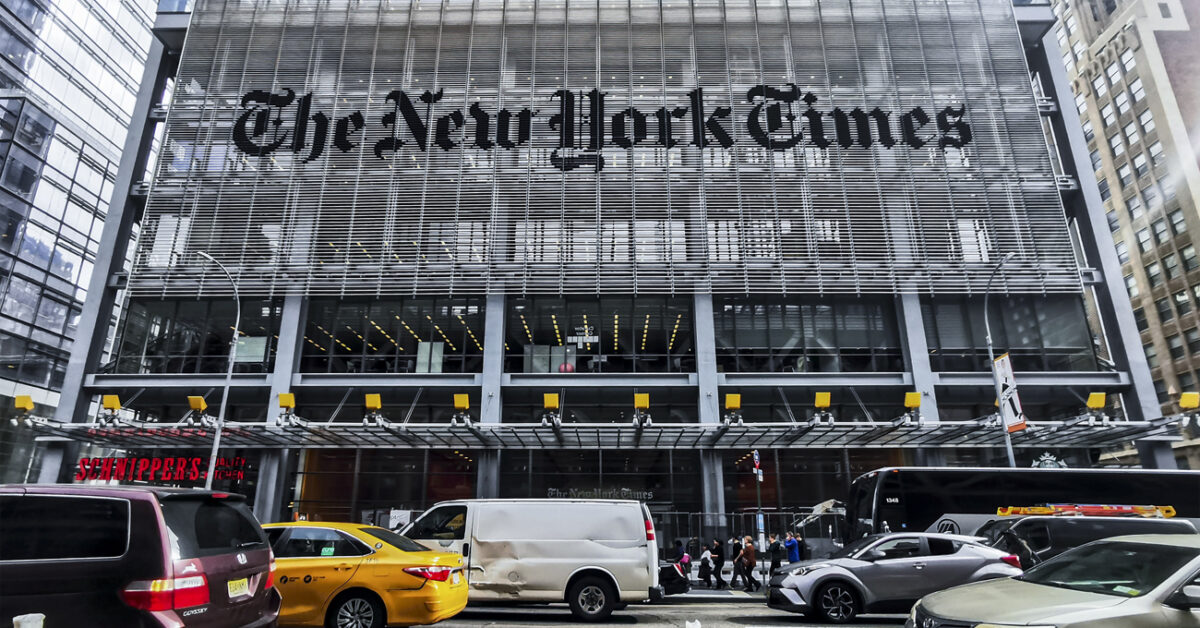
Beata Zawrzel/NurPhoto via AP
President Donald Trump’s administration has withdrawn controversial subpoenas that were sent to journalists at The New York Times.
The subpoenas were issued by the Department of Justice earlier this month, seeking phone records and demanding grand jury testimony from Times journalists who reported on issues with the security capabilities of the Air Force One jet that the president got from Qatar.
The reporters who were named in the subpoenas included Julian E. Barnes, Eric Lipton, and Eric Schmitt. Federal agents showed up at their homes and sought records from their family members as well.
The news of the DOJ’s action raised alarm bells with First Amendment advocates and was met with loud and swift condemnation from the Times, which filed a motion to quash the subpoenas.
David McCraw, the Gray Lady’s deputy general counsel, issued a statement denouncing the subpoenas as a “brazen act” that “should be seen as nothing more than an attempt to prevent the public from knowing what is happening in their country by intimidating journalists from doing their jobs.”
On Thursday, Judge Arun Subramanian, a Biden appointee with the U.S. District Court for the Southern District of New York, subjected the DOJ prosecutors to an intense grilling at a hearing on the Times’ motion to quash. Multiple legal reporters chronicled Subramanian’s overt skepticism towards the government’s claimed justifications for the subpoenas and clear irritation at the DOJ’s initial stubbornness and refusal to withdraw them.
Eventually, however, when the judge made clear he would quash the subpoenas if the DOJ did not withdraw them, the government agreed to do so.
Reported the Times:
“The government is prepared to unilaterally withdraw the subpoenas at this time,” Sean Buckley, one of the highest-ranking officials in the U.S. attorney’s office in Manhattan, said at a hearing in U.S. District Court.
Adam Klasfeld, All Rise News editor-in-chief and former managing editor of Law & Crime, reported in detail about the hearing, writing that Subramanian “came in hot at the start of Thursday’s hearing,” and subjected the DOJ’s attorneys to a “sharp grilling.”
A key part of the judge’s inquire, wrote Klasfeld, was whether the DOJ had properly met the legal precedent set by a 2006 Second Circuit case, New York Times v. Gonzales, which imposes “a three-part test for issuing subpoenas to the news media, beginning with confirming that the information is ‘not obtainable from other sources'”:
Subramanian noted that the government made no attempt to do that.
“Am I wrong that the regulations and cases like Gonzalez say that subpoenas are not the first thing you do?” the judge asked. “They are the last thing you do.”
Another problem the judge pointed out was that a DOJ official had “falsely claimed that the investigation wasn’t public and failed to disclose that the targets were reporters” in the sworn application for the subpoenas, wrote Klasfeld.
The DOJ attempted to claim this was an “oversight,” Klasfeld reported, but then “Subramanian invoked the possibility of considering sanctions ‘with respect to incorrect statements or misstatements.'” The DOJ had also claimed it had been a “mistake” to send subpoenas to the reporters’ family members.
The judge had given the prosecutors the choice of withdrawing the subpoenas or he would quash them. At first the DOJ was unwilling, but after Subramanian mentioned he was considering sanctions, they “reconsidered their prior refusal to withdraw the subpoenas shortly after that,” wrote Klasfeld.
Lipton, one of the targeted reporters, posted on Bluesky the news of the DOJ withdrawing the subpoenas, and that he was “glad to hear this.”
“Enormous thank you to the entire NYT legal team and outside counsel that has worked with such clarity and determination to challenge this, from the moment we first heard FBI agents were starting to [show] up at our houses,” he wrote.
Lipton added that it had been “extraordinary to be in the middle of such an [important] press freedom argument like this” and that he was “[s]o proud to work at The NYT.”
Another of the targeted reporters, Barnes, shared a far more succinct but somewhat cryptic post as the news of the withdrawn subpoenas was breaking. In a tweet without a caption, he posted a clip from The Sheep Detectives film, showing a chicken crossing a road with several sheep standing by to watch. (Perhaps it was intended as a commentary on the role of reporters to ask why did the chicken cross the road, and other perennial questions.)
The Foundation for Individual Rights and Expression, a leading nonpartisan free speech nonprofit, cheered the withdrawal of the subpoenas but warned that the DOJ’s actions still created a “chilling effect.”
“Journalists should not have to choose between protecting confidential sources and facing government threats,” FIRE wrote in a statement shared on social media. “A free press depends on reporters being able to pursue the truth, and on sources being able to share information the public has a right to know.”
“Withdrawal was the correct first step,” the organization added. “The next is ensuring journalists are never put in this position to begin with.”
McCraw took a victory lap after the ruling, posting a statement that called the hearing earlier “an important affirmation of our country’s commitment to a free press.”
“We are pleased that the government finally conceded that the subpoenas violated the law, but they should have never been issued in the first place,” McCraw continued. “The Times and our journalists will continue to report and seek the truth without fear or favor. We will not be deterred in the face of tactics like these.”
This is a breaking news story and has been updated.
New: The Mediaite One-Sheet "Newsletter of Newsletters"
Your daily summary and analysis of what the many, many media newsletters are saying and reporting. Subscribe now!





Comments
↓ Scroll down for comments ↓