
Will Making Football Safer Mean The End Of The Game As We Know It?

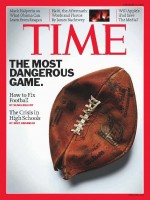 It’s no secret that the violent aspect of football is part of the sport’s appeal – witness here, here, and here, for starters (and note the number of views for each). However, it’s also common knowledge that this same violence poses substantial risk to the game’s participants – young and old. Now, with the recent development of the NFL taking a stricter stance on the long-standing concussion issue, Time’s Sean Gregory addressed the problem himself in the magazine’s most recent issue, with an assist from Friday Night Lights author Buzz Bissinger.
Gregory writes that “a consensus is emerging that reforms are needed to keep football from becoming too dangerous for its own good,” but stories like Bissinger’s account of paralyzed high school football player Chris Canales make it hard to argue that this point hasn’t already arrived. Gregory lays out a four-point plan to combat the problem, part of which would fundamentally change the game (linemen switching from a three-point stance to playing upright), but perhaps drastic change is what’s needed. Also, the suggestion for a hockey-style penalty box for players who commit illegal helmet-first hits could go even further – what about a suspension for recklessly dangerous play?
Importantly, Gregory advocates changing youth football, so that hopefully scenes like the one from this video (mentioned in the article) no longer occur. It’s one thing when adults are paid millions of dollars to put themselves in harm’s way – NFL players like the Baltimore Ravens’ Matt Birk acknowledge that the pain and injury risk are parts of the game they love – but as Gregory points out, millions of kids play the game. NFLers are a small portion of the people at risk.
Former NFL offensive lineman Kyle Turley backed Gregory’s final assertion, that the overall culture of the game must be changed, by saying the following:
“This whole archaic notion that football is everything, all these stupid things coaches go around saying, comparing football to the military … It’s not.”
Now, the culture surrounding football has changed to an extent – the legendary Bear Bryant’s Junction Boys at Texas A&M are proof of how extreme it used to be. Also, any hint of a coach trivializing a concussion leads to trouble and possible termination. And the superb television show Friday Night Lights (inspired by Bissinger’s book), cited by Gregory as an example of pop culture celebrating the game, certainly doesn’t shy away from its inherent danger – a major character from the show’s early seasons was paralyzed due to an in-game injury.
But even these strides can’t hide the fact that changing the culture of football is likely the hardest step of all. Coaches might be (for the most part) more humane these days, but the big hits – more than the sport’s astoundingly complex strategic element – are what keep people watching. Gregory calls on ESPN to do less glorifying of such hits, but who can blame the network when they’re what people want to see? Rules and equipment changes, and basic decency, are likely the best bets to keep the concussion problem from getting any worse – because the visceral thrill provided by interpersonal collisions (don’t lie, you’re still replaying that Reggie Bush video) isn’t going away.
New: The Mediaite One-Sheet "Newsletter of Newsletters"
Your daily summary and analysis of what the many, many media newsletters are saying and reporting. Subscribe now!









Comments
↓ Scroll down for comments ↓