
Multiple Rioters Arrested in Capitol Insurrection Didn’t Even Vote in Election They Claimed Was Stolen

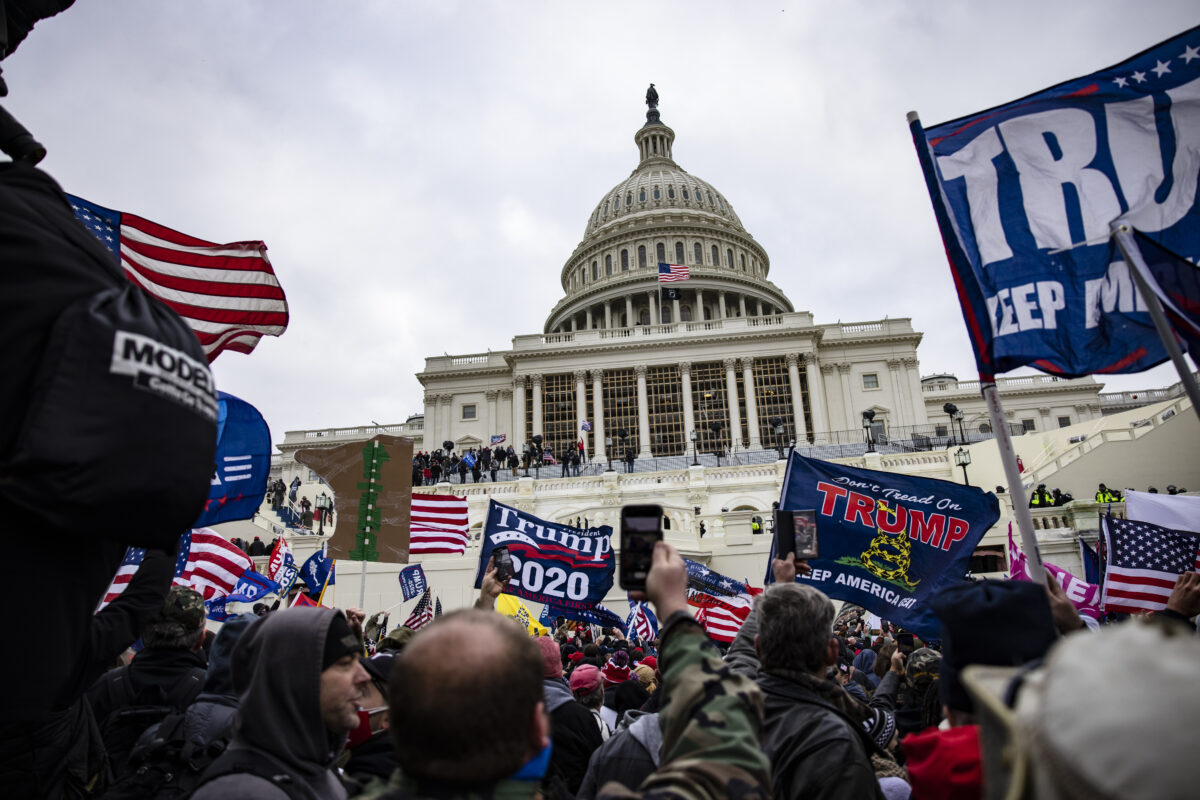
Photo by Samuel Corum/Getty Images.
If you don’t vote you can’t complain, the saying goes. But apparently you can still participate in a violent insurrection to overthrow the election results. That’s the situation with several of the rioters who were arrested for their alleged actions on January 6, according to a report by CNN.
“Many involved in the insurrection professed to be motivated by patriotism, falsely declaring that Trump was the rightful winner of the election,” the report stated. But when CNN reviewed the voting records of more than 80 of the arrested accused rioters, they found at least eight who did not vote in the Nov. 3, 2020 general election: about 10 percent.
Among those who didn’t vote were a 65-year-old Georgia man who, according to government documents, was found in his van with a fully-loaded pistol and ammunition, and a Louisiana man who publicly bragged about spending nearly two hours inside the Capitol after attending Trump’s “Stop the Steal” rally. Another was a 21-year-old woman from Missouri who prosecutors say shared a video on Snapchat that showed her parading around with a piece of a wooden sign from House Speaker Nancy Pelosi’s office. And a Florida man previously convicted of attempted murder who was accused by the government of refusing to leave the Capitol likely did not have the option to cast a ballot because of his unpaid court fines.
CNN spoke to several experts on political extremism about the reasons why someone might be motivated to participate in a violent protest but not vote.
“When we see that significant ideological groups are stopping participating in the Democratic process, that may mean they are looking for other ways to participate, and those other ways could be more violent,” said Arie Perliger, a professor at University of Massachusetts Lowell who specializes in right-wing domestic terror and who maintains a database of American right-wing extremist acts of violence.
“We should be concerned if we see a growing number of ideological groups are reducing their involvement in electoral politics,” Perlinger added, noting that people who join militias often have a distrust of government, making it unsurprising that some might chose not to vote.
Boston University professor Jessica Stern, who has spent three decades studying extremists, had a similar view, noting that some of the rioters may have believed the claims of the “Stop the Steal” movement — that the system was rigged and voting would be futile — or simply found the drama and danger of the insurrection more appealing than the mundane task of waiting in line to cast a ballot.
That may have been the motivation for Gracyn Courtright, a University of Kentucky senior who, like many of those arrested, was implicated by her own social media posts. Courtright posted Instagram photos of herself at the Capitol with captions like “can’t wait to tell my grandkids I was here” and “Infamy is just as good as fame. Either way I end up more known. XOXO.”
Records showed that Courtright was registered to vote in her home state of West Virginia but did not vote in 2020.
New: The Mediaite One-Sheet "Newsletter of Newsletters"
Your daily summary and analysis of what the many, many media newsletters are saying and reporting. Subscribe now!






Comments
↓ Scroll down for comments ↓