The Ratings Collapse of The Oscars Is Not Just About Wokeness

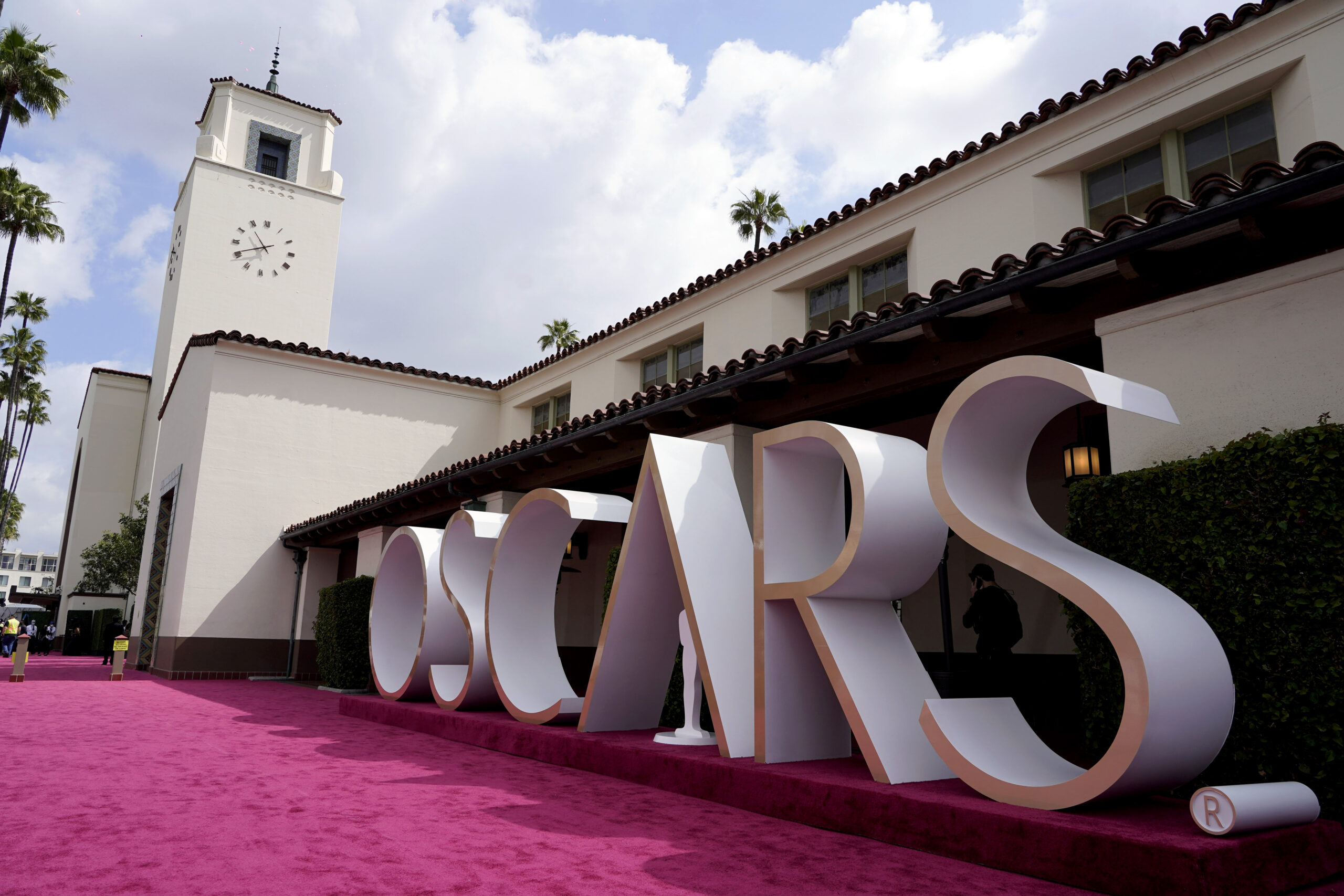
Chris Pizzello-Pool/Getty Images
It was easier to predict than even CNN’s post-Trump viewership decline, but, as expected, last night’s Oscars telecast on ABC was a ratings disaster. Not only was it the least watched Academy Awards ceremony in modern history, the audience was less than half of what it was last year — which was already a record-low benchmark — and just over a puny one-quarter of what it was just five years ago.
There has never been a major American television institution that has suffered such a dramatic ratings decline without a major scandal. There is also a strong argument to be made that the Oscars has permanently lost its highly-prized position among the ever-shrinking group of television events that actually matter.
Many conservatives are celebrating this catastrophe as proof that Hollywood’s hyper-wokeness has finally turned mainstream America off, and are taking this downfall as an opportunity to dance on the grave of its ability to indoctrinate the masses with far-left politics. And to be clear, there is zero doubt that, at least in part to cover past “sins” in the realm of race, Hollywood has gone off the deep end when it comes to pandering/virtue-signaling to a tiny portion of the overall population, with last night’s broadcast being yet another prime example (heck, the show literally started with a reference to people turning off the show because of woke politics!)
This explanation, however, is both too simplistic and thoroughly incomplete. The real reasons for this massive decline in influence have more to do both with what is happening in our increasingly-fractured culture and media, as well as the way the Academy handled the issue of Covid restrictions. Neither are legitimate reasons to rejoice.
In the “Golden Age” of Hollywood there were relatively very few movies that made it to the theater, and there was no such thing as streaming services, which meant that it was inevitable for at least a few of them to reach the threshold of the country’s “collective consciousness.” This was especially the case when there were only a few mainstream media outlets, which created an echo-chamber constantly telling us what movie everyone was watching and, therefore, what we too just had to see.
Today, it is nearly impossible for a theater film, except for the occasional superhero franchise (which the Oscars usually ignore), to break out into a large enough percentage of the population to be a truly “mainstream” event. In response, Hollywood has stopped even trying to make movies that appeal to a broad audience, adopting very much the same business model as highly fragmented cable television news networks, which have gone from broadcasting, to narrow-casting, to cult-casting, and now even narrow-cult-casting as a way to target the most reliably lucrative audience for them.
Consequently, when it comes time for the Academy Awards, there are no movies in which a large portion of Americans are invested, or of which they are even knowledgeable. Then there is also the ripple effect that, because of this dilution of the power of theater movies, there are far fewer true “movie stars,” who used to be, like seeing exotic animals dependably come out of hibernation only one night a year, the big draw of watching the Oscars to begin with.
Then there is the “downward spiral effect” when ratings for an event start to significantly decline. Once it is no longer a cultural “must-see” event, casual fans stop bothering to tune in, and once that happens the event’s power to do what made the event magical in the first place (changing lives dramatically and making new stars) quickly fades away. This is the most substantial element of the deep crisis Hollywood must now face going forward after this calamity, as recreating that fairytale once it has been shattered is nearly impossible, especially in this super-cynical and short attention-span era.
Clearly the Covid restrictions were also a significant part of why this year was so horrendous (and why the Academy would have been politically smart to simply skip the ceremony this year, which would have been particularly peculiar because Covid is a far smaller danger in Los Angeles right now than it was last year when it took place without restrictions). So much of the enchanting nature of the awards has always been their glamour, their grandeur, and electric nature of their atmosphere. Without a large crowd, in a tiny, socially-distanced venue, and with several key figures appearing remotely, none of that was at all present in last night’s presentation.
Making the situation even more unwatchable, especially for many “red-state” Americans who no longer buy that the Covid restrictions are either effective or necessary, was that most of them were clearly intended as nothing but an overt virtue-signal. Bizarrely, masks were not required while the show was going on (which was perfectly fine because everyone had been vaccinated and/or tested), but apparently were during the commercials when “shooting” was paused. Americans have endured far too much abject stupidity in reaction to the pandemic to be asked to do so again just to see if a movie they have never heard of won an award that no longer has nearly the meaning or power that it used to possess.
There are lots of reasons why the Oscars officially died last night. The autopsy report should not cite “of Covid,” but “with Covid,” along with a slew of other maladies from which it will be even more difficult to recover in the future.
This is an opinion piece. The views expressed in this article are those of just the author.
New: The Mediaite One-Sheet "Newsletter of Newsletters"
Your daily summary and analysis of what the many, many media newsletters are saying and reporting. Subscribe now!






Comments
↓ Scroll down for comments ↓