
Tribunal To Hear Of Illegal Surveillance Against Belfast Journalists Investigating Police Corruption

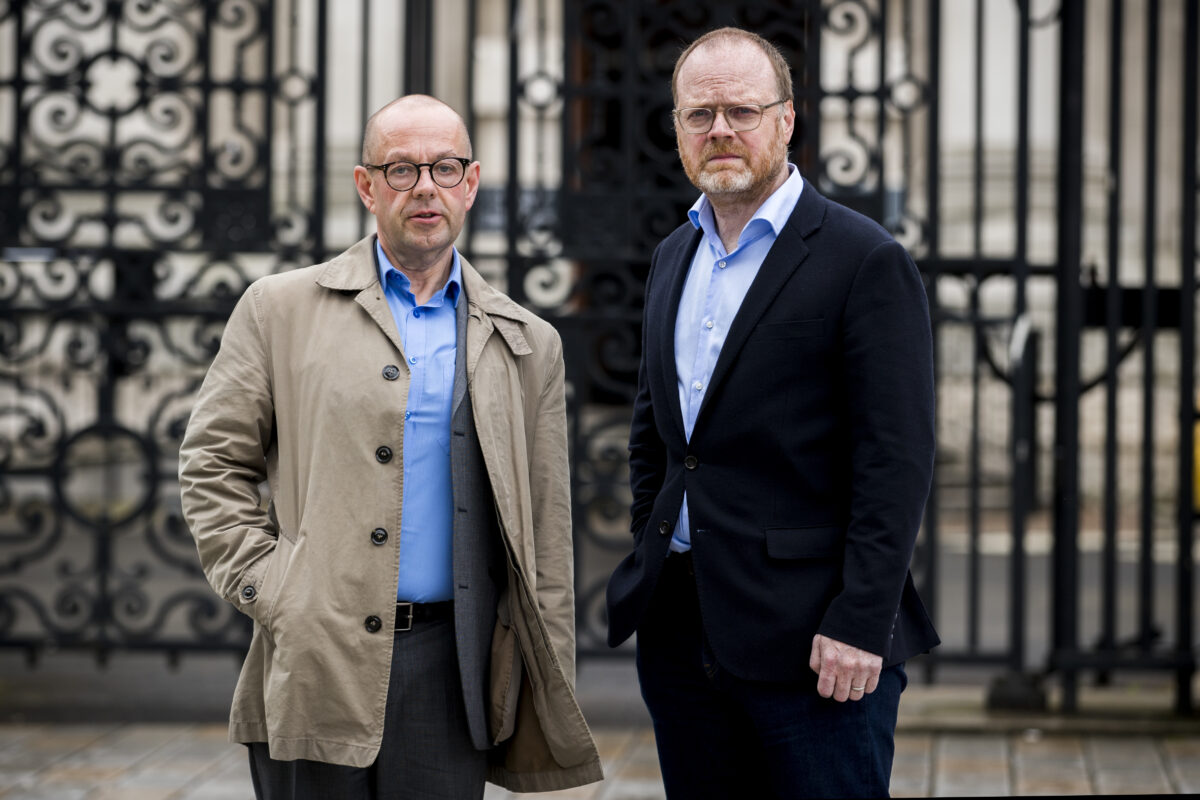
Investigative journalists Barry McCaffrey (left) and Trevor Birney (right) had journalistic material unlawfully seized by police.
Liam McBurney/PA Wire URN:43305098 (Press Association via AP Images)
The Investigatory Powers Tribunal (IPT) will hear allegations that UK authorities unlawfully monitored the phones of Belfast journalists Trevor Birney and Barry McCaffrey after they exposed police mishandling of investigations into the loyalist paramilitary murders of six people.
In hearings set to take place at the Royal Courts of Justice on Wednesday and Thursday, the two reporters will bring their case against Police Service of Northern Ireland (PSNI), GCHQ, MI5 and the Durham Constabulary.
In 2018, the two reporters were subject to a police raid after their work examining police failures following 1994 Loughinisland massacre by loyalist paramilitaries in Northern Ireland was the subject of a documentary, No Stone Unturned.
Police targeted the journalists’ homes and the offices of Birney’s film production company, Fine Point Films. Authorities seized computers, phones, and a server containing 10TB of sensitive journalistic material.
After a subsequent legal battle, the High Court in Northern Ireland ruled that the Durham Constabulary and the PSNI had unlawfully used search warrants to uncover the journalists’ sources. Evidence also surfaced in a report by the Northern Ireland Policing Board, showing McCaffery’s phone activities were under PSNI surveillance back in 2013. The PSNI agreed to pay £875,000 in damages and apologised.
Birney and McCaffrey are now challenging what they see as an egregious breach of press freedom by bringing the case to the IPT, the independent judicial body that investigates allegations of the unlawful use of covert surveillance by public bodies.
“The hearings next week should be of concern to all journalists. The use of covert powers by the police represents an attack on press freedom and we hope the tribunal will shed light on police action around the time of our film,” McCaffery told the Irish News.
Birney told Computer Weekly that he and McCaffery were treated like “criminal suspects” rather than journalists.
He continued: “What we now understand is that the police had a covert surveillance operation on Barry and me. But does that mean our homes were compromised by police? Does it mean they were following us in our cars? Does it mean they have bugged my phone? The police must come clean.”
The duo has petitioned the court to delve into whether British intelligence and law enforcement, including MI5 and GCHQ, tapped into their phones and emails or engaged in other invasive tactics like hacking or sweeping up their data from large-scale citizen databases.
“We need to know how many times this legislation was used or abused and what professions it was used against. It wouldn’t just have been journalists. It will have been NGOs, trade unionists and lawyers,” McCaffery said.
The tribunal’s decision to potentially hold parts of the hearing in secrecy has been criticised after a spokesperson noting that while the hearing will be open “there may be points during the hearing where the tribunal has to sit in closed session.”
The National Union of Journalists (NUJ) is rallying against the possibility of closed-door sessions, emphasising the significance of the case for press freedom.
“This case is of fundamental importance and is of concern to journalists globally,” stated NUJ assistant general secretary Séamus Dooley, underscoring the need for public administration of justice in these “landmark hearings.”





Comments
↓ Scroll down for comments ↓