
Jury Finds Sean ‘Diddy’ Combs GUILTY of Two of Five Counts in Stunning Sex Trafficking Trial

Elizabeth Williams via AP
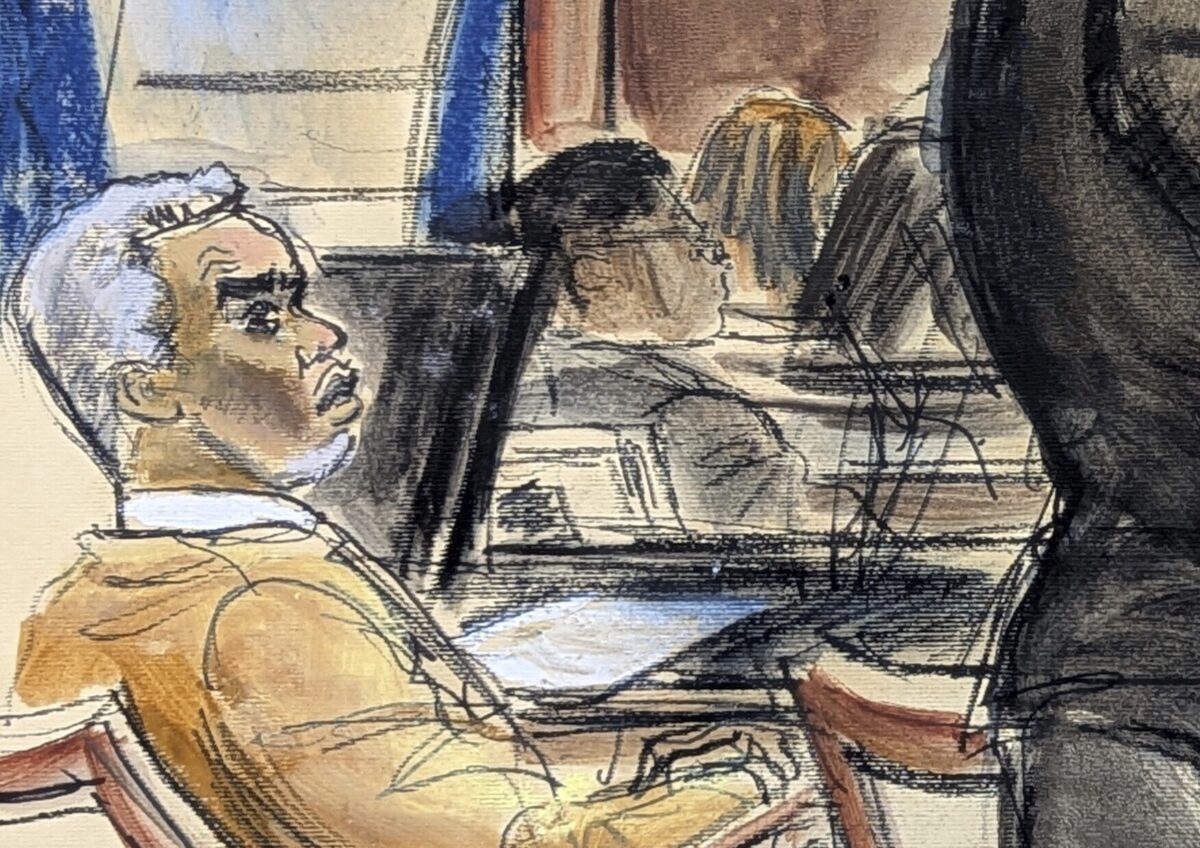
On Wednesday, a federal jury in New York found Sean “Diddy” Combs guilty of two of five counts against him after three days of deliberations, acquitting the rap mogul on the most serious charges but still leaving him potentially facing a prison sentence of up to twenty years.
Combs’s trial in the U.S. District Court for the Southern District of New York began on May 5, with District Judge Arun Subramanian presiding.
Verdict watch kicked off Monday as the jury headed back for their deliberations. Combs was facing five total felony counts: one of racketeering conspiracy, two counts of sex trafficking, and two counts of transportation to engage in prostitution.
Prosecutors have argued Combs masterminded a decades-long criminal enterprise that abused, threatened, and coerced his victims, including Cassie Ventura, his ex-girlfriend whom he was seen violently assaulting in a now-infamous hotel surveillance video from March 2016, and another ex-girlfriend, pseudonymously referred to as “Jane” during the trial.
The 55-year-old had initially denied Ventura’s accusations against him when she sued him in November 2023 saying Combs had raped, abused, and sex trafficked her for years. The lawsuit was settled out of court one day later; Ventura testified during this trial that the settlement was $20 million. A few days after the hotel video was obtained and published by CNN in May 2024, Combs posted a video on his Instagram account admitting to his “inexcusable” actions and saying he was “disgusted” with himself.
Legal experts had said that Combs could spend the rest of his life behind bars if he is convicted, due to the serious nature of the charges against him, the alleged long time period during which the alleged crimes occurred, and total number of incidents involved. He pleaded not guilty to the charges and his legal team, led by attorney Marc Agnifilo, argued throughout the trial that any sexual encounters were legal and consensual.
Tuesday afternoon, the jury sent a note saying they had reached a verdict on counts 2 through 5, but had been unable to reach a verdict on count 1, for racketeering conspiracy. Subraminian sent the jury back to continue deliberating, and they resumed Wednesday morning.
Racketeering was widely viewed as the most complicated and difficult for prosecutors to establish. The Department of Justice has defined the elements of a conviction under federal RICO law as requiring the government to “prove beyond a reasonable doubt: (1) that an enterprise existed; (2) that the enterprise affected interstate commerce; (3) that the defendant was associated with or employed by the enterprise; (4) that the defendant engaged in a pattern of racketeering activity; and (5) that the defendant conducted or participated in the conduct of the enterprise through that pattern of racketeering activity through the commission of at least two acts of racketeering activity as set forth in the indictment.”
At 9:52 am ET, the jury sent a note that they had reached a verdict. “We have reached a verdict on all counts,” the note read.
The verdicts were not guilty of racketeering conspiracy, not guilty on both counts of sex trafficking Ventura and “Jane,” and guilty of two counts of transportation to engage in prostitution.
After the verdict was read, Subramanian thanked the jury for their service and urged them to be cautious about speaking to the press or other people.
“There is an important reason to respect the privacy of your deliberations,” the judge said. “That being said, the choice of whether to speak to others about the case and your personal views is up to you.” He added that if they do decide to speak, they should not disclose information about other jurors’ comments or details about the deliberations.
According to CNN, Combs’ two guilty counts each carry a sentence of up to 10 years, which the judge could order to be served consecutively for a total of 20 years.
Post-verdict, Combs’ defense counsel argued that he “should be released on appropriate conditions” since he was acquitted of the most serious charges. Agnifilo vowed to the court that his client, if released, would return to his house in Miami to be with his family and comply with the court’s conditions.
Last September, the court denied defense attorneys’ motion for bail and ordered Combs to remain incarcerated during the pendency of the trial. An appeal the next day was rejected and the trial court’s denial of bail and pre-trial detention was affirmed. Combs has been held in federal custody since then and throughout the trial.
“Is your proposal that he leave this courtroom and walk outside?” Subramanian asked Agnifilo.
Agnifilo replied yes, and emphasized to the judge that Combs “has been given his life by this jury” by avoiding having to spend the rest of his life in prison and would be “nothing short of a fool” if he were released pre-sentencing and violated any of the court’s conditions.
“He treasures, I assure you, the opportunity that he has been given, and he will not run afoul of anything this court imposes on him,” Agnifilo said.
Prosecutors said the government opposes Combs being released.
Assistant US Attorney Maurene Comey highlighted the substantial evidence presented during the trial of Combs’ heavy drug use and abuse, which was not contested by his defense, and argued the defendant had shown a pattern of not respecting the law, that he had “continued to commit a litany of crimes” even after he knew he was being investigated, and therefore could not be trusted not to commit new crimes if he were released.
Comey added that prosecutors will be seeking incarceration for the two counts of which Combs was convicted.
Subramanian requested both sides to submit letters by 1 pm ET presenting their arguments regarding Combs being released, and said he would rule after reviewing those letters.
Ventura’s attorney Doug Wigdor made a statement praising his client for having the “courage” to file her 2023 lawsuit that launched this criminal investigation and “paved the way for a jury to find him guilty of transportation to engage in prostitution.”
“By coming forward with her experience, Cassie has left an indelible mark on both the entertainment industry and the fight for justice,” said Wigdor, lauding Ventura for the way she showed “exemplary courage throughout this trial” and “brought attention to the realities of powerful men in our orbit and the misconduct that has persisted for decades without repercussion.”
“This case proved that change is long overdue,” he added, “and we will continue to fight on behalf of survivors.”
This is a breaking news story and has been updated with additional information.
New: The Mediaite One-Sheet "Newsletter of Newsletters"
Your daily summary and analysis of what the many, many media newsletters are saying and reporting. Subscribe now!








Comments
↓ Scroll down for comments ↓