No Puppies for Child Sex Traffickers: Ghislaine Maxwell Denied Key Perk at Her New ‘Cushy Prison Camp’

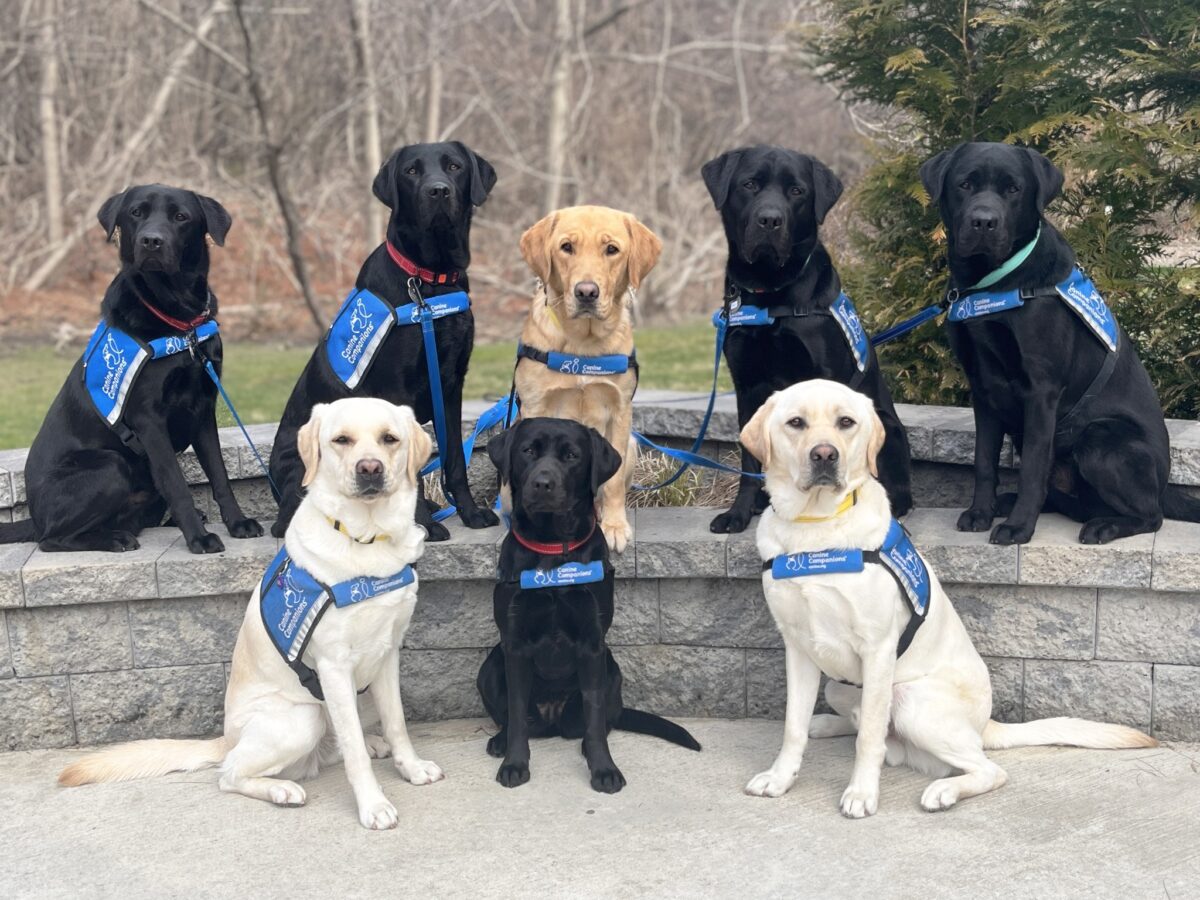
Photo via Canine Companions on Facebook.
Convicted child sex trafficker Ghislaine Maxwell might have managed to get herself transferred to a minimum-security prison in Texas, but she will miss out on one of the facility’s key perks, as the nonprofit organization that runs a service dog training program with volunteer prisoners will not let her participate.
Maxwell, the former girlfriend and accomplice of deceased convicted sexual predator Jeffrey Epstein, is currently serving a 20-year prison sentence after she was convicted of one count of sex trafficking a minor, one count of transporting a minor with the intent to engage in criminal sexual activity, and three counts of conspiracy. Multiple victims testified at Maxwell’s trial about how she not only recruited young women and underage girls to have sex with Epstein and other older men, but that Maxwell also sometimes assaulted them herself.
There has been some chatter among Trump-friendly media that sounds like an effort to rehabilitate Maxwell for the MAGA audience and Trump has refused to rule out granting her a pardon, but polling shows this continues to be extremely unpopular even with his most diehard supporters.
Meanwhile, the furor over the “Epstein files” continues, specifically over a rumored “client list.” Maxwell spoke with Deputy Attorney General Todd Blanche for two days in Tallahassee, Florida, at the maximum-security federal women’s prison where she was previously held. Shortly after she met with Blanche, she was transferred to Federal Prison Camp (FPC) Bryan in Bryan, Texas, a minimum-security facility that is not commonly used to house inmates convicted of crimes as serious as Maxwell’s. The move to this “cushy prison camp” was sharply criticized by some of Epstein and Maxwell’s victims.
Canine Companions for Independence (CCI) has been working with prisons for 30 years with qualified and screened prisoners providing critical support and training for their specially bred puppies (Labrador retrievers, golden retrievers, or a mix of the two breeds) that are intended to be service dogs donated to the disabled, veterans, and others who could benefit from a service animal. CCI now runs puppy training programs at 25 state and federal prisons across the U.S., including with FPC Bryan for over a decade. The prisoners at FCB Bryan take responsibility for the initial stages of a future service dog’s training, and students at Texas A&M University and other local volunteers work with the puppies for situations that can’t be replicated within the prison. According to the CCI website, the prison programs result in both higher graduation rates for the dogs to be certified as service animals and a lower recidivism rate for the prisoners who train the dogs.
But to participate, a prisoner must meet CCI’s strict rules, and the organization makes no exceptions that might put its dogs at risk.
Paige Mazzoni, who has served as CEO of CCI since 2018, was adamant when she spoke to NBC News that Maxwell would not be allowed to have access to their puppies.
“We do not allow anyone whose crime involves abuse towards minors or animals — including any crime of a sexual nature,” said Mazzoni. “Those are crimes against the vulnerable, and you’re putting them with a puppy who is vulnerable.”
“That’s a hard policy we have, so she will not be able to,” she emphasized.
New: The Mediaite One-Sheet "Newsletter of Newsletters"
Your daily summary and analysis of what the many, many media newsletters are saying and reporting. Subscribe now!









Comments
↓ Scroll down for comments ↓