Luigi Mangione’s Lawyers Push to Exclude Crucial Evidence Over ‘Illegal’ Police Conduct

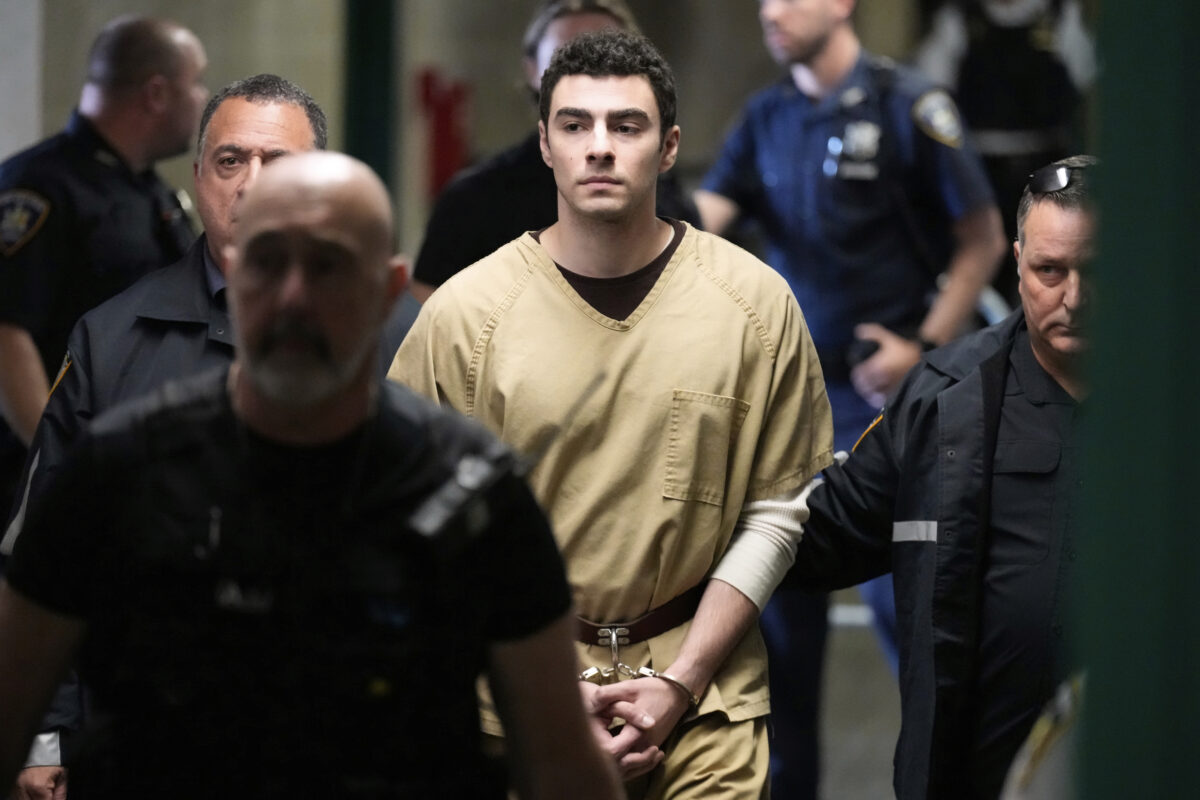
AP Photo/Seth Wenig
Luigi Mangione, the man charged with allegedly shooting United Healthcare CEO Brian Thompson, is set to appear in court on Monday as his legal team seeks to dismiss a swath of evidence they say was obtained illegally.
Pre-trial proceedings in the state case against Mangione are set to begin Monday with his legal team’s bid to block the Manhattan District Attorney’s Office from using evidence seized during his arrest.
That evidence includes a 9mm handgun prosecutors say matched the weapon used to fatally shoot Thompson nearly a year earlier. The gun was found in Mangione’s backpack, along with a notebook in which prosecutors said the suspect described his frustration with the health insurance industry and his intent to “wack” a healthcare executive.
Authorities have called the contents of the notebook a “manifesto” while prosecutors said it “establish[ed] his responsibility for this vicious crime.”
Both the gun and the notebook were discovered by police in the backpack Mangione had with him when he was arrested in a Pennsylvania McDonald’s less than a week after Thompson’s murder.
Defense attorney Karen Friedman-Agnifilo said in a court filing that the entirety of the evidence found in the backpack should be deemed inadmissible, since police searched the bag without a warrant and with no immediate threat to justify a warrantless search.
“Police conducted this warrantless search even though there were no exigent circumstances as Mr. Mangione was already in handcuffs, the backpack was on a table over six feet away and Mr. Mangione was separated from this table by a wall of armed officers,” she wrote.
On body camera recordings from Mangione’s arrest, an officer searching the backpack can be heard saying that she was checking the bag to guarantee there “wasn’t a bomb,” but Mangione’s legal team argued that police were simply making an excuse “designed to cover up an illegal warrantless search of the backpack.”
Friedman-Agnifilo also objected to the prosecution’s use of the term “manifesto,” calling it a “prejudicial, invented law-enforcement label.”
Additionally, she moved to exclude from evidence any statements Mangione made to police before his extradition to New York– including giving authorities a fake ID that was used to book a room in a New York City hostel associated with the suspect in the murder. Friedman-Agnifilo claimed law enforcement had yet to read Mangione his Miranda rights before they questioned him in the McDonald’s.
Mangione was Mirandized about 20 minutes after officers initially approached him, his attorney claimed, and it was only after being read his rights that Mangione exercised his right to remain silent.
In September, Judge Gregory Carro, who presides over the state case, dismissed two state terrorism charges against Mangione, calling the evidence “legally insufficient.” He also tossed out a second-degree murder charge related to killing as an act of terrorism, ruling that Thompson’s murder did not meet the legal definition of terrorism.
“While the defendant was clearly expressing an animus toward UHC, and the healthcare industry generally, it does not follow that his goal was to ‘intimidate and coerce a civilian population,’ and indeed, there was no evidence presented of such a goal,” wrote the judge.
The state charges against Mangione carry a possible sentence of life in prison, along with a federal death penalty prosecution. His defense team is attempting to get the evidence thrown out in both cases, though Monday’s proceedings apply only to the state case. Mangione has pleaded not guilty to all charges.
New: The Mediaite One-Sheet "Newsletter of Newsletters"
Your daily summary and analysis of what the many, many media newsletters are saying and reporting. Subscribe now!





Comments
↓ Scroll down for comments ↓