ONE SHEET: Cease Fire Narrative Wars, OpenAI’s TBPN Era, and WHCD Guest Wars

The Big Picture
In the span of sixteen hours on Tuesday, the American media went from covering what sounded like a presidential threat to commit war crimes to fielding White House spin about a “total and complete victory.” The Iran ceasefire, announced 90 minutes before Trump’s self-imposed 8 p.m. deadline, scrambled the cable news scorecards instantly, with each network declaring a different winner. The New York Times‘ Maggie Haberman and Jonathan Swan dropped a Situation Room reconstruction from their forthcoming book that may be the most significant piece of reporting the newsletters engaged with all day. Meanwhile, the newsletter class was busy with its own dramas: OpenAI bought a tech podcast network for “low hundreds of millions,” raising uncomfortable questions about narrative capture; the New York Times and its union are at war over AI standards; a rogue AI startup got caught plagiarizing the local journalists it claimed to be helping; and CBS is quietly renting its late-night franchise to Byron Allen. It was that kind of Tuesday.
Today’s sources: Mediaite | Politico Playbook | The New York Times | Status | The Free Press | To the Contrary | Press Watch | Awful Announcing | The Ankler | The Rebooting | Feed Me | Axios | Breaker | Poynter | Page Six Hollywood | Tubefilter | Simon Owens | Racket News
Top Story
TRUMP’S IRAN CEASEFIRE IMMEDIATELY CREATES NEW NARRATIVE BATTLE
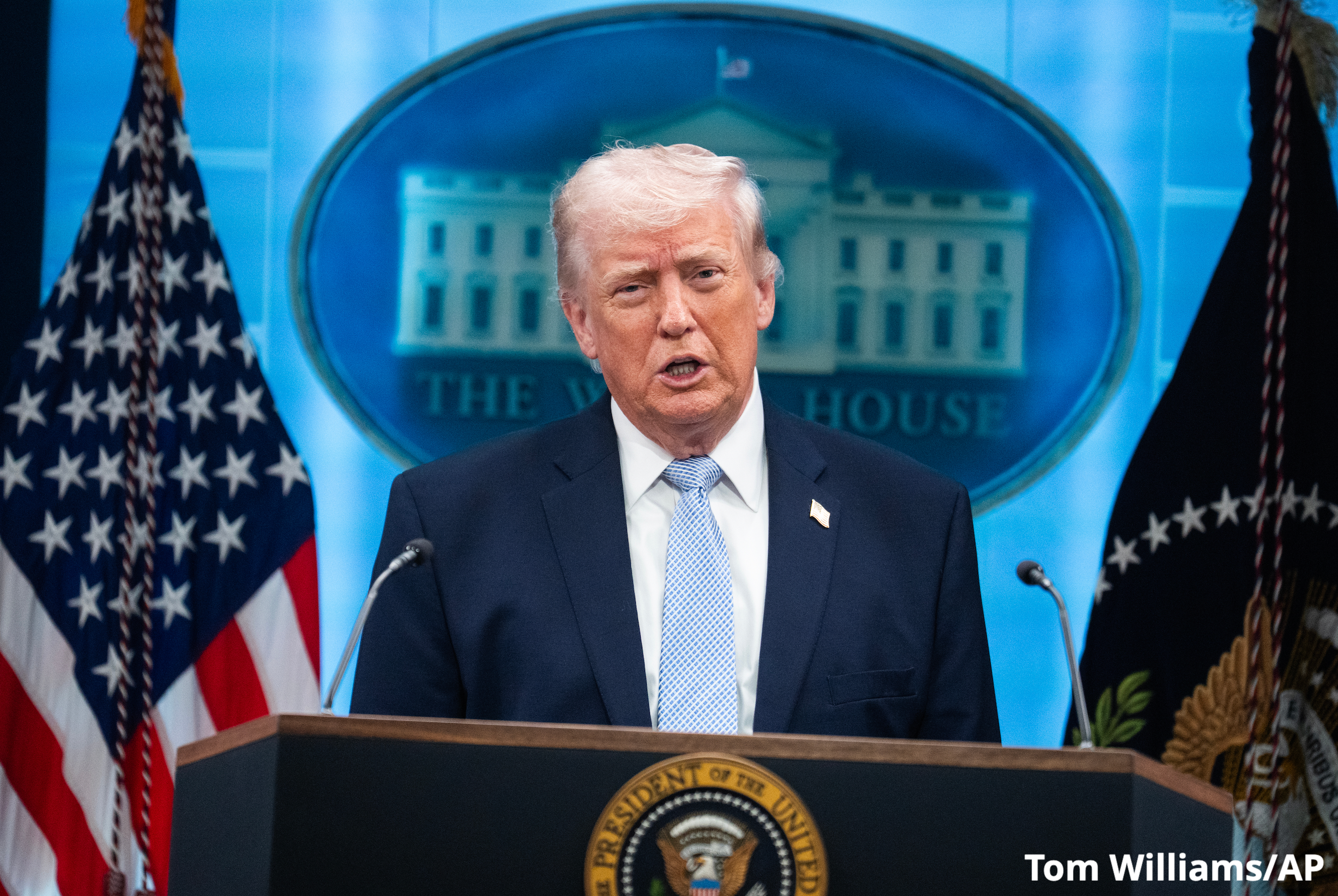
On Tuesday morning, President Donald Trump posted that “a whole civilization will die tonight, never to be brought back again” unless Iran reopened the Strait of Hormuz by 8 p.m. By 6:30 p.m., he had agreed to a two-week ceasefire based on a 10-point Iranian proposal. By midnight, he was calling it “a big day for World Peace.”
The media’s response to that 16-hour arc was, in its own way, just as revealing as the arc itself.
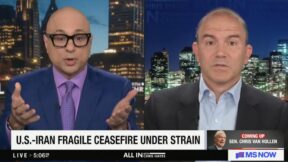
The partisan sorting happened within minutes of the ceasefire announcement. Mediaite’s Joe DePaolo documented the split in real time: MS NOW’s Symone Sanders-Townsend opened her broadcast declaring that Trump “caved.” CNN’s Erin Burnett said he was “backing down.” Fox News’ Laura Ingraham, who told viewers she’d just gotten off the phone with the president, reached the opposite conclusion: “Iran blinked.”
Three networks, one event, three verdicts. Each one landed exactly where you’d expect.
But the most revealing moment of the night may have come not from primetime anchors but from Fox & Friends on Wednesday morning. As this newsletter reported on Mediaite, co-host Lawrence Jones walked through Trump’s original objectives one by one — nuclear facility dismantlement, end to uranium enrichment, transfer of uranium stockpiles, acceptance of international inspections, suspension of the ballistic missile program — and delivered a verdict that was notable for its candor: “We have not reached any of those objectives.” He said it clearly, without hedging.
Then the framing shifted. Co-host Griff Jenkins recast the deal as evidence that Trump had put “so much fear” into Iran that they came to the table. Co-host Ainsley Earhardt closed the segment with the phrase that may as well be the motto of this media moment: “The president didn’t chicken out.”
So: none of the objectives met. Also: success. The bridge between those two positions was a redefined scorecard, moving from specific, concrete demands to the atmospheric metric of momentum and market reaction.
Mediaite’s Zachary Leeman also documented the contradictions: Trump claimed Iran had agreed to “COMPLETE, IMMEDIATE, and SAFE OPENING” of the Strait, while a regional official told the Associated Press that Iran and Oman would continue charging transit tolls throughout the ceasefire period.
The newsletter class was less forgiving, though divided along familiar lines. Politico Playbook noted the ceasefire leaves Iran’s enriched uranium in place, its leadership structures intact, and its hard-liners now in full control of a government that just extracted a two-week negotiating window from the most powerful military on earth. As Playbook put it, the “total victory” narrative looks “tough to sell.”
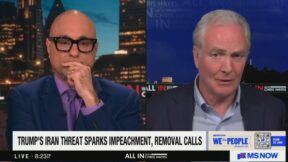
The Free Press ran analyst Eli Lake‘s piece arguing Trump’s “madman act” had delivered a genuine win, while also running a more cautious piece noting unresolved terms. Charlie Sykes at To the Contrary opened with the Trump civilization-death quote and posed three pointed rhetorical questions, the third being: “It really was a bad idea to entrust this man with the nuclear button, wasn’t it?” Dan Froomkin at Press Watch went further, calling on news organizations to explicitly describe Trump as “deranged” and to begin aggressive reporting on what can be done to stop him: impeachment, the 25th Amendment, military refusal of unlawful orders.
Then Trump picked a fight with CNN. After the network aired a statement from Iran’s Supreme National Security Council declaring a “great victory,” a statement CNN verified through the Iranian Foreign Ministry and multiple Iranian state outlets, Trump called it a “FRAUD” linked to a “Fake News site (from Nigeria).” FCC chair Brendan Carr quickly piled on, writing that it was “time for change at CNN.” The catch: the FCC has no authority over CNN, a cable network.
Status’s Oliver Darcy also captured the strangest subplot of the night: the MAGA revolt. Tucker Carlson called Trump’s Easter f-bomb post “vile on every level” and urged administration officials to refuse the president’s orders directly. Candace Owens called for invoking the 25th Amendment. Alex Jones asked on air: “How do we 25th Amendment his ass?” The most reliable amplifiers of Trump’s political brand spent Tuesday urging Congress to remove him from office.
TAKEAWAY: Every network assigned a winner to Tuesday’s ceasefire, and none of the scorecards agreed because none of them were measuring the same game. Fox moved the goalposts in real time, on camera, in a single segment. That is not spin. That is the architecture of how this media environment works, laid bare.
Three Takes
OPENAI BUYS A NARRATIVE ENGINE – AND NO ONE CAN AGREE ON WHAT IT MEANS
OpenAI’s acquisition of TBPN, the tech-focused live streaming and podcast network, for a reported “low hundreds of millions” set off a wave of analysis in the newsletter world Tuesday. The deal landed differently depending on who was reading the tea leaves.
The Ankler’s Erik Barmack framed it as a symptom of the AI industry’s legitimacy crisis. The default sales pitch, faster, cheaper, scalable, has driven adoption while “quietly undermining value,” he argued. TBPN works not because it breaks news, but because it “accelerates consensus” among Silicon Valley power brokers. Acquiring it is OpenAI’s most visible admission yet that the AI arms race is now about narrative, not just capability.
The Rebooting’s Brian Morrissey was more interested in what TBPN got right than what OpenAI is buying. He credited TBPN’s founders with “great energy,” discipline (they didn’t chase side businesses while the main show was working), and a savvy embrace of the clip economy. His cautionary note: TBPN’s model, essentially a friendly trade publication for the tech industry the way a home team’s local broadcast crew covers their own squad, is far harder to pull off as an arm of OpenAI. The acquisition, he suggested, may have already diminished the asset.
Feed Me’s Emily Sundberg went inside the deal, running an interview with TBPN president Dylan Abruscato, who insisted the acquisition changes nothing creatively. A “Commitment to Editorial Independence” clause, he said, is written into the contract and “contractually ensures we operate exactly as we do now.” Abruscato also teased future ambitions: a college tour, live shows at Davos and Milken, their own version of DealBook. The resources are now there, he said. Whether the editorial credibility survives the parent company is the question no clause can answer.
TAKEAWAY: The newsletter class covered the TBPN deal with unusual intensity, and the reason isn’t hard to find. Every writer in this stack is implicitly asking themselves the same question Abruscato fielded: if someone waved enough money, would your editorial independence clause hold? The answer is always yes. Until it isn’t.
📰 Top Reads 📰
The New York Times, Maggie Haberman and Jonathan Swan
THE IRAN SITUATION ROOM, FROM THE INSIDE: Ahead of their forthcoming book Regime Change: Inside the Imperial Presidency of Donald Trump, New York Times reporters Maggie Haberman and Jonathan Swan published a richly detailed account of how Trump made the decision to go to war with Iran — drawn from reporting in the Situation Room itself. The piece reveals that the initial push came from Israeli Prime Minister Benjamin Netanyahu, who hard-pitched Trump in a meeting that included senior Israeli military leaders on video screens alongside Susie Wiles, Marco Rubio, Pete Hegseth, Jared Kushner, and Steve Witkoff. VP JD Vance was overseas and couldn’t make it back in time. The gathering, Haberman and Swan report, “had been kept deliberately small to guard against leaks.” Hegseth was the most enthusiastic voice for war. Vance warned Trump that attacking Iran could cause regional chaos, break apart his political coalition, and be seen as a betrayal by voters who bought into the promise of no new wars. And Tucker Carlson, who had visited the Oval Office multiple times to argue against intervention, got a call from Trump shortly before the war began. “I know you’re worried about it, but it’s going to be OK,” Trump told him. Carlson asked how he knew. “Because it always is,” Trump replied. Poynter’s Tom Jones flagged the piece as essential reading. … QUOTE (Haberman and Swan): “Mr. Trump’s decision to take the country to war was not driven by intelligence assessments or a strategic consensus among his advisers, which did not exist. It was driven by instinct.” … QUICK TAKE: The detail that the meeting was kept small to prevent leaks — and leaked anyway, in granular detail, to the two reporters the White House most fears — tells you everything about the durability of information control in this administration.
Breaker, Lachlan Cartwright
NYT GUILD CALLS AI STANDARDS “WOEFULLY INADEQUATE”: The Times Guild sent a letter to New York Times leadership — addressed to A.G. Sulzberger, Meredith Kopit Levien, Joe Kahn, Kathleen Kingsbury, Marc Lacey, and Carolyn Ryan — describing the paper’s AI standards as “woefully inadequate,” often unclear, and “already frequently ignored,” per a copy reviewed by Breaker. The letter, from the Guild’s AI subcommittee, came after a freelance book reviewer used AI and plagiarized The Guardian. Management’s response, in a letter from Lacey to staff, argued the Times already has clear AI principles “first published over two years ago” and that writing multi-year AI restrictions into a contract is impractical given how fast the technology is moving. Axios’s Sara Fischer also reported the fight independently. … QUOTE (Times Guild AI subcommittee letter): “We are told to use A.I. ‘ethically,’ but given little guidance on what exactly that means.” … QUICK TAKE: Management’s argument that AI moves too fast for contractual guardrails is technically true. It is also exactly what you would say if you didn’t want guardrails.
Axios, Sara Fischer
🚨 SCOOP — LOCAL NEWSPAPER GIANT TRIES TO BREAK AP CONTRACT: Lee Enterprises, one of the country’s largest independent newspaper chains, contacted the Associated Press last month seeking to end its licensing deal on April 26 — months before the December 31 expiration — citing AP’s move away from hyperlocal coverage toward video and national topics. AP warned it may cut off services or charge interest if Lee stops paying early, with senior VP and general counsel Karen Kaiser telling Lee in a letter that the agreement “expressly provides that AP retains complete editorial discretion over the substance and form of its services.” Lee’s chief content officer Jason Adrians told Axios the disagreement is about content direction, not cost. … QUOTE (Adrians): “As we have advised the AP for some time, Lee will continue to focus its investments on its core commitment as a community news company.” … QUICK TAKE: The AP spent years diversifying away from newspapers. Lee is now using that pivot as an exit ramp. Both sides are right that the other changed the deal first.
Awful Announcing, Sam Neumann / Poynter, Tom Jones
TROY AIKMAN SAID THE QUIET PART OUT LOUD: On the Dallas Cowboys’ podcast, NFL Monday Night Football analyst Troy Aikman explained why the Miami Dolphins hired him as a consultant: “I have information that they don’t have or can’t get.” Awful Announcing walked through what that means in practice. Every week during the season, Aikman sits in production meetings with coaches who speak freely because they assume that information stays in service of the television product. Aikman said he has “fingerprints” on the Dolphins’ recent GM and head coach hires, and that he’s “pulling for” Miami because he has “something at stake.” The NFL declined comment when Pro Football Talk’s Mike Florio asked about the remarks. AA noted that the league quietly relaxed Tom Brady‘s facility access restrictions last season after initially treating his Raiders stake seriously, and that relaxation was the real policy statement. Poynter’s Tom Jones, citing Florio, added the clearest proposed remedy: if a broadcaster has an opportunity to work for a team, they must pick one job or the other. … QUOTE (Aikman): “I think the Dolphins were wise in understanding my relationships around the league, and knowing that I have information that they don’t have or can’t get.” … QUICK TAKE: Every NFL coach who ever spoke candidly in a production meeting with Aikman now has reason to wonder where that conversation ended up. The audience watching Monday night has the same problem. They just don’t know it yet.
Status, Oliver Darcy
60 MINUTES BRACES FOR A BARI WEISS OVERHAUL: CBS News boss Bari Weiss is expected to seek changes to 60 Minutes after this season ends in May, with current executive producer Tanya Simon‘s future described as “up in the air,” Status reports. Tucked into Simon’s contract, Status learned, is a clause giving CBS News the option to not continue with her in the EP role after one year, meaning Weiss could reassign her without technically firing her. More striking: Weiss has privately floated airing pieces from her own outlet The Free Press on 60 Minutes, an idea that, per Status, “raised eyebrows.” A CBS News spokesperson said Weiss had not suggested running Free Press pieces on the show, but that the program could look to The Free Press — which Darcy describes as “anti-woke” — for story inspiration. … QUOTE (CBS News staffer): “If Tanya goes, you can expect others to leave.” … QUICK TAKE: Darcy has covered Weiss more aggressively than almost any other reporter. Worth keeping that in mind when his anonymous CBS staffer sources are defining what counts as editorial interference at a network he is clearly watching closely.
Poynter, Angela Fu
AI STARTUP PLAGIARIZED THE LOCAL JOURNALISTS IT CLAIMED TO HELP: Nota News, which presented itself as an AI solution to local news deserts, was caught systematically lifting reporting from local journalists — sometimes barely reworded, sometimes mangled, sometimes with fabricated quotes — across all 11 of its sites, Poynter’s Angela Fu found. A Kansas City Star story about minors was rewritten without attribution; exclusive quotes were paraphrased and passed off as direct quotes; AP Style was garbled so badly that Georgia O’Keeffe became “Ga. O’Keeffe.” After scrutiny from Axios and Poynter, Nota pulled its sites offline. Its CEO then told Fu the sites were “never meant to be made public,” a claim Fu’s reporting disputes given that Nota had issued press releases and given interviews to The Wall Street Journal about the project. … QUOTE (Fu): “Almost none of the counties chosen were true news deserts. To produce enough stories, the Nota News sites needed to use the work of local journalists.” … QUICK TAKE: An AI local news product that needs local journalists to function is not a solution to the local news crisis. It is a parasite dressed as a cure.
The Ankler, Glenn Peoples and Robert Levine
BILL ACKMAN’S $64 BILLION BET ON UNIVERSAL MUSIC: Pershing Square Capital CEO Bill Ackman submitted a bid to acquire Universal Music Group, home to Taylor Swift, Kendrick Lamar, the Rolling Stones, and Bob Dylan’s songwriting catalog, valued at roughly $64 billion, a 77 percent premium over Monday’s closing price. The Ankler’s former Billboard analysts broke down the financial engineering involved: a mix of cash and stock, a proposed move of UMG’s listing from Amsterdam to the NYSE, and a plan to install former CAA chief Michael Ovitz as board chair. The key obstacle is French billionaire Vincent Bolloré, whose Bolloré Group and Vivendi holdings give him effective veto power. Ackman has said he already had dinner with Ovitz and CEO Lucian Grainge and expects “overwhelming shareholder support,” though music executives who spoke to the Ankler were skeptical. Axios’s Sara Fischer and Dan Primack also covered the bid. … QUOTE (Peoples and Levine): “Investors are falling out of love with music companies.” … QUICK TAKE: Ackman’s bid may be most useful whether it succeeds or fails. It forces a public argument about what UMG is actually worth, which is more than any shareholder letter has managed in two years of declining stock price.
Breaker, Lachlan Cartwright
WHCD GUEST WARS: With Trump attending the White House Correspondents’ dinner for the first time as president, networks and publishers are in a full-scale scramble to lock in the most prominent guests. Breaker has the receipts: The New York Post‘s Keith Poole is hosting Treasury Secretary Scott Bessent, EPA Commissioner Lee Zeldin, and UN Ambassador Mike Waltz. The Wall Street Journal‘s Almar Latour gets former Trump campaign senior advisor Chris LaCivita. Fox News hosts National Intelligence Director Tulsi Gabbard and Transportation Secretary Sean Duffy. All eyes are on the CBS table, where White House Correspondents’ Association president Weijia Jiang will be on stage with Trump. CBS News president Bari Weiss will be in attendance but will not be sitting next to Jiang on the dais. Jane Fonda declined The Guardian’s invitation citing a “scheduling conflict.” The Substack new media party at the Renwick Gallery will feature, among others, the “looksmaxxing” influencer Clavicular, whose spokesperson told Breaker he “looks forward to mogging people” and doesn’t know any DC reporters’ names. … QUOTE (Jackson): “Given DC is Hollywood for ugly people, he looks forward to mogging people.” … QUICK TAKE: In 2011, this dinner embarrassed Trump into running for president. In 2026, he is sitting at the head table while the same press corps competes to impress him. That is the guest list story nobody is writing.
Media Newsletter, Simon Owens / The Rebooting, Brian Morrissey
AXIOS IS BETTING AI CAN MAKE LOCAL NEWS PENCIL IN SMALL MARKETS: Axios Local executive editor Holly Moore told Simon Owens that the company is pushing into cities of 100,000 or fewer using AI tools to reduce the per-reporter workload. These include an internal copy editor called the “Axiomizer,” AI-assisted transcription of public meetings, and automated localization of national data stories. The model: one reporter, centralized editing support, AI handling the repetitive production work. Axios is already in 35 markets and has set targets as ambitious as 1,000 cities. The human-in-the-loop principle holds. “Don’t let anything get out there that hasn’t gone through a person,” Moore said. But the ratio of AI to human is shifting. Axios COO Allison Murphy told The Rebooting’s Brian Morrissey that the reporter’s role is expanding well beyond filing copy: anchoring community relationships, doing audio and video, driving events. … QUOTE (Murphy): “The proportion of our employee base who are reporters versus other roles will be higher.” … QUICK TAKE: The Nota News story and the Axios Local story ran on the same day, and together they answer the same question differently. Nota tried to replace the journalist. Axios is trying to free one up. Read both stories back to back and the distinction becomes the whole argument.
Status, Oliver Darcy
ELLISON’S GULF DEAL AND THE STRINGS ATTACHED: Paramount’s SEC filing disclosed that its Middle Eastern partners, primarily Saudi Arabia, Abu Dhabi, and Qatar, are providing $24 billion for the Warner Bros. Discovery acquisition and will engage in “strategic and commercial opportunities” with the combined company. Status’s Oliver Darcy noted that Saudi Arabia has “a long record of human rights abuses and chilling creative expression,” and that the filing’s boilerplate about “enhancing long-term shareholder value” leaves the nature of those opportunities entirely undefined. The filing confirmed the David Ellison family and RedBird retain all voting shares. … QUOTE (Darcy): “It goes without saying that these Middle East countries are not giving Ellison billions of dollars without some strings attached.” … QUICK TAKE: Paramount’s SEC filing is careful to note that the Gulf partners hold no voting shares. It is less careful about what $24 billion in equity interest actually buys. The answer to that question will not appear in any filing.
🎬 SHOWBIZ 🎬
Page Six Hollywood, Peter Kiefer
CAA OFFERS EQUITY BUYOUT AMID RANGE LEGAL PRESSURE: Following a three-judge panel’s ruling that CAA must pay $36 million in cash to four former employees who left to found Range Media Partners — agents Jack Whigham, Dave Bugliari, Michael Cooper, and Mick Sullivan — CAA president Jim Burtson sent a letter offering all equity holders the chance to liquidate 5.6% of their holdings. The timing struck insiders as curious, coming five weeks after the ruling, though a source close to CAA insisted it was consistent with planned annual liquidity events. The ruling also raised the possibility of a mass suit from dozens of current and former employees who’ve been restricted from cashing in equity despite multiple liquidity events over 14 years. CAA is appealing. … QUOTE (source with CAA equity): “It’s far from equitable, but at least it’s something.” … QUICK TAKE: CAA principals Bryan Lourd, Kevin Huvane, and Richard Lovett created this mess by stripping equity from agents who left. The Range ruling may have just made it significantly more expensive.
Page Six Hollywood, Tatiana Siegel
JEFF SHELL’S EXIT FROM PARAMOUNT IS IMMINENT — AND THE MONEY AT STAKE IS STAGGERING: Sources representing all sides of the Jeff Shell legal saga told Page Six Hollywood that Paramount Skydance’s president is “most certainly gone,” with his exit expected to be amicable and without a “for cause” finding — which matters enormously. Shell is in year one of a five-year deal at $3.5 million annually, plus a $1.5 million bonus, but the real money is the five million shares of restricted stock that vest over five years — worth $50 to $100 million depending on stock price. A “for cause” firing would cost him approximately $45 million in unvested options. The case involves allegations from poker player and Hollywood fixer RJ Cipriani that Shell disclosed non-public information about Paramount’s UFC streaming deal via text. … QUOTE (Shell): “We are buying ALL of the UFC rights for the next 7 years for Paramount.” … QUICK TAKE: The “for cause” distinction is doing $45 million worth of work in this negotiation. Shell’s lawyers know it. Paramount’s lawyers know it. The entire proceeding is being choreographed around that number.
The Ankler (Wakeup), Sean McNulty
LATE NIGHT BY THE NUMBERS — AND WHY CBS FOLDED: CBS is handing its 11:35 p.m. slot to Byron Allen‘s Comics Unleashed beginning May 22, with Funny You Should Ask taking the 12:35 a.m. slot — effectively leasing two hours of late night airtime for a year. Sean McNulty ran the actual Nielsen and YouTube numbers that make sense of why: Fox News’ Gutfeld! draws 3.5 million viewers at 10 p.m. CBS’s Late Show and ABC’s Jimmy Kimmel Live! are tied at 2.4 million. NBC’s Tonight Show trails badly at 1.3 million. On YouTube, Jon Stewart‘s The Daily Show monologues get 5-7 million views; Kimmel and Stephen Colbert are in the 2.5-3.5 million range; Jimmy Fallon averages 200-400k. The hard math: ABC gets similar numbers to CBS and late night is apparently a viable business for them. CBS looked at the same numbers and quit. … QUOTE (McNulty): “This year will likely show if Colbert is truly a canary in the coal mine for late-night TV economics, or if his cancellation was even more likely a victim of the Ellison regime’s politics.” … QUICK TAKE: CBS is not exiting late night. It is outsourcing the risk. If Allen’s shows flop, CBS shrugs and moves on. If they work, every other network has a template for converting a money-losing obligation into a revenue stream. The experiment is less about comedy than about who bears the downside.
👀 What Got Missed? 👀
The newsletter class spent considerable energy on Tuesday dissecting Trump’s Iran threats and the media’s response to them. What it largely skipped was a question sitting at the center of the whole story: Why did the same MAGA media apparatus that spent years defending Trump’s every move suddenly call for his removal from office in a single news cycle?
Tucker Carlson, Candace Owens, and Alex Jones don’t agree on much. They agreed on Tuesday that Trump had gone too far. That is not a footnote. That is a data point about where right-wing media’s actual red lines are and what it takes to find them. The newsletter class reported the quotes. It did not ask what those quotes reveal about the architecture of MAGA media loyalty, or whether a ceasefire puts those voices back in the box. That is the more interesting story.
🏆 Newsletter of the Day 🏆
Awful Announcing — On a day dominated by Iran ceasefire takes, Awful Announcing published the most substantive piece of original media criticism in the stack: a meticulous, sourced account of what Troy Aikman’s own words reveal about the NFL’s broadcaster-team conflict-of-interest problem. The key move was letting Aikman hang himself with his own quote rather than editorializing around it, then working through the structural implications with precision. The league’s silence, AA argued, is not a sign that a policy is coming. It is the policy.
The Bottom Line
Every partisan news cycle produces its own version of the same scene: the facts arrive, the networks sort them, and each audience gets the version its outlet already believed. Tuesday’s version was faster than most. Within ninety minutes of the ceasefire announcement, three networks had declared three different winners. Fox & Friends went further. It admitted the facts, then changed the subject. Nobody on air acknowledged the scorecards were measuring different games. They rarely do.
Get full access to premium content with a Mediaite+ subscription.


Comments
↓ Scroll down for comments ↓