ONE SHEET: Trump Vs. the Press, Joe Rogan Feels ‘Betrayed’, CNN’s Foreign Influence, and More!

The Big Picture
The Iran war is reshaping every corner of the media landscape. A single pointed question from a New York Times reporter went viral and sparked a debate about whether the press corps is doing its job — or just congratulating itself for asking one good question. Meanwhile, YouTube has officially dethroned Disney as the world’s largest media company, and Hollywood is scrambling to catch up with creators. David Ellison is pledging CNN’s independence while foreign petrodollars and Chinese tech money quietly back his deal. And Rupert Murdoch turned 95, which means the media world’s most durable mogul is still very much the story.
Today’s Sources: CNN’s Reliable Sources | Charlie Sykes | Press Watch | Poynter | Axios | Status | Ankler’s Like & Subscribe | Tubefilter | The Rebooting | Feed Me | Breaker | Page Six Hollywood | Racket News | CJR | Politico Playbook
Top Story
WAR ZONE: TRUMP VS. THE PRESS
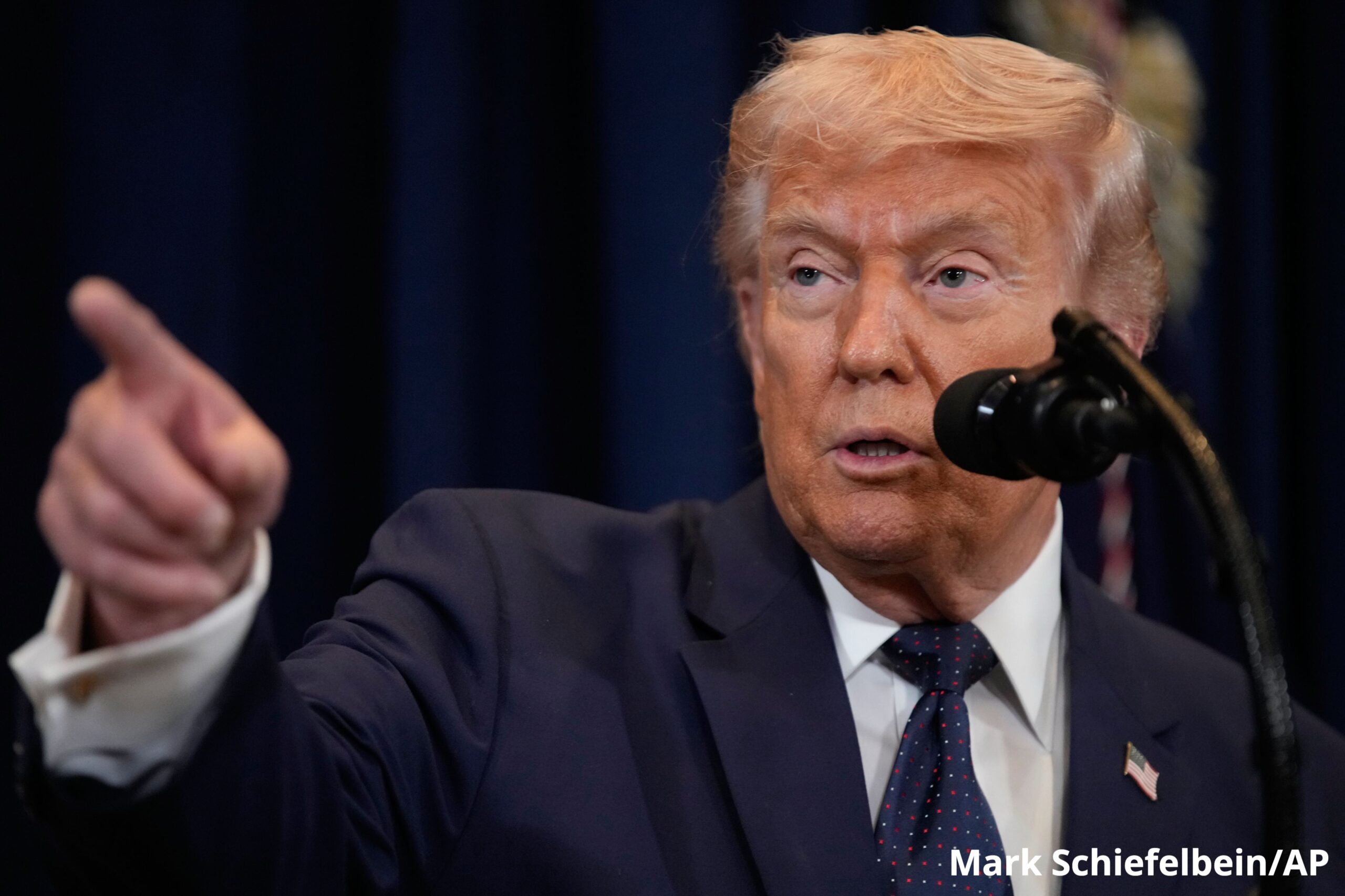
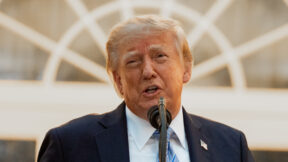
The moment came during a Monday press conference. Shawn McCreesh of the New York Times stepped up with a question that stopped the room cold: You just suggested Iran somehow got its hands on a Tomahawk and bombed its own elementary school on the first day of the war. Your defense secretary wouldn’t say that. Why are you the only person saying this?
Trump’s answer: “Because I just don’t know enough about it.”
The exchange went everywhere. Tech investor Chris Fralic asked on X whether there were Pulitzer Prizes for reporters’ questions. Reliable Sources‘ Brian Stelter called the question a model of composition — factual, non-confrontational, and surgically direct. Poynter‘s Tom Jones praised the tone and the architecture: it laid out the facts, didn’t attack, and got a genuine answer.
But Press Watch‘s Dan Froomkin had a sharper read: the praise itself was part of the problem. The press corps got one good question and congratulated itself while letting Trump’s broader wartime derangement pass unremarked. Froomkin catalogued the contradictions Trump delivered in a single Monday — “the war is very complete, pretty much”; “we’ve already won in many ways, but we haven’t won enough”; “Death, Fire, and Fury will reign upon them” — and asked why no news organization was connecting the dots. Collecting evidence of incoherence, he argued, is not the same as reporting incoherence.
Compounding the challenge: the information environment itself is being actively poisoned. CNN’s Daniel Dale reported that fake videos and images purporting to show Iran war scenes have racked up tens of millions of views on social media this month — clips depicting fictional Iranian missile strikes on Tel Aviv, captured U.S. special forces, airport evacuations — most of them AI-generated. Meanwhile, X’s Grok is making things worse by hallucinating information and generating its own fabricated war imagery. University of California, Berkeley, digital forensics professor Hany Farid put it plainly: the content is more realistic, the volume is higher, and the penetration is deeper. The press corps is being asked to do accountability journalism in an environment where the baseline facts are themselves under assault.
The backdrop made it worse. Poynter noted that the Iran war is historically unpopular — 53% of voters oppose military action, per the latest Quinnipiac poll, a striking contrast to the 92% who supported Afghanistan in 2001 and the 82% who backed the Gulf War. The New York Times reported that the usual “rally around the flag” effect has essentially collapsed under partisan polarization. Democrats won’t rally for Trump. And as a Harvard professor told the Times, Trump’s own base “thinks they hired him to get him out of wars.”
To the Contrary‘s Charlie Sykes went further, zeroing in on Trump’s aside to GOP members of Congress that it was “more fun to sink” enemy ships than capture them. “Let’s focus on the sadistic glee,” Sykes wrote — the performative bloodlust of men running a war, contrasted with the sobriety serious military leaders have historically brought to the moment.
Meanwhile, Politico Playbook reported that White House officials privately believe they have three to four weeks to “ride out” oil price pain before the war becomes a durable political problem — a window that reveals just how much the administration’s wartime posture is being driven by commodity markets, not military strategy.
White House press secretary Karoline Leavitt completed the picture from the podium, telling reporters the administration won’t be “harassed by the New York Times” over the school strike — framing accountability journalism as harassment in a line that Status flagged and Poynter amplified.
TAKEAWAY: In a media environment defined by access anxiety and an administration that openly calls accountability reporting “harassment,” one New York Times reporter asked a plain factual question and became the story. Froomkin’s point cuts deeper: the press corps praised McCreesh for doing what every reporter in that room should be doing on every question. The applause wasn’t just for him — it was a tell about everything the rest of them aren’t doing.
Three Takes
YOUTUBE IS THE WORLD’S LARGEST MEDIA COMPANY. NOW WHAT?
MoffettNathanson analyst Michael Nathanson dropped a number this week that reshuffled the media industry’s self-image: YouTube generated $62 billion in revenue in 2025, edging past Disney’s $60.9 billion in media assets. The firm values YouTube at somewhere between $500 billion and $560 billion — well ahead of Netflix’s $417 billion market cap.
Three newsletters covered it. Three very different stories.
Tubefilter played it as a creator economy vindication. MrBeast topped its weekly ranking with 1 million new subscribers. A “rankings only” channel called Polar Ranks earned 358.9 million views in a single week just by posting contentious lists. The Roblox developer economy is minting millionaires. The platform isn’t just big — it’s the new infrastructure.
Like & Subscribe‘s Natalie Jarvey (Ankler) saw Hollywood’s existential reckoning. Fox Entertainment just hired a veteran digital executive to run a new Creator Studios division. The Hormozi couple is building an eight-figure B2B media studio. Dude Perfect and Audiochuck are both bringing in traditional entertainment executives. “YouTube’s studio era,” she wrote, isn’t a one-way street — creators are going full studio, and Hollywood is finally paying attention.
Reliable Sources‘ Brian Stelter made it personal. He caught his 8-year-old watching a MrBeast video — “50 million views in two days” — and noted the MoffettNathanson finding in the same breath. For Stelter, it’s a generational data point: YouTube isn’t beating Disney in some abstract financial sense. It’s beating Disney in living rooms, on phones, and in the attention of children whose media habits are being formed right now.
TAKEAWAY: The MoffettNathanson number is striking, but the more important story is how YouTube got there. Not through executives greenlighting projects or moguls placing bets — but by handing cameras to millions of people and letting the algorithm crown the winners. A handful of MrBeasts rise to the top; the rest chase the feed. It’s democratic in theory and ruthless in practice. Disney built an empire on control. YouTube built a bigger one by surrendering it. The question nobody in the newsletter class is asking: what does media look like when the platform always wins and the creator is always disposable?
📰 Top Reads 📰
Status, Oliver Darcy
ELLISON PLEDGES CNN INDEPENDENCE — BUT FOREIGN MONEY COMPLICATES THE PICTURE: Speaking before Warner Bros. Discovery executives at the Steven J. Ross Theatre in Burbank, David Ellison said CNN’s “editorial independence” must be “maintained” and called it an “honor” to be among its stewards. But Status reports that RedBird’s Gerry Cardinale has confirmed foreign investors will be part of the deal’s financing — including a possible return of China’s Tencent, which Paramount had previously removed from the equation over CFIUS concerns. Senators Richard Blumenthal and Elizabeth Warren both gave Status statements demanding regulatory review. … QUOTE (Blumenthal): “Paramount now appears to be trying to hide the ball about Tencent’s role.” … QUICK TAKE: Ellison can insist that he is in the “truth business.” But his foreign financial backers may be in a different business entirely.
Axios, Sara Fischer
🚨 SCOOP — NIELSEN’S GRACENOTE SUES OPENAI FOR COPYRIGHT INFRINGEMENT: Gracenote, the metadata company owned by Nielsen, has filed suit against OpenAI in the Southern District of New York, alleging the company copied not just its entertainment metadata but the proprietary relational framework connecting that data — the structure that makes it valuable to enterprise clients. Fischer reports this is the first major AI copyright lawsuit focused on the theft of a dataset’s architecture, not just its content. … QUOTE (Axios): “Those providers could use the data and framework scraped by OpenAI to build their own substitutive, competing media metadata products and platforms, all without permission or compensation to Gracenote.” … QUICK TAKE: Every AI copyright lawsuit so far has been about words and images. This one is about the map.
The Rebooting, Brian Morrissey
JOURNALISM’S PRODUCT PROBLEM: Ex-BBC and Ringier executive Dmitry Shishkin told Morrissey that newsrooms are drowning in commodity “update me” content while starving for utility journalism. His most concrete data point: BBC Russia’s output was dominated — roughly 70% — by that kind of breaking-news churn, which accounted for just 7% of page views. When the team cut total output by 60% and shifted toward educational and analytical content, its audience tripled. Morrissey draws a line to the Washington Post‘s job cuts, which came with data showing the product wasn’t performing in the market. … QUOTE (Shishkin): “We need to make journalism indispensable in people’s lives. I always ask my clients, what would happen if your organization disappeared tomorrow? And if there is a silence at the end, then there is a problem.” … QUICK TAKE: The Times built a games company to fund its world-class newsroom, while everyone else is still arguing about article formats and SEO.
Feed Me, Emily Sundberg
VANITY FAIR‘S NEW BOSS ON CHASING MELANIA AND THROWING PARTIES: Mark Guiducci, Vanity Fair‘s global editorial director, tells Feed Me that the Susie Wiles profile was “the most subscriber-driving story in Vanity Fair’s history” — a direct result of his day-one mandate to knock on Washington’s front doors. He says a real Melania Trump interview is still on the table. On the Oscar party: smaller guest list, no outside photography, a mix of “legends and young people who feel very right now.” On the future of magazine journalism: bullish, especially as AI “promises to aggregate better than your favorite blogger’s favorite blog.” … QUOTE (Guiducci): “Whenever we hit ‘publish’ on a story that makes me nervous because we’re taking a risk — or even feels like we’re getting away with something — I feel like we’re doing something right.” … QUICK TAKE: The editor who almost got cancelled for suggesting a Melania profile now runs one of the most-talked-about magazines in Washington. The risk paid off.
Breaker, Lachlan Cartwright
AXEL SPRINGER BUYS THE DAILY TELEGRAPH FOR £575 MILLION: Former Financial Times editor Lionel Barber writes for Breaker that Mathias Döpfner financed the deal in three days, outmaneuvering Lord Rothermere’s Daily Mail group and ending a years-long ownership saga. Döpfner, who already owns Politico and Business Insider in the U.S., has signaled ambitions to go big on digital and target the American market. Former Spectator editor Fraser Nelson called it “The Great Escape” from Wall Street private equity and Abu Dhabi’s state ownership. … QUOTE (Barber): “There is speculation that he may be looking for a new Telegraph editor.” … QUICK TAKE: Döpfner now owns the conservative flagship on both sides of the Atlantic. That’s a media empire with a point of view.
CJR, Ivan L. Nagy
ARE PREDICTION MARKETS ACTUALLY GOOD FOR JOURNALISM?: CJR profiles Dustin Gouker, a prediction markets analyst, who argues newsrooms should treat Kalshi and Polymarket as complements, not competitors. CNN and Dow Jones have already signed deals to integrate prediction market data into coverage. But Gouker notes caveats: Kalshi predicted Ken Paxton would win the Texas Senate primary; John Cornyn won. The markets forecast 60,000 new jobs in February; the economy lost 90,000. … QUOTE (Gouker): “Prediction markets and news media exist in parallel. You’re seeing deals between them because they need each other.” … QUICK TAKE: Prediction markets are gambling with better branding. The deals with news organizations are mostly free PR for Kalshi and Polymarket.
Racket News, Matt Taibbi
DIMITRI SIMES: AMERICA’S EXILED PRESS FREEDOM CASE: Taibbi interviews Dimitri Simes, the Russian-American analyst who defected to the U.S. in 1973, only to be indicted in 2024 on IEEPA sanctions violations for hosting a Russian TV debate program. The charges remain active under the Trump administration despite Trump’s repeated claims that such prosecutions were Biden-era “Russia hoax” politics. Simes’s lawyer calls it “a totally unprecedented use of the sanctions laws.” The New York Times — which covered Simes as a go-to Russia analyst for decades — has not covered his case substantively. … QUOTE (Simes): “If I were to remain silent, there would be a false impression that things like this are okay, that you can do it with total impunity. That’s wrong.” … QUICK TAKE: The man the Times called for quotes about Russia for 30 years is now exiled in Moscow under a Biden-era indictment the Trump DOJ won’t drop. Nobody’s writing that story.
Axios, Sara Fischer and Kerry Flynn
NEWSROOM STRIKES HAVE REACHED HISTORIC LEVELS: Union formation in the media industry has surged since 2020, averaging over 23 new unions per year — up from roughly eight annually in the decade before. Strike activity has followed: NewsGuild data shows roughly 40 media unions have walked out or authorized strikes since 2019, compared to zero in the 18 years prior. The New York Times editorial union is currently negotiating a contract renewal after its deal lapsed Feb. 28. SAG-AFTRA faces a June deadline with major studios. … QUOTE (Axios): “The evolution marks a generational power shift as more media workers bring new expectations around transparency and social responsibility to the bargaining table.” … QUICK TAKE: The media industry is contracting and its workers are organizing faster than ever. Those two trends are on a collision course.
🎬 SHOWBIZ 🎬
Page Six Hollywood, Tatiana Siegel
SHELL LAWSUIT DRAGS ARI EMANUEL, ZASLAV INTO $150M LEGAL MESS: Pro gambler RJ Cipriani filed his threatened $150 million lawsuit against Paramount Skydance president Jeff Shell on Monday in LA Superior Court, and the 67-page complaint named names — from WME’s Ari Emanuel to Warner Bros. Discovery CEO David Zaslav to Hunter Biden. The suit alleges Shell shared confidential Paramount deal intel with Cipriani, including advance knowledge of the $30-per-share WBD bid and the UFC deal. Emanuel is mentioned in connection with crisis communications work Cipriani claims he performed in 2019, though Emanuel’s only documented responses in the filing are a prayer hands emoji and a “Happy Hanukkah” like. Shell’s wife is a named defendant. … QUOTE (Steven Aaronoff, Cipriani’s attorney): “Jeff Shell is not the first heavyweight in Hollywood to try to use RJ to repair their public reputation or to prevent bad press from coming out.” … QUICK TAKE: The arsonist cosplaying as a firefighter — as one source described Cipriani — has finally lit the match.
Status, Oliver Darcy
HARVEY WEINSTEIN SPEAKS FROM RIKERS: ‘I DON’T WANT TO DIE IN HERE’: In his first major interview from Rikers Island, disgraced filmmaker Harvey Weinstein told THR’s Maer Roshan he spends 23 hours a day in his cell, was punched in the face by another inmate, receives the trades two weeks late, and is afraid of dying in custody. “Cold and heartless,” he called it. Status flagged the interview as a notable media moment — Weinstein, stripped of power, still reading The Hollywood Reporter religiously and “talking to Hollywood people on the outside.” … QUOTE (Weinstein): “I don’t want to die in here.” … QUICK TAKE: Hollywood’s most infamous prisoner is still following the trades. The trades are still covering him. Some relationships are harder to end than others.
Breaker, Lachlan Cartwright
RASHIDA JONES NAMED CEO OF PIERS MORGAN’S UNCENSORED: Former MSNBC chief Rashida Jones has been appointed CEO of Uncensored, the content company founded by Piers Morgan, Breaker reports citing Variety’s Brian Steinberg. The pairing is being described as one of 2026’s most curious. Jones ran MSNBC during a period of significant ratings turbulence; Morgan has built Uncensored as a deliberately provocative platform positioned against mainstream media pieties. … QUOTE (Brian Steinberg, Variety): “One of 2026’s most curious pairings.” … QUICK TAKE: Piers Morgan hiring a former MSNBC president is either a masterstroke of brand disruption or a very expensive content of contradictions. Probably both.
👀 What Got Missed? 👀
The newsletters spent the week grading the press corps. Meanwhile, the most influential media criticism of the Iran war came from Joe Rogan — a podcaster in Austin who told his audience that MAGA supporters “feel betrayed,” questioned whether Israel pushed the U.S. into the conflict, and reached more ears in one episode than this entire stack combined. The chattering class treated Rogan as a data point — a right-wing voice registering dissent — and moved on. Nobody stopped to observe that the most penetrating anti-war media moment of the week didn’t come from a newsletter, a newspaper, or a cable anchor. It came from a guy on a couch with a microphone. That’s not a Rogan story. That’s a press corps story.
🏆 Newsletter of the Day 🏆
Axios (Sara Fischer) — Three strong items in one edition: the Nielsen/Gracenote OpenAI scoop, the VOA court ruling, and the newsroom labor data package. The Gracenote lawsuit in particular surfaces a genuinely novel legal theory — suing over a dataset’s relational architecture, not just its content — that the rest of the stack missed entirely. That’s the newsletter doing its job.
The Bottom Line
The McCreesh question was good. The praise for it was excessive, and the excess was revealing. When a single well-composed question becomes the event of the week — when journalists are asking if there are Pulitzer Prizes for questions — it tells you something about how low the bar has been set. Froomkin is right that the press is collecting evidence of Trump’s wartime incoherence without reaching the obvious conclusion. But there’s a deeper media dynamic at work: outlets are now so worried about being accused of advocacy that a question which merely applies basic logical pressure feels like a landmark act of journalism. The news industry’s crisis of confidence isn’t just about revenue or platforms. It’s about whether reporters trust themselves to say what they can plainly see.
Get the Mediaite One Sheet with a One Sheet or Mediaite+ subscription.



Comments
↓ Scroll down for comments ↓