Meet the SiriusXM Host Whose Top-Tier Political Guests Are the Envy of Bookers Everywhere

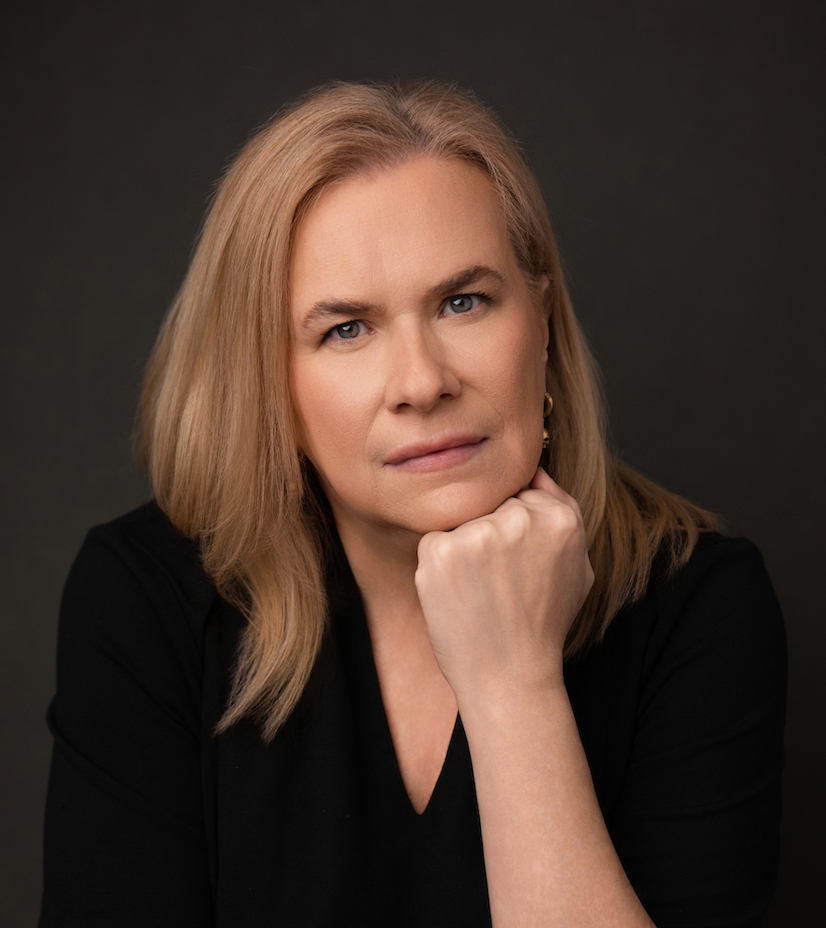
Julie Mason
SiriusXM POTUS host Julie Mason isn’t a new kid on the block. The veteran print journalist, who reported on former President George W. Bush’s White House as well as former President Barack Obama’s first term in office, isn’t even new to radio, having switched to that medium in 2011. Now, Now, she’s still finding ways to thrive while attracting big-name, ideologically diverse guests ranging from Senator Ted Cruz (R-TX) to former Speaker of the House Nancy Pelosi.
Guests like those make Mason’s daily rundown the envy of many a cable news booker with their much larger budgets and teams. Big names, both sides. Often in the same show. Mason gets them all. From Cory Booker to Rand Paul. From Tammy Duckworth to Sarah Huckabee Sanders. From Chris Murphy to Trump officials like Doug Burgum.
The question asks itself: How does she do it?
The answer, according to Mason, is that politicians — like the rest of us — are getting tired of canned questions designed to prompt viral answers.
“They don’t want to deal with your stupid gotcha question, right? And I understand that, and I don’t think they should have to,” Mason explained. “There’s a way to get that same information without being an antagonist.”
Mason’s guests are also relaxed and engaged, equally happy to banter and to dive into tough topics. She says it’s a little harder to get big-time guests from the right than from the left, but the GOP is more apt to participate if they believe you’re an honest broker.
“[Republicans] just want a fair shake,” Mason added. “They don’t want softball, they don’t want an easy time of it, they just want you to be fair.”
She recalled speaking to Senator Ron Johnson (R-WI), who was “in the middle of some stupid mess” at the time, and telling him, “Look, I’m not looking for a fight with you, I just want to understand how you’re thinking.”
Mason continued, “And his sigh was so audible on the air, he exhaled heavily, and just calmly explained his thinking. I learned from him so much more than I would have if I’d gone in hard.” Having the time (her show runs three hours from 3-6 p.m. ET every weekday) to really dig into a guest and their concerns and issues is a “luxury,” she admits.
Mason’s career began when she was hired as a clerk by the Dallas Morning News, and then as a reporter by the Houston Chronicle in 1988. She began covering Washington in 2001, and joined SiriusXM in 2011.
“I couldn’t do this radio job if I hadn’t done 25 years of print reporting, so I consider them a continuum rather than like a jump,” Mason said of the change. “I needed that foundational knowledge of 10 years at the White House.”
In addition to picking up new skills, like operating a soundboard, Mason also had to change how she approached reporting.
“How I think about the news [changed],” she added. “I’m much better informed as a radio reporter because I have to be. When I was covering the White House, all I had to know was the White House, and I would have no idea what else was going on.”
Her time in the White House was intense, but also fun. The Bush years were marked by wars and Hurricane Katrina, but “you couldn’t miss an event that he had, even if it was just routine remarks, because there was always [a moment] like a bird was going to sh*t on him, or he would do a little dance, or he was going to embarrass himself or someone else, and it would be the talk of the afternoon.”
Being on the radio means her voice “is in the ear of the person who’s receiving it,” which inherently makes the relationship different. “There’s humanity involved,” Mason said. “They’re looking for your voice. They can engage with sincerity. They listen all the time, probably, and so they have a sense of you as a person, and it makes them react much kinder, even when they’re upset, even when they don’t like the news, or what you’re saying.”
One thing that stands out about the Julie Mason Show is her ability to respectfully engage with politicians from across the political spectrum. “Democrats will come on, and they have a more natural relationship with journalists,” she explained. “They trust us; they think we’re on the team, even though we’re not—so it’s a much easier relationship most of the time.”
But their Republican counterparts can require a more delicate approach, which is often worth it. “You’ve got to let them know that you’re going to treat them fairly, and then they’ll give you everything,” she added.
She’s also not afraid to repeatedly interview guests that her listeners don’t really like, like Sen. Ted Cruz.
“People who follow a politics show are naturally partisan, right? I mean, I actually do have a huge number of people who are independent or unaffiliated, moderate, who like bipartisanship, but they also don’t like certain personalities,” Mason explained of her listeners.
“I would say generally, my audience doesn’t love Ted Cruz. I do. I like Ted Cruz a lot, I love to have him on, and it’s part of a persuasion game to get them to see his humanity, or see like what’s kind of fun and cool about him,” she said.
But listeners on the other end of the spectrum weren’t exactly into the conversation she had with Representative Jamie Raskin (D-MD) about Bruce Springsteen—at first. “On the 50th anniversary of Bruce Springsteen’s Born to Run album, I had a whole conversation about it with Jamie Raskin, and I think for my conservative listeners or my most moderate listeners, they look at [Raskin] and just see a liberal who’s causing trouble.”
But hearing Raskin speak about Springsteen opened some minds. Those kinds of interviews “give a different side of politicians.” That isn’t the summation of the entire show, but it’s a big part of it.
Landing such a wide swath of guests is the work of her producer, Patrick Ferrise, who worked in alternative music before making the switch to politics. Ferrise is universally beloved across D.C., which makes it possible for Mason to have spoken to former Vice President Mike Pence (who she described as “hilarious”) three times.
For a group of people who nearly always have a message they want to get out, booking politicians can actually be a difficult thing to do. The process is “aggressive,” Mason said, and hosts are competitive. “It is really competitive and really aggressive about getting guests on, and people can… they’re really concerned about becoming overexposed or oversaturated in the news,” she explained. “They don’t want to overdo it, but they don’t want to underdo it either.”
If there’s one thing Mason doesn’t do on her show, it’s offer a fiery hot take—though it seems she’s in the minority there, a rare RADIO HOST, who can still stake a living on reporting the news and interviewing the people who are at its heart.
“The hot take industry is regrettable, but I don’t think people want nonpartisan news. I really don’t, and I’m not even sure that there’s a future for nonpartisan news. People just want to hear their own opinions; they want to hear their own people, their own opinions. This isn’t new information that I’m telling you; it’s pretty well established in the news, and I don’t know anyone who thinks that news has a strong future,” Mason admitted.
She’s often “actively avoiding” falling into the hot take trap. One way she’s found success is by asking herself, over and over time, what people want to know, and how she can use her expertise to be a transmitter of that information.
“So now with the show, I can sort of step back, find out what they’re working on, even if it’s not going to become law in the next like three years,” Mason said. She added, “There’s all this different stuff that they’re passionate about, and we can have a conversation about that, even if it’s not necessarily news.”
Maybe that’s her secret sauce: good, casual conversation with someone they trust isn’t looking to make gotcha headlines. Regardless, it’s working.
——
New: The Mediaite One-Sheet "Newsletter of Newsletters"
Your daily summary and analysis of what the many, many media newsletters are saying and reporting. Subscribe now!







Comments
↓ Scroll down for comments ↓