
Vanity Fair Photographer Defends Photos of Trump Officials: Retouching Them ‘Would Be a Lie’

AP Photo/Jacquelyn Martin
Christopher Anderson, the Vanity Fair photojournalist who took the pictures that accompanied the magazine’s bombshell report on key players in President Donald Trump’s administration, staunchly defended his work in several interviews on Wednesday.
The two-part exposé by Vanity Fair reporter Chris Whipple included content from multiple on-the-record conversations with Trump White House officials, including Vice President JD Vance, Secretary of State Marco Rubio, chief of staff Susie Wiles, press secretary Karoline Leavitt, and deputy chief of staff Stephen Miller.
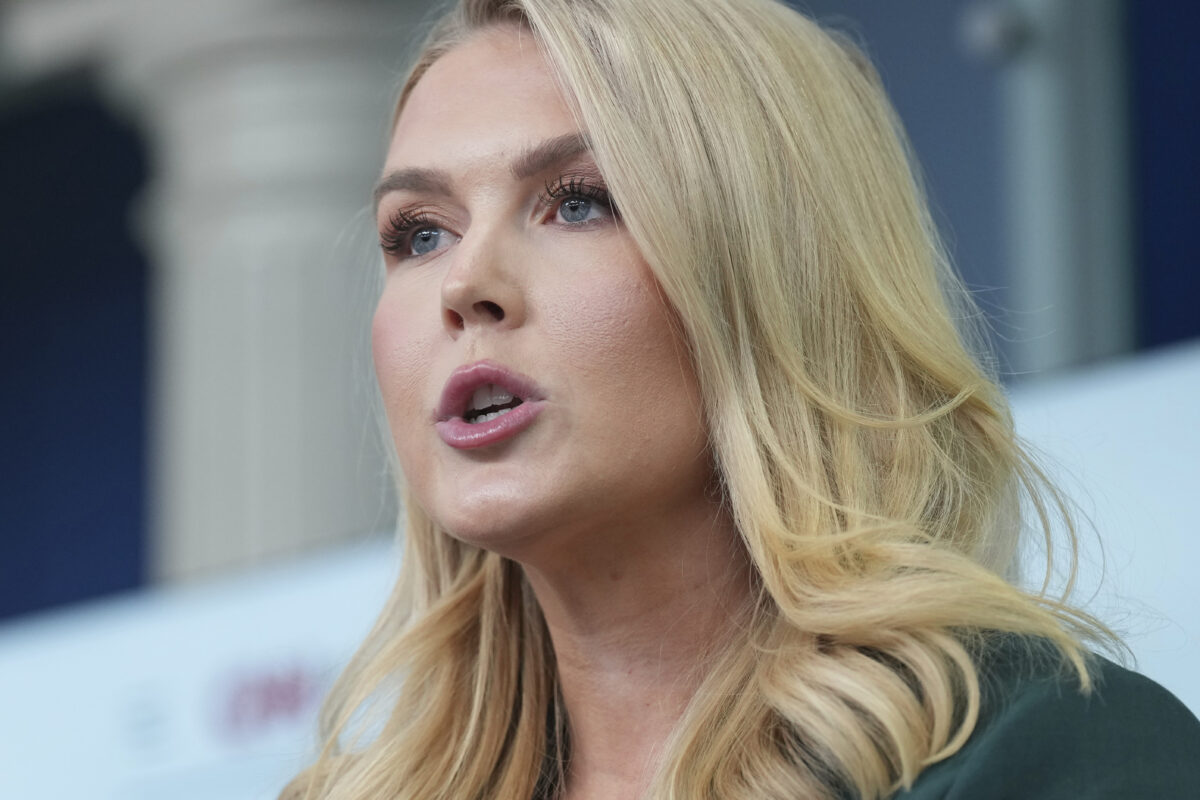
The article itself brought a massive amount of buzz, and Anderson’s photos raised that to a nuclear level, with harsh lighting, unflinchingly close-up views of their faces, and posed photos that seemed clearly intended to communicate critical judgment of these people and the roles they were playing in Trump’s second term.
Many commentators were struck by the brutal detail of some of the photos, showing wrinkles, smeared makeup, stray hairs, and other facial skin imperfections. Leavitt bore the brunt of much of this scrutiny; only 28 years old, her photograph showed her with a ruddy orange nose, enlarged pores, mascara settling into wrinkles under her eyes, and what appeared to be filler injection marks around her lips. (Her lips do appear larger than they did in her official White House portrait from earlier this year.)
The article and photos brought a wave of outrage from the right, as expected. Anderson shrugged off the criticism and defended his photos in several chats with reporters.
In an email exchange with Newsweek’s Marni Rose McFall, Anderson emphasized the difference between commercial photography and political photojournalism.
“Style is for others to judge,” said Anderson. “My objective, when photographing the political world, is to make photographs that cut through the staged-managed image to reveal something more real and for the images to honestly portray the encounter that I had at that moment. Being very close is part of how I have been doing this for many years now.”
He specifically addressed the “shock” some were expressing about the decision not to retouch blemishes:
Some on the internet have expressed shock that I chose not to retouch blemishes, injection marks, wrinkles, etc. From my perspective, it should be shocking if I did indeed retouch these things out…
I think the internet is a weird and sometimes entertaining place. Obviously, I assumed photos of the political world would generate some attention. It is curious that the internet is shocked that I would not retouch the blemishes. I guess I find it shocking that people would expect that journalistic photos should be retouched. Celebrity photos are celebrity photos. Politicians are not celebrities. Let’s not mix things up.
Anderson made similar comments in a phone interview with Shane O’Neill at The Washington Post. O’Neill asked Anderson for his response to those who thought the photos were “unfair,” specifically mentioning the photo of Leavitt and “what appear to be injection sites.”
“I didn’t put the injection sites on her,” replied Anderson. “People seem to be shocked that I didn’t use Photoshop to retouch out blemishes and her injection marks. I find it shocking that someone would expect me to retouch out those things.”
He added that he wasn’t the one who did the makeup or clothing selections for the White House officials.
“That’s the makeup that [Leavitt] puts on, those are the injections she gave herself,” he said. “If they show up in a photo, what do you want me to say?”
He theorized that the freakout over seeing “real photos and not retouched ones” might be due to the “age of Photoshop” and “AI filters on your Instagram” we were in, and reiterated the differentiation between celebrity portraits and political journalism:
Vanity Fair is a magazine that has its feet in two worlds, right? One is the journalism world, and one is the celebrity entertainment machine. Obviously, celebrity portraits on the cover of Vanity Fair are not really about journalism in the way that you and I think about journalism. But then there’s the other side of Vanity Fair, which is real journalism. I’m surprised that a journalist would even need to ask me the question of “Why didn’t I retouch out the blemishes?” Because if I had, that would be a lie. I would be hiding the truth of what I saw there.
–
New: The Mediaite One-Sheet "Newsletter of Newsletters"
Your daily summary and analysis of what the many, many media newsletters are saying and reporting. Subscribe now!





Comments
↓ Scroll down for comments ↓