JUST IN: Justice Department Rips Trump-Appointed Judge’s Ruling in Motion to Continue Mar-a-Lago Probe

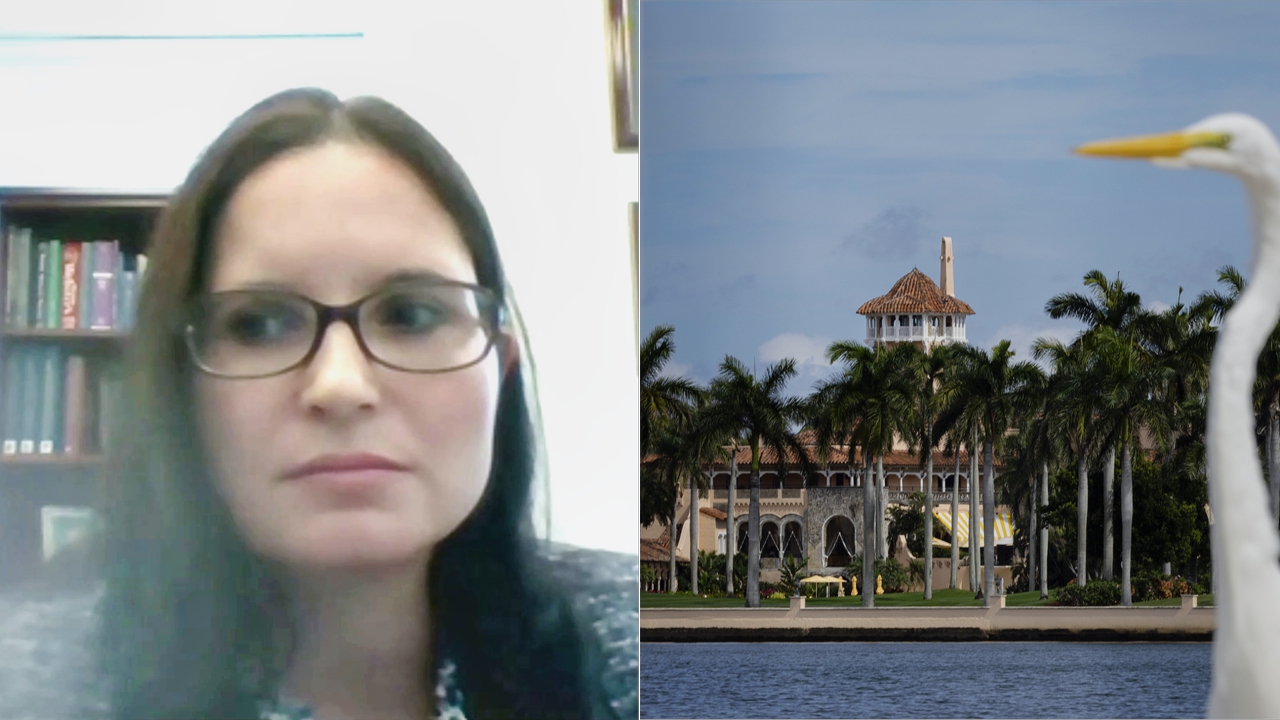
R: Joe Raedle/Getty Images
The Justice Department filed an appeal ripping Trump-appointed District Court Judge Aileen Cannon‘s ruling that investigation of documents seized from Donald Trump‘s Mar-a-Lago residence cannot continue until the Special Master review is completed.
Cannon had previously ruled that not only should a special master must be appointed to review the seized documents, she enjoined the Justice Department from using the documents in its investigation of Trump for crimes involving the Espionage Act in the interim.
Cannon issued a ruling this week appointing Judge Raymond Dearie — one of Team Trump’s proposed candidates — as Special Master, and denying DoJ’s motion to continue their review of the 100 classified documents seized.
On Friday, the Justice Department filed an appeal with the 11th U.S. Circuit Court of Appeals seeking to block parts of Cannon’s ruling, and trashing Cannon’s decision to block their investigation:
(T)he government and the public would suffer irreparable harm absent a stay. The district court recognized the government’s overriding interest in assessing and responding to the national-security risk from the possible unauthorized disclosure of the records bearing classification markings. The court thus stated that its order was not intended to “impede” an ongoing “classification review and/or intelligence assessment” of those records by the Intelligence Community (IC). A14-A15.
But as the head of the (FBI) explained in a sworn declaration, the criminal investigation is itself essential to the government’s effort to identify and mitigate potential national-security risks. A38-A43. The court’s order hamstrings that investigation and places the FBI and Department of Justice (DOJ) under a Damoclean threat of contempt should the court later disagree with how investigators disaggregated their previously integrated criminal-investigative and national-security activities.
It also irreparably harms the government by enjoining critical steps of an ongoing criminal investigation and needlessly compelling disclosure of highly sensitive records, including to Plaintiff’s counsel.
The DoJ asked that the appeals court “act on this motion as soon as practicable.”
New: The Mediaite One-Sheet "Newsletter of Newsletters"
Your daily summary and analysis of what the many, many media newsletters are saying and reporting. Subscribe now!








Comments
↓ Scroll down for comments ↓