Anti-Choice Lawmakers Are Hurting the Economy, According to New Studies

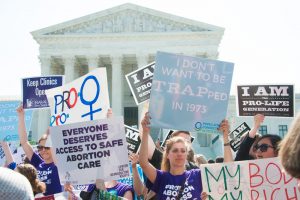
Today, it’s a pity that America’s anti-choice population — which includes the majority of lawmakers throughout rural states — is unwilling to listen to the moral and public health-related justifications for protecting access to birth control and abortion. It’s a pity that women having autonomy over their bodies and the highest maternal mortality rates in the industrialized world aren’t enough to convince them.
The bills meant to shame and burden women, that even endanger their lives, continue to roll in almost on a daily basis, and new reports reveal that these bills and laws have consequences beyond hurting America’s reputation abroad and traumatizing women — they’re also costing taxpayers a fortune that could be going toward education or infrastructure, and disproportionately hurting low-income women’s economic situations as well.
The U.S. District Court judge on Monday ordered the state of Arizona to reimburse Planned Parenthood and other abortion providers for their costs in fighting the most recent unconstitutional law passed by state lawmakers, which required abortion providers to lie to patients that medication abortions could be “reversed.” This reportedly cost Arizona taxpayers $600,000.
And on a federal level, in December last year, the House approved to double the budget of a committee investigating Planned Parenthood for “wrongdoing” — which, to them, seems to be providing notably legal abortion services, and donating fetal tissue for medical research. According to a report from The Hill at the time, the panel is slated to spend $1.6 million in total over the course of just under a year after the House previously approved a $790,000 budget in 2015.
Considering the rallying cry of Planned Parenthood opponents is one of not only ideological hard-lining but also fiscal conservatism — that they don’t want to pay for abortions — ironically, they’re making us all pay for an investigation that’s related to abortion.
And according to the research by the University of California, San Francisco published Wednesday, the absence of nearby abortion clinics substantially drive up costs for the procedure. In recent years, particularly in rural areas, abortion clinics have shut down by the dozens in regions that had few to start with. This is, of course, due to laws by politicians that place medically unnecessary requirements on clinics, many of which are either too expensive or simply impossible to implement, forcing clinics to close by the dozen.
Low-income women struggle to find transportation and lodging, let alone afford the procedure, and often have few options but to bankrupt themselves, go through with the indignity of an unwanted pregnancy, or put their health and safety at risk to attempt a DIY abortion.
But another factor driving up health care costs for women who have abortions is the travel fees to travel to a clinic seeking follow-up care. According to the study, this practice, which is commonplace despite the safety of the procedure, increases the bill for an abortion by 76 percent.
The addition of more clinics in these areas, so that women would not feel compelled to go to the emergency room to confirm the end of their pregnancy, or the availability of phone and video consultations, could drastically reduce these costs: The median cost to Medicaid for the emergency department visit is $941, where the median cost for returning to the abortion clinic is $536.
The economically feasible solution to this would be to invest in women’s health organizations to open more clinics, saving women money and time and further opening up the economy.
And, of course, speaking of high costs for women with unwanted pregnancies, there’s the issue of exemptions for companies seeking to avoid providing female employees with birth control.
According to the National Women’s Law Center, in 2013, the Affordable Care Act’s contraceptive coverage mandate saved women $1.4 billion on birth control pills and 55 million women access to low-cost birth-control coverage, but a new report by the Center for American Progress has found a staggering amount of corporations successfully filed for exemptions allowing them to deny women this coverage. It’s deeply important to recognize the immorality of telling women their most crucial health needs are unimportant, but it’s also an economic issue.
The loss of opportunity for women — those who are forced to lose out on higher education and job stability, who are forced to rely on welfare and struggle to raise their children — due to unwanted pregnancy or being unable to obtain a safe abortion, is the loss of opportunity for everyone.
If the immorality of forcing a woman to give birth to satiate the personal belief that an embryo is more human than an adult woman isn’t enough to make lawmakers think twice, hopefully the economic consequences of their actions will.
This is an opinion piece. The views expressed in this article are those of just the author.
New: The Mediaite One-Sheet "Newsletter of Newsletters"
Your daily summary and analysis of what the many, many media newsletters are saying and reporting. Subscribe now!








Comments
↓ Scroll down for comments ↓