Eric Bolling Speaks to Mediaite About His Son’s Overdose and the Trump Opioid Plan

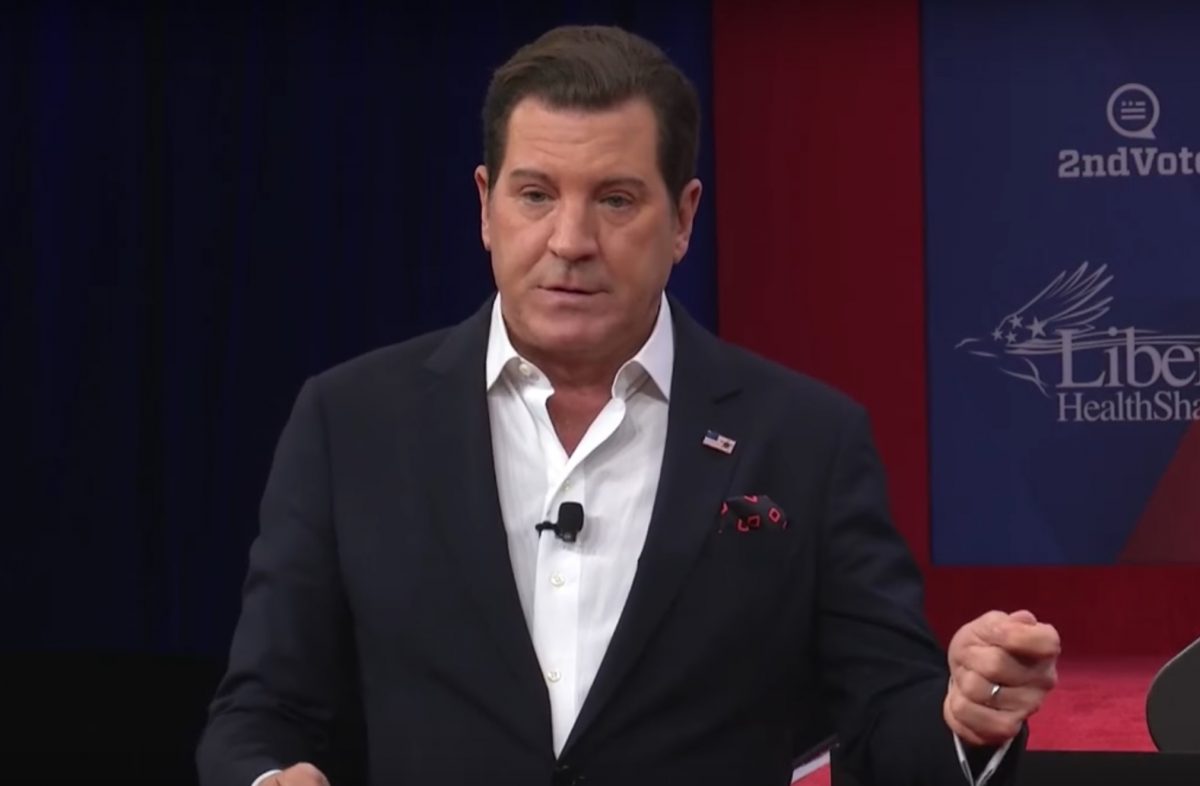
As President Donald Trump heads to New Hampshire on Monday to roll out his administration’s plan to combat the nation’s staggering opioid epidemic, his White House is fielding advice from someone who self-describes as an “accidental expert” on the crisis: Eric Bolling, the former Fox News host.
Bolling took part in a White House conference call on Sunday evening with adviser Kellyanne Conway, who has taken over the opioids agenda, and other officials working on the administration response.
In a conversation with Mediaite on Monday morning ahead of Trump’s remarks in New Hampshire, Bolling expressed optimism that the administration’s response will not simply focus on cracking down on drug dealers, but also on funding awareness, treatment and recovery for drug users.
“It’s got to be attacked from all angles,” Bolling said. “Not just supply but also demand.”
Bolling has met with the president several times in the Oval Office to discuss the jarring epidemic that has led to thousands of overdoses across America, after his own son Eric Chase Bolling died of an accidental fentanyl overdose last year.
The television personality — who departed Fox News amidst harassment allegations the same day his son died — has since become one of the public faces of the White House’s efforts to combat the crisis. In a video opening the White House Opioid Summit in early March that went viral, Bolling gave an emotional account of his son’s unexpected death — and emphasized that the crisis can touch anyone.
Bolling told Mediaite that while the original White House push centered on the “supply side” of the problem, he hopes more attention will be paid to users affected by the metastasizing crisis.
Indeed, Trump’s public comments on opioids have focused heavily on legal punishments for dealers and traffickers: In a recent rally Trump declared, “the only way to solve the drug problem is through toughness.” He suggested he was open to considering the death penalty for traffickers, and has praised the bloody crackdown on dealers conducted by Rodrigo Duterte in the Philippines.
And Trump’s plan to be rolled out on Monday will include severe penalties for drug traffickers, including the death penalty for some, according to the White House — a proposal Bolling did not disagree with.
“I can clearly tell you I’m against incarcerating users, period. They need treatment, they don’t need incarceration,” Bolling said. “As far as dealers go, especially dealers who have been proven to deal drugs that killed people, I absolutely agree with the president on this.”
“There’s also the other side — which I wouldn’t say they’re ignoring, but they’re not taking seriously enough, in my opinion,” Bolling told me. “And as a father who has lost a child, I said, ‘You guys need to talk about the demand side too.’ You have to talk about awareness, you have to talk about getting help.”
“We have to take the stigma away from opioid use,” he added.
It’s perhaps thanks to this push by Bolling, then, that the White House plan will also focus on “prevention and education through a sizable advertising campaign, improving the ability to fund treatment through the federal government, and help those impacted by the epidemic find jobs while fighting addiction,” CNN reported.
“I think what you’re going to see today,” Bolling said, “probably likely because of myself and some other parents that were at the [White House opioid] summit, they’re going to also spend a lot of money on the demand side.”
On reports that the Trump administration is looking to impose steep cuts to its “drug czar” office, Bolling isn’t concerned, and said that sources inside the White House told him that the funding loss with be reallocated to the Department on Justice.
And while he says that the House budget allocating $6 billion over two years to deal with the crisis is “never enough,” he maintained that its a “good start.”
Bolling has become practiced in retelling the painful story of how he and his wife found out, on their way home from dinner, that their son had died. There’s another pivotal moment in the aftermath of the tragedy that has stuck with Bolling: meeting with the Boulder County coroner in Colorado, where his son attended college.
“At that moment the world changed for us,” Bolling said, explaining that Trump called him while he was at the coroner’s office to offer his condolences.
He also described the pain of having a number of publications — he cited the Daily Mail and TMZ — which put out reports that his son’s overdose was a suicide in response to his departure from Fox News. “The blatant lies made it even worse,” Bolling said.
Trump called him once again on Thanksgiving, as he left an empty chair at the dinner table for his late son, to again offer condolences on the first holiday since Eric Chase’s passing.
“At that moment I realized that he really cares about this issue, whether it’s because of his family,” Bolling said of the president, whose brother Fred Trump died an alcoholic.
On his future plans, the former Fox News host told me while he’s fielded offers to get back into media, he’s “in no rush to do that” — though an industry source said the former Fox News host is likely to return to television soon.
[image via screengrab]
—
Follow Aidan McLaughlin (@aidnmclaughlin) on Twitter
New: The Mediaite One-Sheet "Newsletter of Newsletters"
Your daily summary and analysis of what the many, many media newsletters are saying and reporting. Subscribe now!








Comments
↓ Scroll down for comments ↓