Ready Player One’s Greatest Asset and Worst Problem: Steven Spielberg

SPOILER WARNING: Proceed with caution.
Steven Spielberg is one of the great directors of our time. Maybe of all time. He’s got a very particular, sweeping, reverent style that makes his films feel like love letters to the movies. Take the iconic scene of Elliott riding his bicycle past the full moon in E.T. (Spielberg liked it too – it’s the logo for his production company, Amblin Entertainment), or the arresting suspense of Jaws, or the sheer magnitude of Jurassic Park. Spielberg likes to go big or go home, and that’s his mark.
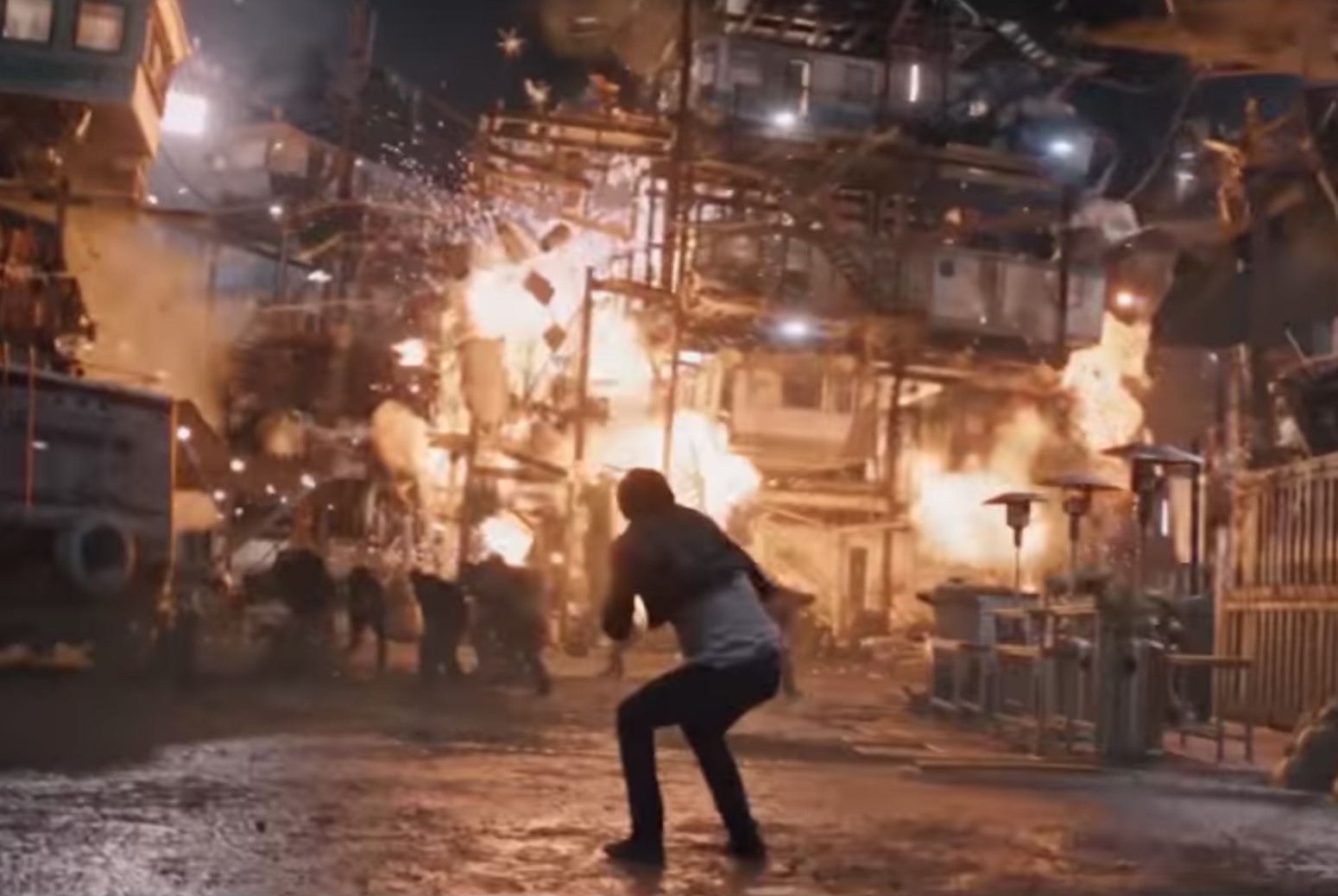
So it is with his newest film, Ready Player One, based off the 2011 novel of the same name by Ernest Cline. Ready Player One the book is a delightful mashup of 80’s pop culture and a sci-fi virtual reality fever dream, all rolled into a Willy Wonka-esque contest. Ready Player One the movie is also that, minus the Willy Wonka and plus plus plus the special effects and action-packed sequences.
This makes Ready Player One the film two things that the book is not: a) More palatable to less geeky audiences who want to see things blow up in a massive virtual realm because that’s always fun for everybody, and b) Much more like what you’d consider a classic “Spielberg flick,” in that it has a winsome protagonist dashing and leaping through obstacles of gargantuan scale and socking it to the big baddies.
In one sense, this is great, as the book’s climactic sequences involve such mega nerd-dom as needing to perfectly recite every line of the 1983 movie WarGames, and that’s not quite as screen-ready as a souped-up NASCAR race through a trap-riddled mock-up of New York City.
In another sense, this is terrible, as the book’s climactic sequences involve such mega nerd-dom as needing to perfectly recite every line of the 1983 movie WarGames, and a souped-up NASCAR race through a trap-riddled mock-up of New York City is not nearly as dependent on knowing and loving every little trivia piece that James Halliday – the Wonka of the story – held dear.
Because those of us who went batty for the book identified with the sheer joy of knowing an arcane reference to a book or a video game. Yes, this is preserved as a facet of Spielberg’s take on Ready Player One, but it’s not the focus.
This means that the movie completely revamps pivotal scenes in the book, such as when Wade, the protagonist, finds a hidden room in the OASIS and plays a perfect game of Pac-Man, an achievement which ends up being a crucial mulligan. Instead, the mulligan is received by knowing something personal about Halliday’s life, a connection that more people are likely to appreciate.
But here’s the main issue: Ready Player One shouldn’t necessarily be enjoyable to a wide audience. Many people who loved it did because it was really, really really nerdy, and ultimately those people are whom the book rewards. This dichotomy is perfectly demonstrated by the “gunters,” or “egg hunters”: those searching for Halliday’s egg. When it was first announced, everyone in the world of the OASIS searched for clues to the multi-trillion dollar prize. But as the years went on and no one found any clues, only the truly dedicated, like Wade, continued on the hunt. So do we want many, casual gunters, or a few hardcore ones?
Spielberg’s Ready Player One argues the former: it invites people of all levels of nerdiness to enjoy its splendor, rather like the OASIS itself. What we as the audience need to decide is: Are we enamored of the OASIS, or are we enamored of the egg?
[image via screengrab]
This is an opinion piece. The views expressed in this article are those of just the author.
New: The Mediaite One-Sheet "Newsletter of Newsletters"
Your daily summary and analysis of what the many, many media newsletters are saying and reporting. Subscribe now!








Comments
↓ Scroll down for comments ↓