
WSJ Reporter’s Latest Piece Might Offer Clues to Why He Was Detained By Russia for Being a Spy

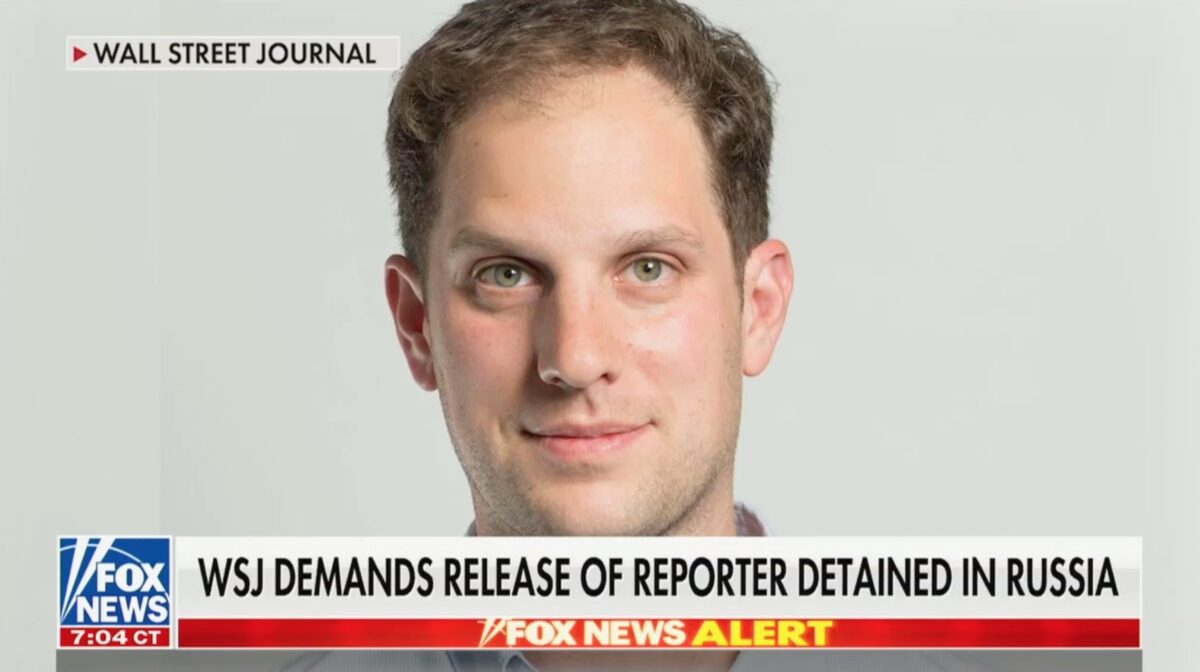
Wall Street Journal reporter Evan Gershkovich was arrested in Russia on Tuesday under espionage charges. However, the reality very well could be that the Kremlin hated the facts he provided on Russia’s flailing national economy.
Russia’s Federal Security Service announced they detained Gershkovich in Yekaterinburg, claiming that he was “collecting information about one of the enterprises of the Russian military-industrial complex” while acting on the instructions of the United States. The Journal has denied the allegation against Gershkovich and demanded his immediate release.
The relationship between Russia and America has been tense since the invasion of Ukraine. However, Russia’s arrest of a U.S. correspondent marks a further escalation since this is the first time it has happened since the Cold War.
Gershkovich’s detainment follows the publication of “Russia’s Economy Is Starting to Come Undone,” an article he co-authored with Georgi Katnchev. The two explored Russia’s economic struggles and isolation since the Ukraine war started and the long-lasting impacts they will likely have.
“As the war continues into its second year and Western sanctions bite harder, Russia’s government revenue is being squeezed, and its economy has shifted to a lower-growth trajectory, likely for the long term,” the article states. “The country’s biggest exports, gas, and oil, have lost major customers. Government finances are strained. The ruble is down over 20 percent since November against the dollar. The labor force has shrunk as young people are sent to the front or flee the country over fears of being drafted. Uncertainty has curbed business investment.”
The report notes that Russia has been leaning increasingly on its economic relationship with China while being cut off from other international markets. With the hits Russia has taken to its energy revenue, it is now a question of how long the Russians can keep their economy afloat before it reaches the breaking point.
The International Monetary Fund has estimated that Russia’s potential growth rate — the rate at which it could grow without courting inflation — was around 3.5% before 2014, the year it seized Crimea from Ukraine. That has now fallen to around 1%, some economists say, as productivity declines and the economy becomes technologically backward and more isolated.
“For an economy like Russia, 1% is nothing; it’s not even a maintenance level,” said Ms. Prokopenko, the former central bank official.
The fall in exports, tight labor market and increased government spending are worsening inflation risks, the central bank said this month. Russia’s inflation was running at around 11% in February compared with that month last year. That rate will temporarily fall below 4% in the coming months, the central bank said, though that is because of the high comparison base of the post-invasion surge in prices last year. A number of other economic indicators will also temporarily improve in the coming months due to such base effects, economists say.
The country’s industry is in its worst labor crunch since records began in 1993, the Moscow-based Gaidar Institute for Economic Policy has said. The post-invasion brain drain and last fall’s 300,000-man military mobilization have resulted in around half of businesses facing worker shortages, according to the central bank. Locksmiths, welders and machine operators are in high demand.
The article goes on with further analysis that the Russian economy’s trajectory has shifted dramatically with limited chances of mitigating the damage. At the same time, it remains cut off from most of the world.
New: The Mediaite One-Sheet "Newsletter of Newsletters"
Your daily summary and analysis of what the many, many media newsletters are saying and reporting. Subscribe now!






Comments
↓ Scroll down for comments ↓