Joker Review: Absurd Masterpiece That Fell Victim to Misinterpretations From the Left and Right

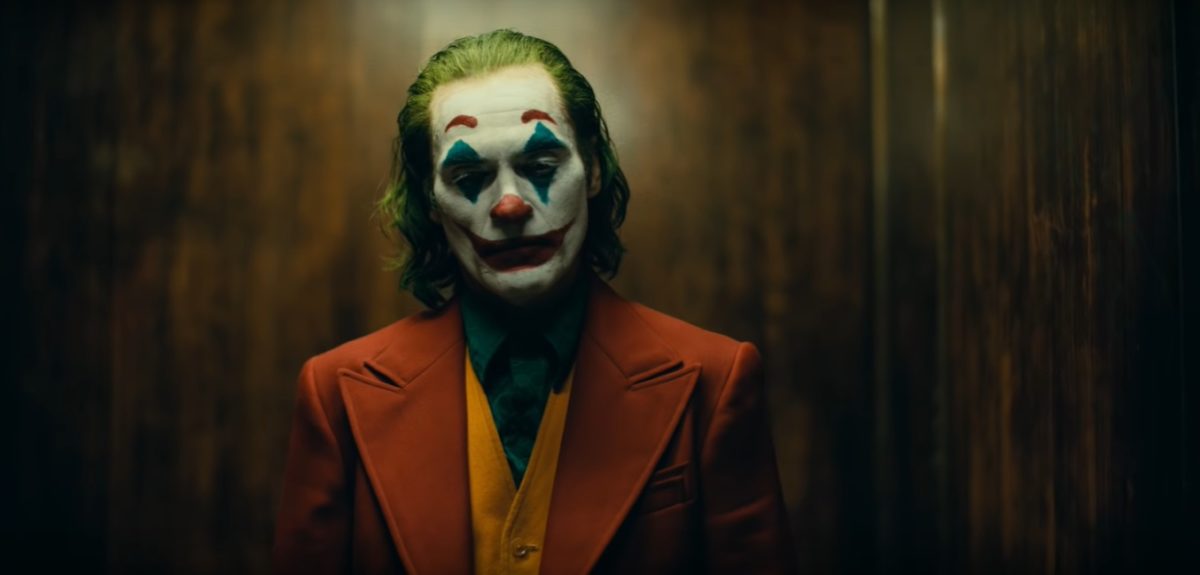
(SPOILERS AHEAD)
There has been a lot of hype surrounding Todd Phillips’ Joker. And a lot of hysteria too.
All sides of the political aisle have been eager to put a label on the film, but Joker inconveniently sidesteps attempts at easy categorization.
Before even entering a screening, people were told that Joker would be incel ground zero, that a mass shooting wouldn’t be out of the ordinary. You can see the movie if you really want to, but you might get shot. Conservative commentators claimed Joker was about the dangers of Antifa, and liberal commentators claimed Joker was about the entitlement of straight white men.
Sam Adams, writing for Slate, opined that a film about a “frustrated, alienated white man who turns to violence” is the last thing we need in our current political moment, while Jeff Yang commented at CNN that Joker is just a thinly-disguised racist rant and glorification of Trumpism.
On the right, Kevin Williamson remarked in National Review that the film was exposing the mainstream press as “moralistic busybodies” and showing how transgressive art has become verboten, while John Daniel Davidson wrote for the Federalist that the film is essentially a no-holds-barred indictment of progressive society.
So you could imagine our surprise when we finally got to catch a screening and found that Joker was none of the above.
Former 1791L writer Christian O’Brien provided a succinct summation of this: “It seems to me Joker is this impactful not because of its superb quality, but that it’s a sort of political rohrshach test for our time.” It’s the best evaluation of Joker thus far.
The partisan conservative, libertarian, liberal, and socialist takes on Joker are wrong — or at least incomplete.
It’s true, traces of Antifa are clearly defined throughout the movie, and the same goes for inceldom and anti-capitalism. But these traces don’t singularly define the movie, and they don’t indicate any sort of explicit political statement on the director’s behalf. Joker isn’t definitively populist or elitist; it isn’t fully sympathizing with the Joker nor fully disowning him. It’s ambivalent, dangerous: it doesn’t give the viewer an easy answer or a satisfying conclusion. That tension, that dissonance — that giant spinning question mark — makes the film all the more compelling and disturbing.
At the beginning of the film, a news report discusses the “super rats” which are now roaming Gotham City. They’re bigger than normal rats and they’re hard to kill, the reporter claims. In other news reports dotted around the movie, the viewer hears about a city-wide garbage strike, which has resulted in mountains of trash around Gotham — without an end in sight.
When pre-Joker Arthur Fleck is speaking to his therapist in one scene, a poster in the background mockingly reads, “It’s not normal to feel trapped,” and shows a man stuck in a cage. The concept of being stuck and being a rat in a maze is prevalent. The abstraction and alienation of modern society, where even his attempt to cheer up a small kid on a bus leads to misunderstanding and interruption are a world in which Arthur is cast adrift and abandoned, apart from his unhealthily dependent relationship with his mentally ill mother.
Thomas Wayne, the wealthy businessman who is running for mayor, frequently appears on television and portrays himself as the only hope for those in poverty to escape. Behind closed doors, however, Wayne refuses to lift a finger to do anything for the less fortunate and serves instead as an avatar of false hope for the naive and downtrodden.
While performing as a clown for sick children at a hospital, Arthur’s revolver (given to him by a colleague after he was jumped by a gang of teenagers) falls out of his pocket and flies across the floor, leading to his dismissal from the clown company.
The Joker’s remark — “I used to think my life was a tragedy, but now I realize it’s a comedy” — encapsulates the absurdity of these scenes, Arthur’s surroundings, life, and the situation that Gotham’s less fortunate find themselves in.
“Put on a happy face” looks all the more sinister written on the dressing room mirror when you know it’s the recipe for a mask to cover up a killer’s crazed grin. The hardest punchline in Joker turns out to be the lack of a punchline, or as the Joker menacingly puts it at the end of the film when asked what joke he is laughing at: “You wouldn’t get it.”
Arthur’s idolization of talkshow host Murray Franklin, played by Robert DeNiro, bears striking similarities to the cult of personality surrounding talkshow hosts like Ellen DeGeneres, Jimmy Fallon or Jimmy Kimmel. More widely this aspect of the plot is a dark satire on celebrity culture as a whole and the emptiness of the public looking up to famous people and political figures to bring their lives meaning and joy. Arthur’s infatuation ends, of course, when he spots Franklin mocking his failed comedy club act on the show.
When Arthur is finally invited on Franklin’s show (so Franklin can mock Arthur for his poor comedy routine), Arthur is introduced as “Joker.” He dances onto the stage, passionately kisses an elderly lady on the lips, and admits on live television to killing the three Wall Street men who were murdered earlier in the movie, and whose deaths sparked the “Kill the Rich” Gotham City movement of copycat clowns.
The Joker, who intends to use his appearance on the Murray Franklin show to have his dramatic death aired on live television — in the style of R. Budd Dwyer or Christine Chubbuck — decides to shoot Franklin several times in the head and torso instead, triggering clown-masked riots across the city.
Disregarding the complexities of the mental illness subplot, Joker is a movie about what happens when absurdity and suffering combine, and become too much to take. It is a movie about survival in an urban environment under late capitalism. It is a movie about social alienation and societal abandonment. It is about broken families and a social fabric that’s been shredded beyond repair.
Arthur’s need for a strong father figure, the discovery that he is adopted and the product of childhood neglect and abuse emotionally eviscerates him, destroying any basis he thought he had for a comeback. Joker is not left wing or right wing, at least in any easily discernible sense. It’s about nihilism and the absence of any heroic role to live up to, the feeling that one is trapped and unseen.
“I don’t believe in any of that. I don’t believe in anything,” the Joker glibly quips when asked if he supports the uprising against the rich.
The Joker comes to find his true self in the chaos and gestalt of the violent crowds protesting in Gotham, swept up and exhilarated by their collective momentum. “Isn’t it beautiful?” he remarks to the police officer escorting him in a squad car as the clowns light the city on fire. The Joker finds validation in their anonymous, ridiculous clown faces staring back at him. He is no longer isolated, but has become part of a submerged monster rising above the surface: demanding recognition and filled with violent resentment.
Joker is timely, and fits like a puzzle piece into current affairs, but it could also be enjoyable and equally as powerful in 60 years’ time. Like Fritz Lang’s Metropolis, its themes are equally as universal as they are entrenched in current affairs.
It also must be noted that despite the fact Arthur is a mentally ill mass murderer, there feels something more relatable about Joker today than Batman, or Bruce Wayne. Beyond the left vs right debate, and threads of meaning that critics of all stripes have identified, it is certainly worth asking what has changed in the past several decades to make the villain more sympathetic or meaningful to an audience than the hero. The answer — in terms of societal mental stability and civic health — is not likely to be good. You could argue this at least means we are more interested in facing our darker elements than escaping in a comfortable fairy tale.
For the majority of people, it’s hard to identify with an egotistical rich kid who was born into money. Sorry, Batman. A kid who uses his piles of money, inherited from his father’s career of exploitation, to fight the criminals who were created by an unjust economic system that his family helped create and perpetuate, is just not very relatable at all.
The Joker is the underdog, and a sort of Robin Hood figure. Only, instead of taking from the rich to give to the poor, he acts out the inner violent fantasies of an international proletariat. His victims are often unlikable, if not downright nasty, and he goes about his business in a ridiculously dramatic manner– fitting for the five minutes of fame generation. The Joker is depressed, poor, fed up, and the recipient of bad luck after bad luck. Today, that’s as relatable as you can get.
Bottom line: Todd Phillips’ strongest movie to date, and the best performance of Joaquin Phoenix’s career thus far. Perfect balance between the standalone gritty origin story and the fanfare that Batman fans would expect. 9/10!
This review was written by Charlie Nash and Paul R. Brian.
New: The Mediaite One-Sheet "Newsletter of Newsletters"
Your daily summary and analysis of what the many, many media newsletters are saying and reporting. Subscribe now!




Comments
↓ Scroll down for comments ↓