Michael’s Turns 30: Famed NY Restaurateur Michael McCarty Takes Us Inside His Power Lunch Hot Spot

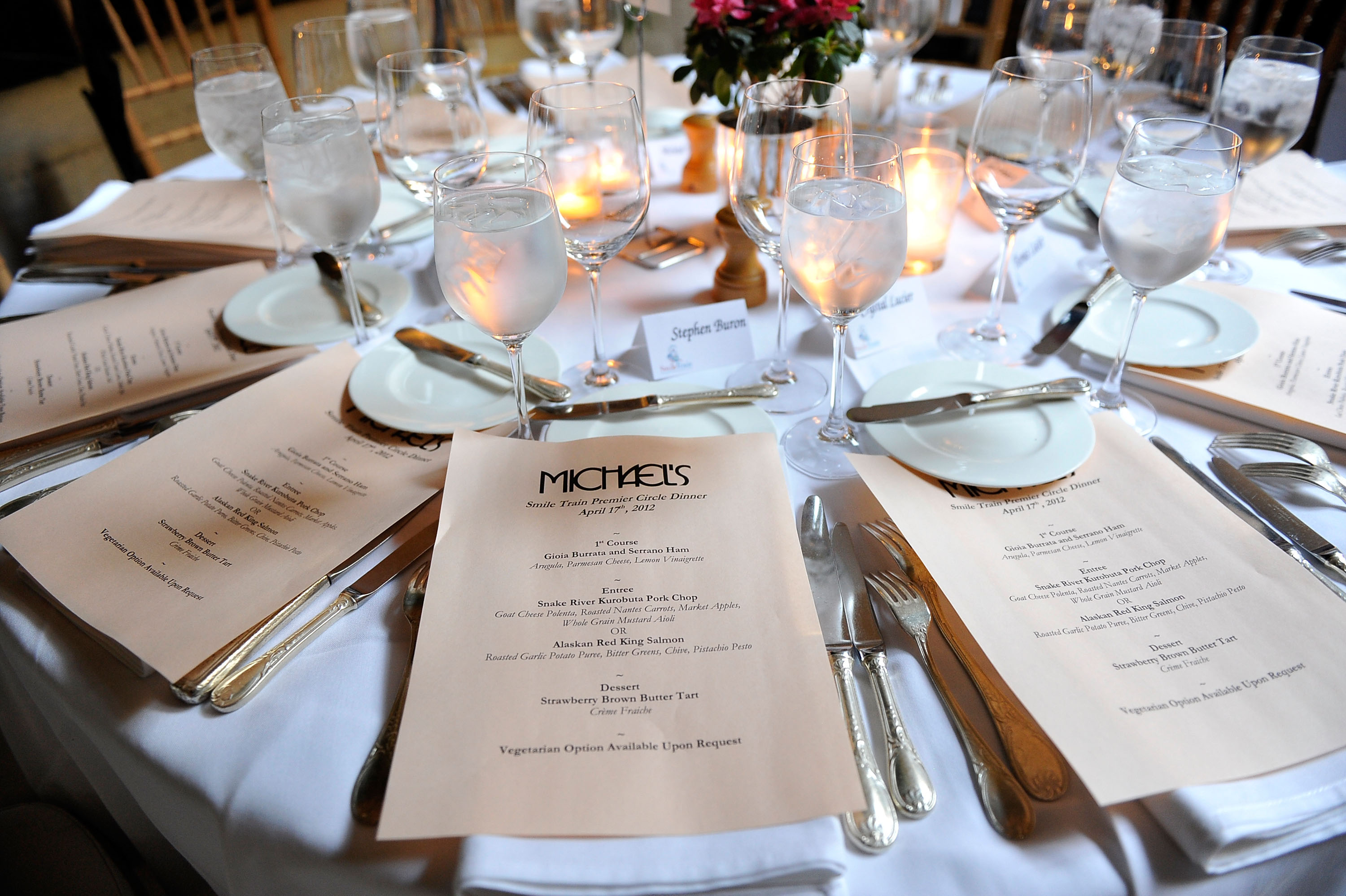
Jerod Harris/Getty Images
There are few restaurants more emblematic of New York’s media power scene than Michael’s, the namesake of restaurateur Michael McCarty, who I met last week at the famed hot spot on the eve of its 30th anniversary.
Michael’s has been a fixation of New York tabloids since it opened its doors at the base of a modernist building in 1989, thanks to its stature as one of the city’s more iconic power lunch canteens. In thirty years it has hosted presidents and their estranged press secretaries, media publishing titans, glossy mag editors, disgraced cable news chiefs, famed authors, artists, advertising execs, tie-less tech entrepreneurs, network anchors and gossip columnists.
But as McCarty was preparing to celebrate the three decades of his midtown staple in a town where the Four Seasons couldn’t survive, the New York Post’s restaurant critic Steve Cuozzo was declaring the power lunch dead in a piece on Michael’s. Cause of death: millennials, who now eat Sweetgreen over their desks at offices that long ago moved downtown.
“The schmoozing and table-hopping encounters by heavy-hitters who could move markets,” Cuozzo wrote, “is slowly but surely going the way of flip phones.”
“It is not,” McCarty told me over coffee. “That is that is an unfortunate article because instead of sort of celebrating 30 years of Michael’s, and the power that it is, and the place where it is today, including the fact that we have a lot of millennials.”
McCarty argued his restaurant has maintained a young crowd — including his son and daughter, both in their early thirties, who frequent the restaurant along with friends from nearby talent agencies.
“We have always been successful based on our mix,” McCarty explained. “Not just of ages, but of industries. If you were reliant on one industry, you know that you don’t win. That’s not a winning solution.”
“That article was sort of about him, in my opinion,” he added of Cuozzo.
McCarty’s customers run the gamut. In the past two weeks alone, the restaurant’s green velvet Cesca chairs have sat actor Robert De Niro, writer Michael Wolff, MSNBC host Lawrence O’Donnell, legendary ad man Jerry Della Femina, former CBS News president David Rhodes, actress Joan Collins, News Corp. vet Les Hinton, music exec Marty Bandier, actor Rob Reiner, author Jay McInerney and Mediaite’s own Dan Abrams. It’s is such a renowned destination for industry gossip that the New York Post masthead — Emily Smith, Richard Johnson, Keith Kelly and even Cuozzo, if he’s welcome back — seems to consider it a professional obligation to eat there.
If the power lunch is a dying tradition, you wouldn’t notice it in the dining room at Michael’s during lunch service. Whether or not millennials are still hightailing it up to midtown for a midday Lobster Risotto and four martinis, Michael’s is still bustling.
“We’re busier today than we’ve ever been,” McCarty said. “And more diverse than it’s ever been.”
Opened 10 years after a 25-year-old McCarty launched his first restaurant in Santa Monica, Michael’s New York was from its inception a destination for the kind of bicoastal power players that frequented his art-filled iteration in California and yearned for one in Manhattan where they could gorge themselves on Niçoise salad and attention.
I’m not kidding about the attention part. While some institutions frequented by the famous try to afford their patrons some anonymity (think the strict no photos policy at Soho House) Michael’s leans into its status as a restaurant where powerful New Yorkers go to be seen.
McCarty is explicit about this. He recalled facing the scorn of Gawker when Michael’s began chronicling its famous customers on Twitter back in 2009. The restaurant ignored the criticism, and it still tweets out a selection of its patrons to this day.
“My stock answer has always been: Nobody comes to Michael’s to hide,” McCarty told me.
We sat at table four, the dining room’s most coveted real estate. It’s in the corner of a seating chart that has been tabloid fodder for years. When I asked about late Fox News chief Roger Ailes, who claimed he frequented Michael’s to “irritate liberals,” McCarty pointed out I’m sitting in the late Fox News chief’s seat. It’s the back seat of the table, beneath a David Hockney painting, with corner walls behind and a sweeping view of the main room in front.
Michael Wolff, who famously boycotted Michael’s when he was denied his preferred table, once said, “If you have lost a job or endured any kind of humiliation in the business, the thing you want to do is show up at Michael’s the next day. It shows that you are still standing.”
McCarty told me that Ailes took a shot at that method, appearing at the restaurant with his wife in tow after the eruption of his sexual harassment scandal at Fox News. (The Michael’s Twitter account documented Ailes having lunch there six days after he resigned from Fox). His appearance didn’t do much to revive his reputation, of course, which is more a positive sign of the shifting cultural landscape than an indictment of the Michael’s step and repeat.
While many of the high powered executives that frequented midtown icons like Michael’s, the Four Seasons and the 21 Club have been flushed out of the spotlight by the Me Too movement, there remains a thriving culture of power lunching by the surviving power players at the surviving institutions. IAC’s Barry Diller (“He basically created Fox channel here,” McCarty said) is a frequent customer, as is the new generation of network leaders like CBS News president Susan Zirinsky.
Granted, some of the old guard institutions whose executives once packed the dining room at Michael’s — like Condé Nast — have moved away from midtown. For glossy magazines, the expense accounts aren’t what they used to be (non-existent?), nor are the lunch breaks (30 minutes). But television news is still thriving, and in midtown: Fox’s HQ is seven blocks from Michael’s, NBC’s 30 Rock is six.
Still, McCarty said, when there is a good story to be mined or money to be made, new media makes the trip up from offices in downtown and Brooklyn.
“Finance is still in midtown. So even when we talk about millennials and startups and tech, they still come here for the money,” he said. “The money is here.”
And what about the stories? “Your industry is dependent on content. And we have a shit-ton of content here.”
I didn’t stick around to find out if he was right. It was noontime, and I had to get back to the office for lunch.
New: The Mediaite One-Sheet "Newsletter of Newsletters"
Your daily summary and analysis of what the many, many media newsletters are saying and reporting. Subscribe now!








Comments
↓ Scroll down for comments ↓