‘He Served His Country’: Remembering WWII Correspondent Ernie Pyle, Who Died Alongside U.S. Troops in Okinawa

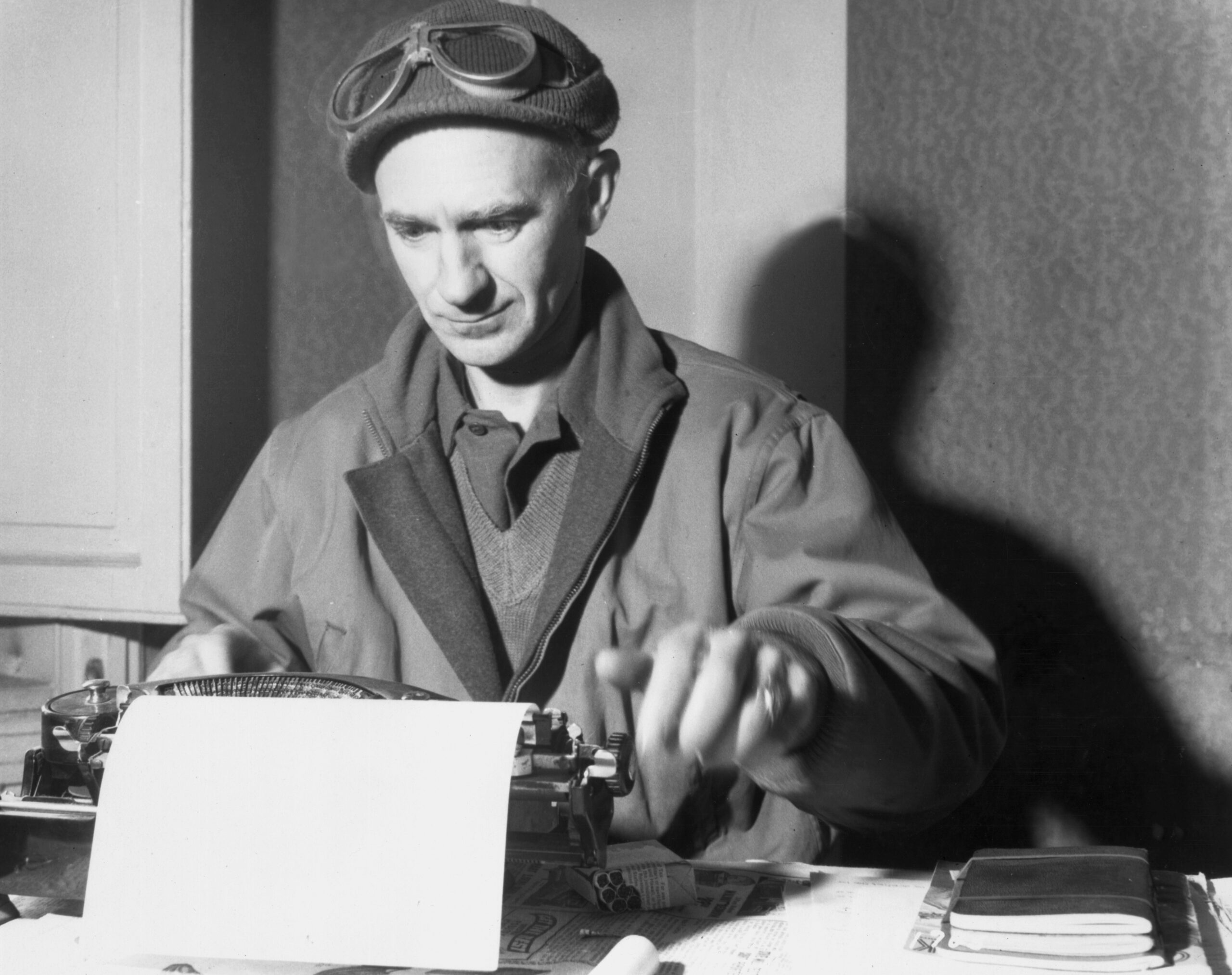
Hulton Archive/Getty Images
On Memorial Day, Americans are remembering men and women in uniform who paid the ultimate sacrifice serving their country.
Journalist Ernie Pyle did not wear battle fatigues, nor did he carry a weapon. But he died telling the stories of American troops during one of the bloodiest battles of the Second World War.
A Navy veteran who enlisted near the end of the First World War, Pyle became a stateside folk hero throughout the 1940s.
Hundreds of thousands of American soldiers never came home from foreign battlefields during the war. Pyle’s reporting from the frontlines told a country isolated by geography and technology what life was like for many of them.
Born in Indiana, Pyle traversed parts of three continents with American troops after the country entered the conflict. His column was syndicated nationwide by more than 200 newspapers.
History notes:
In 1942, after the United States entered World War II, Pyle went overseas as a war correspondent. He covered the North Africa campaign, the invasions of Sicily and Italy, and on June 7, 1944, went ashore at Normandy the day after Allied forces landed.
Pyle wrote of the D-Day invasion of northern France: “It was a lovely day for strolling along the seashore. Men were sleeping on the sand, some of them sleeping forever. Men were floating in the water, but they didn’t know they were in the water, for they were dead.”
The National WWII Museum honors Pyle as a journalist whose work inspired the subjects of his reporting:
Ernie liked to mention specific units, which gave their soldiers an immense source of pride. Ernie explained how he felt “a loyalty to the First Division” which he accompanied “off and on for six months.”
But he found it “sad because the men go, and new ones come and they go, and other ones come until at last only the number of the division is left.” Resigned to this eventuality, Ernie noted that “As long as we have an army, the First Division will exist, but my friends in it may not.”
He went on to win a Pulitzer Prize for his reporting in Europe. After Allied forces began to force Hitler’s troops back into German territory, Pyle traveled to the Pacific theater of the war.
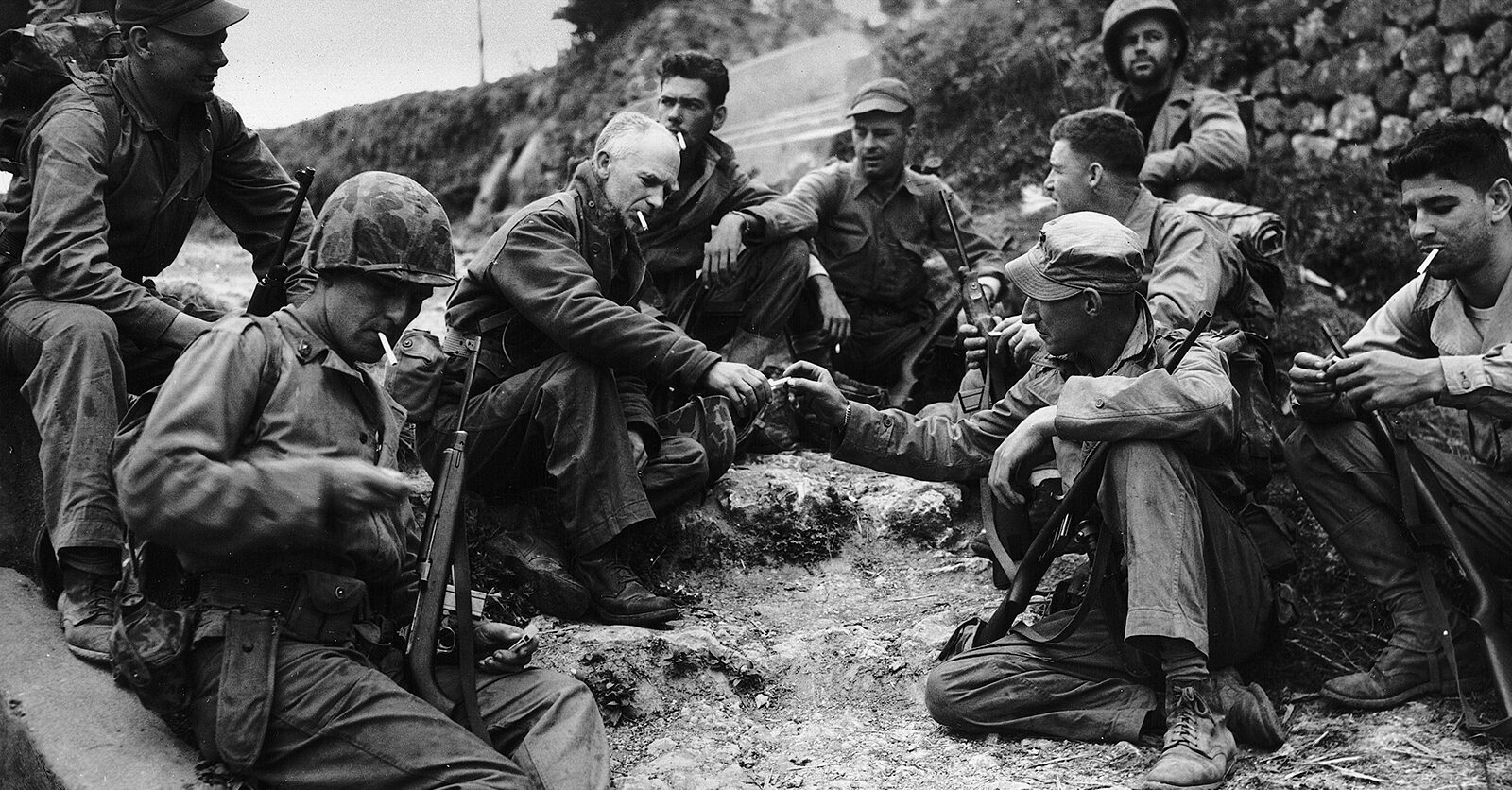
On April 18, 1945, Pyle was killed while covering the Army’s 77th Infantry Division in Okinawa.
“Ernie was riding in a jeep with an army officer when a hidden Japanese machine gunner opened fire,” the WWII museum notes. “Ernie and his companion dove into a nearby ditch, but when Ernie raised his head a short time later, a bullet struck him just below the rim of his helmet. He was 44 years old.”
Rather than distress Americans at home, the museum notes Pyle’s “honest depictions of soldiers were exactly what the public wanted.”
Then-President Harry S. Truman issued a statement the day of Pyle’s death, in which he referred to him as “the spokesman of the ordinary American.”
Truman stated:
THE NATION is quickly saddened again by the death of Ernie Pyle. No man in this war has so well told the story of the American fighting man as American fighting men wanted it told. More than any other man he became the spokesman of the ordinary American in arms doing so many extraordinary things. It was his genius that the mass and power of our military and naval forces never obscured the men who made them.
He wrote about a people in arms as people still, but a people moving in a determination which did not need pretensions as a part of power.
Nobody knows how many individuals in our forces and at home he helped with his writings. But all Americans understand now how wisely, how warmheartedly, how honestly he served his country and his profession. He deserves the gratitude of all his countrymen.
New: The Mediaite One-Sheet "Newsletter of Newsletters"
Your daily summary and analysis of what the many, many media newsletters are saying and reporting. Subscribe now!








Comments
↓ Scroll down for comments ↓