
‘This is My Fault, Right?’ Former NY Times Opinion Editor Explains Error Behind Sarah Palin Defamation Trial

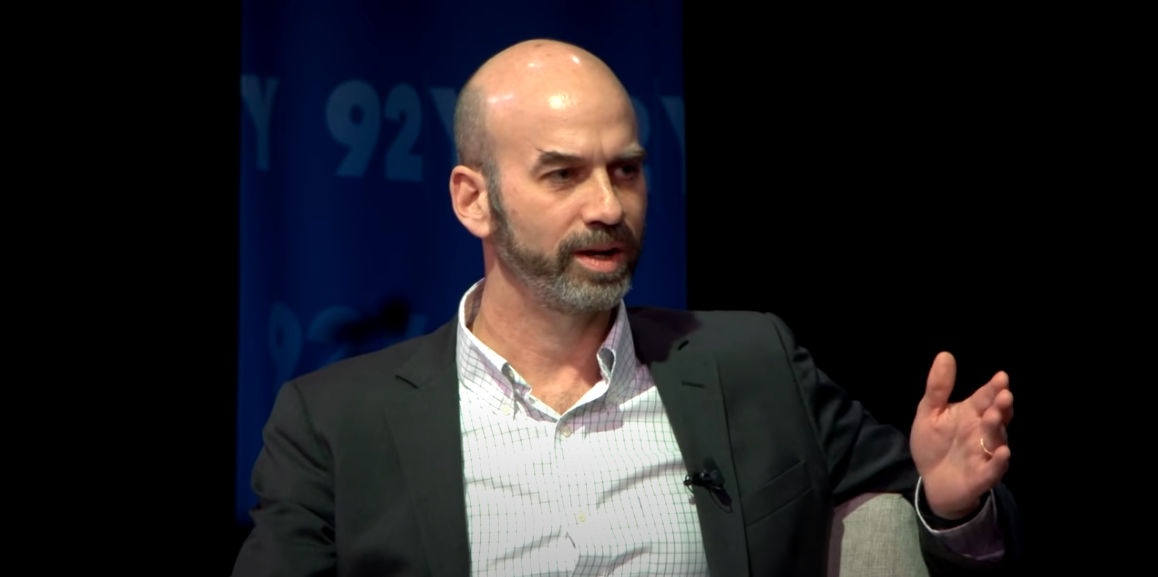
James Bennet
James Bennet, the former editor in charge of the New York Times’ opinion pages, took responsibility on Thursday for the errors that have led to former Alaska Governor Sarah Palin taking the Times to court.
“This is my fault, right?” Bennet testified in court. “I wrote those sentences and I’m not looking to shift the blame for anyone else. I want that for the record.”
Palin is suing the Times for defamation over a June 2017 editorial titled “America’s Lethal Politics.” The editorial was published in the wake of a shooting of several Republican members of Congress during a softball game and tied that event to the 2011 shooting of then-Rep. Gabriel Giffords (D-AZ) — an attack that killed six people and left Giffords with a traumatic head injury.
Palin took objection to the piece as it blamed her for inciting the horrific shooting of Giffords, the wife of Sen. Mark Kelly (D-AZ). The article argued that an image published on Facebook by Palin’s political action committee, which showed Giffords’s district under crosshairs helped to inspire Gifford’s shooter.
The Times published a correction the next day, which read:
An editorial on Thursday about the shooting of Representative Steve Scalise incorrectly stated that a link existed between political rhetoric and the 2011 shooting of Representative Gabby Giffords. In fact, no such link was established. The editorial also incorrectly described a map distributed by a political action committee before that shooting. It depicted electoral districts, not individual Democratic lawmakers, beneath stylized cross hairs.
Palin’s lawsuit claims that the article wrongly drew a “clear” link of “political incitement” between the graphic published by Palin’s PAC and the Arizona shooter.
Bennet was questioned during his testimony if he did “conduct any fact research” before editing and publishing the piece. Bennet, the former editor-in-chief of The Atlantic, said he did not, noting an assistant did his research.
Bennet went on to explain he felt pressure to publish the piece before an impending 8 p.m. deadline for print and he “began to just edit the piece” without going back to the original writer.
After publishing another controversial article, Bennet resigned in June of 2020. The piece by Sen. Tom Cotton (R-AR) titled “Send in the Troops,” called for the deployment of federal military forces to stop the nationwide protests against police brutality that summer. The piece sparked immediate controversy and led to protests against Bennet from inside the paper.





Comments
↓ Scroll down for comments ↓