Jack Smith Hammers Trump Immunity Claim In Supreme Court Filing — Read Blistering Motion Here

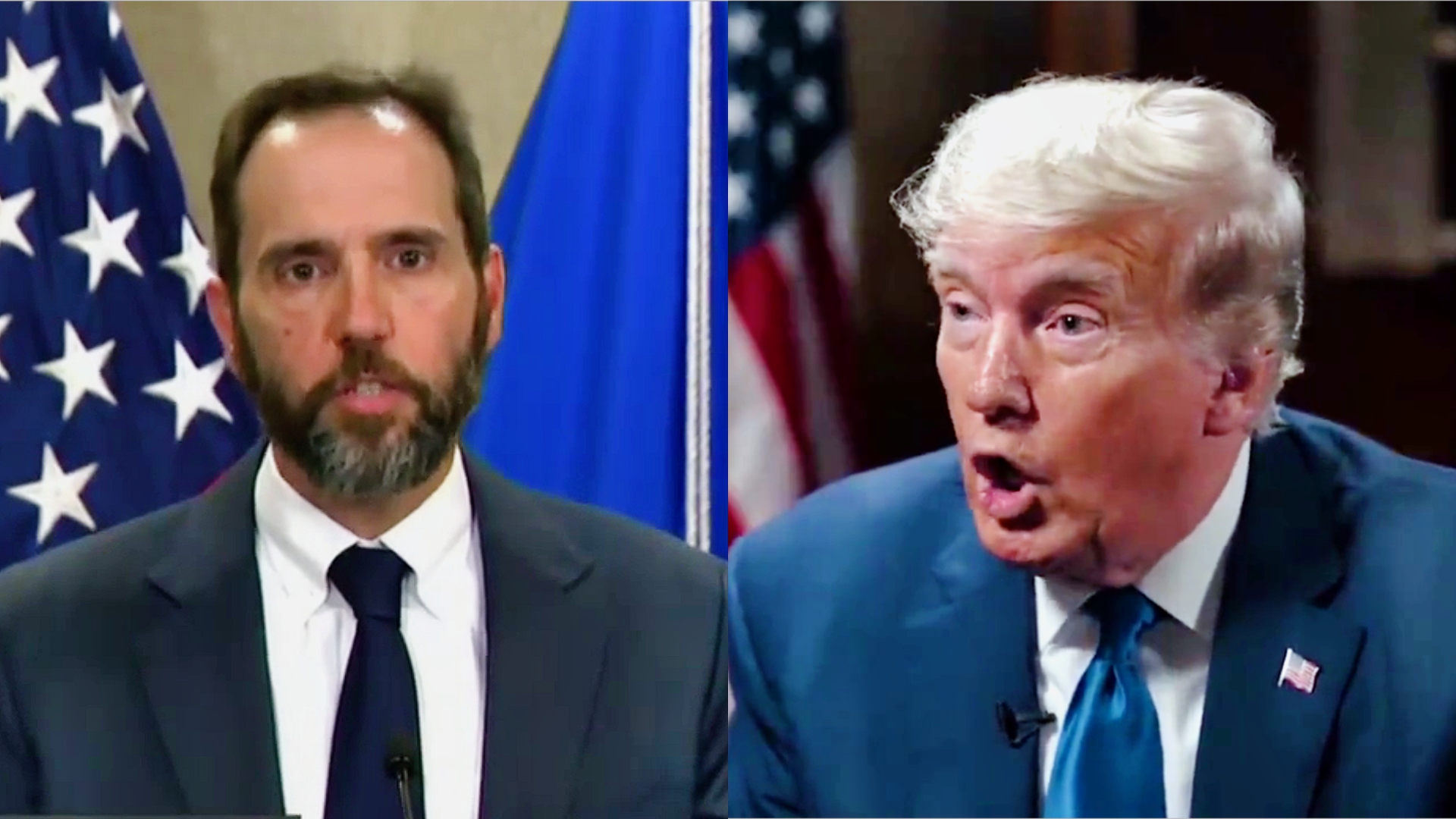
Special Counsel Jack Smith hammered former President Donald Trump’s immunity claim in a blistering petition to the Supreme Court for a speedy ruling — which the Court has agreed to consider.
The big news Monday was that the Supreme Court agreed to Special Counsel Jack Smith’s request they take up the issue of presidential immunity after Judge Tanya Chutkan denied two motions to dismiss from Trump’s team, based on First Amendment and presidential immunity claims.
The order reads:
Petitioner’s motion to expedite consideration of the petition for a writ of certiorari before judgment is granted, and respondent is directed to file a response to the petition on or before 4 p.m. (EST) on Wednesday, December 20, 2023.
That order was in response to a pair of stunning filings in which Smith torpedoed Trump’s claims and expressed the urgency of having the question decided quickly.
In one detailed 81-page filing, Smith presents the constitutional question “Whether a former President is absolutely immune from federal prosecution for crimes committed while in office or is constitutionally protected from federal prosecution when he has been impeached but not convicted before the criminal proceedings begin.”
Smith’s introduction slams Trump’s claims of immunity as “profoundly mistaken”:
This case presents a fundamental question at the heart of our democracy: whether a former President is absolutely immune from federal prosecution for crimes committed while in office or is constitutionally protected from federal prosecution when he has been impeached but not convicted before the criminal proceedings begin. The district court rejected respondent’s claims, correctly recognizing that former Presidents are not above the law and are accountable for their violations of federal criminal law while in office. Respondent’s appeal of the ruling rejecting his immunity and related claims, however, suspends the trial of the charges against him, scheduled to begin on March 4, 2024.
It is of imperative public importance that respondent’s claims of immunity be resolved by this Court and that respondent’s trial proceed as promptly as possible if his claim of immunity is rejected. Respondent’s claims are profoundly mistaken, as the district court held. But only this Court can definitively resolve them. The Court should grant a writ of certiorari before judgment to ensure that it can provide the expeditious resolution that this case warrants, just as it did in United States v. Nixon.
The document contains a mountain of citations knocking down Trump’s arguments, as well as the full text of Judge Chutkan’s order denying the motions to dismiss.
In a separate filing, Smith petitioned for the court to expedite the proceedings, writing:
Expedited consideration of the government’s petition for a writ of certiorari before judgment, and briefing on the merits if certiorari is granted, is warranted.
1. This case involves an issue of exceptional national importance: the amenability to federal prosecution of a former President of the United States for conduct undertaken during his presidency and the effect, if any, that his acquittal in impeachment proceedings has on this federal prosecution. The district court has scheduled trial to commence on March 4, 2024, but the trial cannot proceed pending respondent’s appeal. See Griggs v. Provident Consumer Discount Co., 459 U.S. 56, 58 (1982) (per curiam).
This case should therefore be resolved expeditiously, so that trial proceedings may resume if and when respondent’s claim of immunity is ultimately rejected. And given the weighty and consequential character of the constitutional questions at stake, only this Court can provide the definitive and final resolution of respondent’s immunity claims that this case demands. Those considerations counsel in favor of immediate and expedited review in this Court, under the established criteria both for certiorari and for certiorari before judgment.
Precedent supports expedition of the certiorari proceedings and, if certiorari is granted, merits briefing. In United States v. Nixon, 418 U.S. 683 (1974), the Court faced comparably significant issues involving the presidency. In light of the scheduled Watergate conspiracy trial, and the need for resolution of presidential claims of executive privilege for potentially relevant evidence, the government sought certiorari before judgment. The Court granted the government’s petition one week after the government filed it. The Court also set an expedited briefing schedule; heard argument one week after briefing was concluded; and issued its decision 16 days later — two months after the petition was filed. Id. at 683, 690. The expedited proceedings reflected “the public importance of the issues presented and the need for their prompt resolution.” Id. at 687.
As in Nixon, the circumstances warrant expedited proceedings at the certiorari stage and, if the Court grants review, on the merits. The public importance of the issues, the imminence of the scheduled trial date, and the need for a prompt and final resolution of respondent’s immunity claims counsel in favor of this Court’s expedited review at this time.
2. To ensure timely consideration of the petition, the government requests that respondent be directed to file a response to the petition on or before December 18, 2023. The government would waive the 14-day waiting period for reply briefs under this Court’s Rule 15.5, so that the petition and response could be distributed immediately. The Court would then be able to consider the petition, response, and any reply at the earliest time convenient to the Court.
If the Court grants the petition, the government requests that the Court establish a briefing schedule consistent with the framework that the Court ordered in United States v. Nixon, 417 U.S. 927 (1974). Under that framework and consistent with the circumstances of this case, the parties would exchange and file opening briefs 14 days after the grant of certiorari and any responsive brief would be due 7 days thereafter, with oral argument to be held as soon as practicable. The Court may wish to order that amicus briefs supporting the parties be due on the date the parties’ briefs are due. The government is also prepared to comply with any more expedited schedule that the Court finds appropriate under the circumstances.
Smith concluded, “For the reasons stated, the government respectfully requests that the Court expedite consideration of the petition for a writ of certiorari before judgment and, if the Court grants the petition, that the Court expedite briefing and oral argument.”
Read the full filings here and here.
New: The Mediaite One-Sheet "Newsletter of Newsletters"
Your daily summary and analysis of what the many, many media newsletters are saying and reporting. Subscribe now!






Comments
↓ Scroll down for comments ↓