Researcher Claims 36,000 Lives Could’ve Been Saved If US Had Started Social Distancing One Week Earlier

A Columbia University research model has attempted to quantify the fatal costs of the country’s belated coronavirus response, and it estimates that tens of thousands fewer Americans would’ve died had rigorous social distancing rules been put in place just one week earlier.
The lead researcher from the study, Dr. Jeffrey Shaman, discussed the yet-to-be-peer-reviewed model with CNN’s Don Lemon on Wednesday night. The results of his counterfactual simulation showed that 36,000 lives across the country, and more than half of the deaths seen in New York City, could have been saved by May 3rd with a more aggressive response.
“So, nearly 36,000 fewer deaths? I mean, this is not only startling and tragic, but — but it speaks to how quickly this virus spiraled out of control,” Lemon said.
“Absolutely. I mean, what we’re dealing with is something that really can spread like wildfire through a population,” Shaman agreed. “Unfortunately when you have a new novel virus, almost the entire population of the world is susceptible to it. They’re all campaign of being infected by it, and as it moves into the community, it doubles over a period of time. Each period of time it will accelerate up one, two, four, eight, and so on number of cases. The consequence of this is, if you don’t recognize the problem early, and if you don’t jump on it, it’s going to really come down on you harder than it would otherwise. And just a very small backtracking of our social distancing measures, so if we had taken them, in fact, just one week earlier, has a very drastic effect in reducing the number of cases and deaths that we would have seen thus far.”
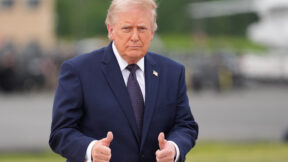
For context: On March 10, President Donald Trump was still downplaying the risk from Covid-19, saying: “Just stay calm. It will go away.” It wasn’t until March 13 that he declared a national emergency. Likewise, New York City Mayor Bill de Blasio was resistant to initiate lockdown rules, saying: “We’ll tell you the second we think you should change your behavior,” on March 5th. It wasn’t until March 22 that shelter-in-place rules were put in effect for his city, while California and Washington had already taken those same steps days earlier.
Shaman then pointed to the repercussions of that initial, delayed response as reflected in his team’s model and how that has sobering implications for the efforts to relax social distancing rules and reopen the economy going forward.
“As we loosen these restrictions, it’s possible we could start to have the growth of the virus in a lot of communities if we’re not careful,” Shaman warned. “If social distancing practices lapse. If people aren’t wearing face masks as they start to go to businesses and restaurants and theaters. If we don’t monitor this and if we don’t recognize it really early and jump on it, it’s going to jump out of control again. We’re going to have problems again. We’re going to have growth that’s beyond our expectations and we’re going to see surging of people coming into hospitals again.”
“We may have good news going forward going with this, but the real key here is if we’re not vigilant, if we’re not testing and tracing in these communities, we’re not actively looking for the virus, it can really sneak up on us,” Shaman added. “It really speaks to how sensitive this virus is or how sensitive the control of the virus is if you can get out in front of it really early. That exponential growth phase it was going through in early March in New York City is devastating.”
Watch the video above, via CNN.
New: The Mediaite One-Sheet "Newsletter of Newsletters"
Your daily summary and analysis of what the many, many media newsletters are saying and reporting. Subscribe now!






Comments
↓ Scroll down for comments ↓