
Lost in the Halftime Controversy Is One Undeniable Truth: Kid Rock SUCKS

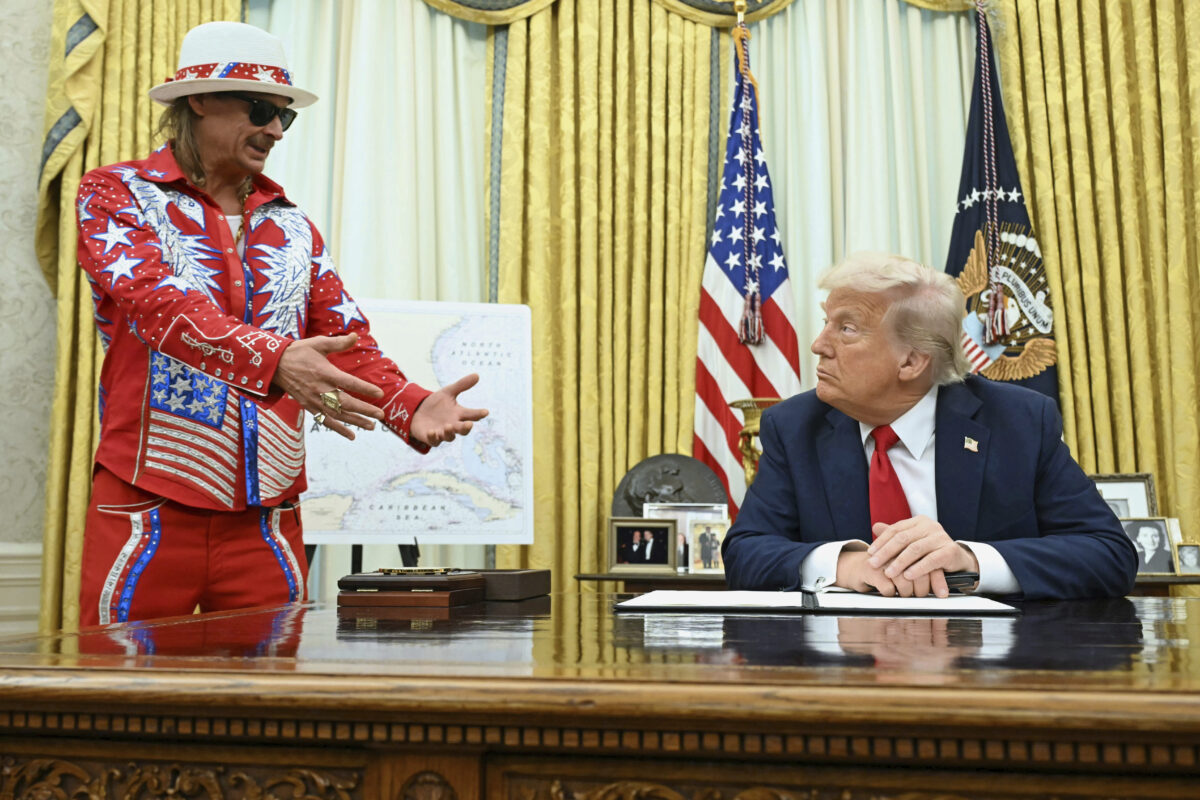
(Pool via AP)
Kid Rock is celebrated by the right as an avatar of cultural relevance in Trump-era politics. He shows up at rallies, conventions, and counterprogramming events and is held up evidence that MAGA still has cultural juice.
But buried beneath his recent reclaim of relevance is one widely accepted truth: he f*cking sucks.
This has nothing to do with his politics. He can vote however he wants and believe whatever he wants. The problem is simpler and deeper than that. He’s a rich kid pretending to be something he’s not, making terrible music, and selling it to an audience that deserves better than being pandered to by someone who wouldn’t recognize their lives if he tripped over them.
What’s funny is how easily we’ve all gone along with the idea that he matters. Strip away cowboy Elvis costumes, and the summer patriot flag-waving, and the story underneath isn’t rebellious or populist. It’s just ridiculous.
Kid Rock was born Robert James Ritchie in 1971 and raised in Romeo, Michigan, a comfortable suburban town outside Detroit. His father owned multiple successful car dealerships. The family lived on a large estate with a horse barn, an apple orchard, and an in-ground pool. This was not a household scraping by, as his catalog of music might suggest. This was money, space, stability, and options. Ritchie grew up with every opportunity and exit available to him.
That’s the part that makes the act collapse. The trailer-park outlaw persona, the working-class rage, the whole red-neck bravado thing. None of it is rooted in lived experience. It’s branding. A wealthy, suburban kid play-acting poverty and grit because it tested well with an audience that wanted rebellion without introspection.
The TPUSA counter–halftime show put that cosplay front and center. Conservative media rushed to celebrate the moment, not because the performance worked, but because the symbol did. Jesse Watters smiled, nodded, and treated it like a cultural win. No one lingered on the music, which sounded like bad karaoke blasted through a patriot filter. When everyone agrees to skip the quality check, you’re not watching criticism. You’re watching loyalty enforcement.
Kid Rock has cited hip-hop legends Run-DMC and the Beastie Boys as influences, but these comparisons are brutal for him. Those artists built something new and dragged the culture forward with them. Ritchie came up with resources and borrowed aesthetics. He took hip-hop posture he didn’t originate, bolted it to bar-band rock and country clichés, and sold it as authenticity. There’s no innovation in the catalog, just confidence, a lot of volume, and shameless marketing.
As the music aged poorly, politics became the second act. MAGA fits him perfectly because it runs on the very same fiction.
Trump, another rich beneficiary of American capitalism, poses as a champion of the forgotten while turning grievance into a revenue stream. Kid Rock plays the same role in miniature. Trump sells hats, donations, licensing deals, crypto junk, meme coins, whatever merch is moving. Kid Rock sells rebellion as costume. Both depend on an audience willing to confuse identification with representation.
The people this act targets aren’t being lifted up. They’re being flattered. Told they’re winning a culture war while the people on stage cash checks. It’s spectacle standing in for substance.
The contrast sharpens when you look at who this Buc-ee’s crowd resents. Kendrick Lamar. Bad Bunny. Artists with real cultural gravity and industry respect, who don’t center them or soften the edges. The discomfort isn’t about taste. It’s about challenge. This is the same instinct that powered country radio’s backlash against the Dixie Chicks, the same reflex that keeps spawning parallel entertainment ecosystems designed to avoid being unsettled.
Kid Rock doesn’t unsettle anyone. He reassures his audience that they’re right, they’re real, and nothing needs to change.
What makes this moment so revealing is how exposed it all feels. A wealthy suburban kid cosplaying as dispossessed rage. A movement mistaking volume for meaning. The costumes are louder now, but the seams are obvious.
Strip it all away and you’re left with the same conclusion. Kid Rock isn’t an avatar of cultural relevance. He’s a case study in how easily relevance can be manufactured when nobody wants to admit the act is hollow.
This is an opinion piece. The views expressed in this article are those of just the author.
New: The Mediaite One-Sheet "Newsletter of Newsletters"
Your daily summary and analysis of what the many, many media newsletters are saying and reporting. Subscribe now!











Comments
↓ Scroll down for comments ↓