The Backwards Logic of Calling Bari Weiss and Matt Taibbi ‘Conservative’

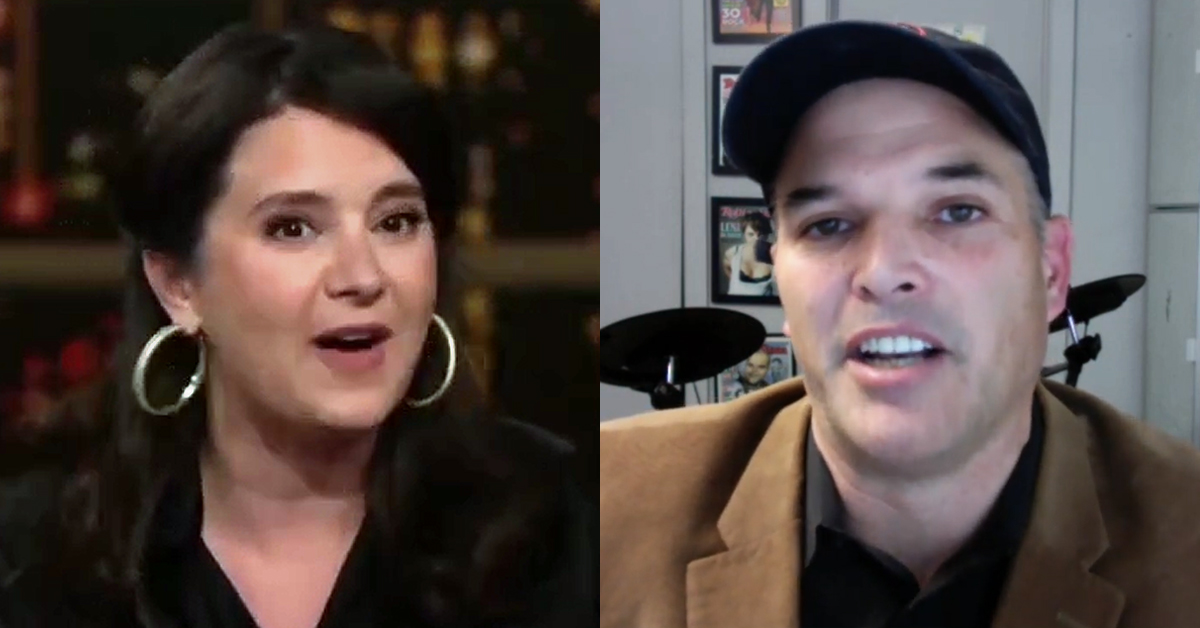
In a skeptical report on the ongoing release of the Twitter Files and the shelving of the social media company’s trust and safety team, the honorable, agenda-less folks at the Washington Post describe its presenters, Bari Weiss and Matt Taibbi, the way they might National Review or Ted Cruz.
“Conservative journalists” is the label they first applied to the pair, before stealth-editing it out:
Could anyone, after surveying the totality of the American political biosphere, honestly call Weiss — who opposed Brett Kavanaugh‘s confirmation to his seat on the Supreme Court seat and accused Jews who supported Donald Trump of having “traded policies that they like for the values that have sustained the Jewish people—and frankly, this country—forever” — a conservative?
Could anyone straight-facedly say the same of Taibbi, the author of Insane Clown President (guess who) and I Can’t Breathe, which the New York Times praised for having been “smart to depict the structurally racist system of law enforcement in this country as a character in and of itself”?
No, of course not. Neither wake up with a marked-up copy of God and Man at Yale on their nightstand or are prone to making appeals to tradition or the Founders, much less the Bible.
But Weiss and Taibbi are notable for their awareness of the excesses of their overwhelmingly progressive peers, and unwillingness to adopt all of their assumptions. In her 2020 resignation letter from the Times, Weiss lamented that at the paper of record “stories are chosen and told in a way to satisfy the narrowest of audiences,” and that her efforts to present its readership with a wider array of views was met with “constant bullying by colleagues,” that she described thusly:
They have called me a Nazi and a racist; I have learned to brush off comments about how I’m “writing about the Jews again.” Several colleagues perceived to be friendly with me were badgered by coworkers. My work and my character are openly demeaned on company-wide Slack channels where masthead editors regularly weigh in. There, some coworkers insist I need to be rooted out if this company is to be a truly “inclusive” one, while others post ax emojis next to my name. Still other New York Times employees publicly smear me as a liar and a bigot on Twitter with no fear that harassing me will be met with appropriate action. They never are.
It simply cannot be that a publication that prides itself on being the gold standard of journalism can menace a left-of-center, but right-of-editorial-board employee out of its ranks and in so doing, change the perception of her ideological predispositions. It cannot be that a vehemently anti-Trump, anti-racist journalist levels critiques of the insularity of the dominant political culture of the elite class and in so doing becomes a tool of the establishment.
The Post’s modifiers aren’t just inaccurate, they’re the product of reasoning backward from the faulty assumption that perspectives that diverge from those of its staff — including adherence to small-l liberal principles — are not just wrong, but inherently Big-C Conservative.
For most of us, labels are useful so long as they’re not manipulated. For the purposes of the Post, they’re only useful so long as they can be.
This is an opinion piece. The views expressed in this article are those of just the author.
New: The Mediaite One-Sheet "Newsletter of Newsletters"
Your daily summary and analysis of what the many, many media newsletters are saying and reporting. Subscribe now!








Comments
↓ Scroll down for comments ↓