The No Kings Protests Were Great for Social Media — Not for Meaningful Change

Credit: mpi04/MediaPunch /IPX
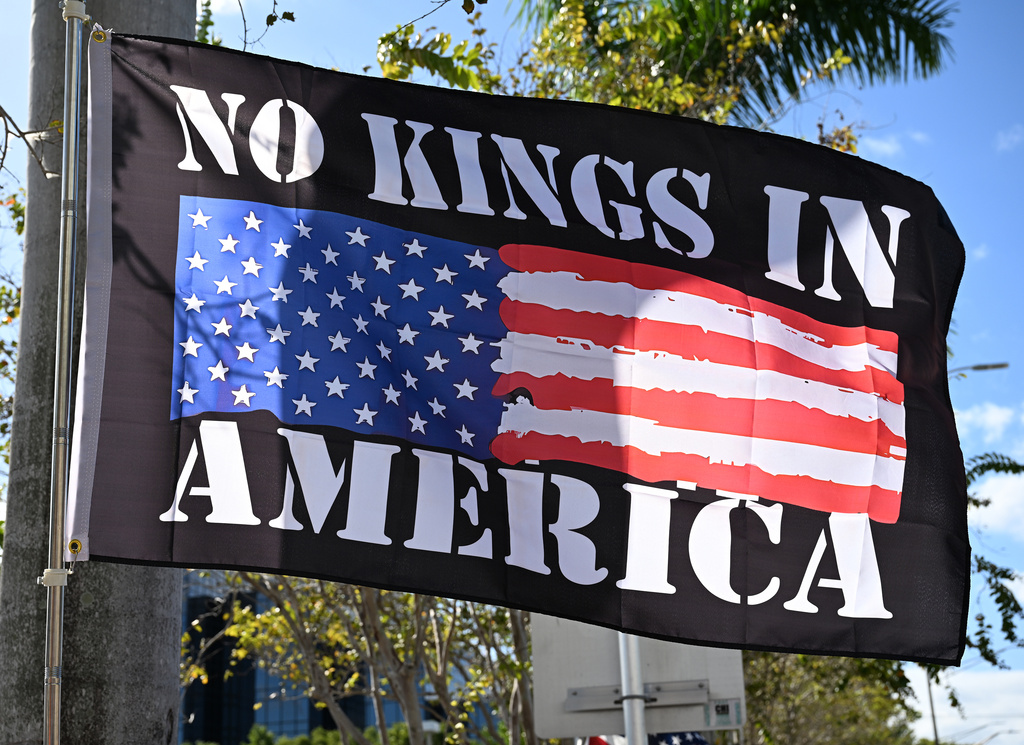
Saturday saw the latest No Kings protests draw a reported 7 million peaceful demonstrators around the nation. That’s very good for organizers, as attendance is growing. But this might also be a problem.
Not because the marchers aren’t sincere—they are. Not because moral clarity doesn’t matter—it does. But because every protest that doesn’t lead to organization might be worse than no protest at all. It gives the feeling of agency without the fact of it. It lets us post, share, and check the box marked “I did something,” while the machinery of power keeps humming, unbothered.
This is the trap of protest in the age of the algorithm. It’s not that demonstrations are performative—all politics involves performance—but the performance has become the point. The march happens, the signs get photographed, the videos go viral, and everyone goes home feeling like they participated in democracy. Meanwhile, nothing changes except your feed, which has already moved on.
Trump figured this out long before this dynamic had a name. It isn’t an ideology—it’s a social media hack. It uses the same viral mechanics that fuel resistance: outrage, attention, emotional velocity. You don’t need to silence dissent when you can let it dissipate on its own. Every protest becomes a pressure valve, releasing energy that might otherwise build into something lasting.
Political scientist Zeynep Tufekci calls this “tactical freeze”—the paralysis that follows a viral high. The Women’s March drew four million people and built no durable structure. Occupy Wall Street absolutely electrified a generation and entirely evaporated. The pattern repeats because we’ve mistaken visibility for power, attention for infrastructure.
The movements that actually changed the country—civil rights, labor, suffrage—understood something we’ve forgotten. They built institutions that endured between spectacles: voter drives when no cameras were rolling, legal strategies that took years, local chapters meeting in church basements doing the slow, unglamorous work of accumulating power one conversation at a time. The March on Washington was an exclamation point on a sentence that took a decade to write. The march was the culmination, not the plan.
Disclosure: I was curious about the No Kings protest and considered covering it, but I didn’t attend. I know my misanthropic streak in crowds—and I’d likely have come away more pro-King than I’d like. Also, my beloved Arsenal were away at Fulham at the same time.
Trump’s allies aren’t marching—they’ve long been organizing. They’re on school boards, election commissions, and state legislatures. They’re passing laws, installing loyalists, dismantling oversight. They’re disciplined, hierarchical, relentless. The progressive movement is networked, expressive, and episodic. MAGA has been hard at work building a movement while progressives seem content in posting a cleaver sign on Instagram.
The infrastructure for genuine resistance exists—it’s just scattered. Groups like Protect Democracy are training election defenders. The States Project is funding down-ballot races that decide who counts votes. Local organizers are still doing the fieldwork after 2020, mapping precincts, registering voters, recruiting volunteers. What’s missing is coordination and the willingness to do what doesn’t photograph well.
That means message discipline—turning outrage into concrete demands: repeal Schedule F, defend state election autonomy, restore independent inspectors general. It means emotional infrastructure: phone banks, legal trainings, Tuesday night meetings with eighteen people, because eighteen people is enough to flip a precinct.
And maybe it means escalation. Some, like Scott Galloway, have started saying the quiet part out loud: the next step isn’t another march, it’s a national strike. General strikes impose real costs—economic and political consequences that can’t be scrolled past. They demand the very qualities the algorithm erodes: coordination, endurance, the ability to act when the cameras are gone.
The marchers are virtuous; they showed moral clarity when cynicism was easier. But virtue without strategy is performance—and performance without follow-through is paralysis. The crowd made noise. Now it has to make demands—and back them with something more than Saturday’s turnout.
The algorithm rewards the spectacular. Power respects the organized. Until we learn the difference, every protest is just another form of pacification.
This is an opinion piece. The views expressed in this article are those of just the author.
New: The Mediaite One-Sheet "Newsletter of Newsletters"
Your daily summary and analysis of what the many, many media newsletters are saying and reporting. Subscribe now!






Comments
↓ Scroll down for comments ↓