The Washington Post: Biden’s Student Loan Forgiveness Plan Is Illegal, But Untouchable

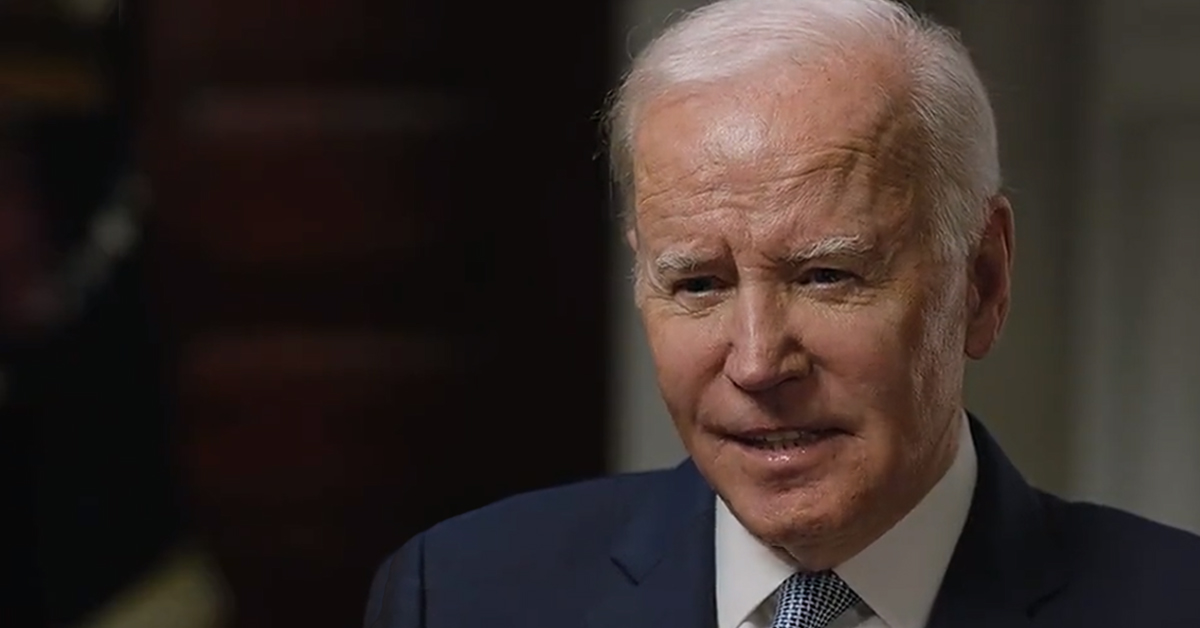
The Washington Post concedes in a new editorial that Joe Biden has “overreached” by interpreting the 20-year-old HEROES Act as allowing him to unilaterally cancel hundreds of billions of dollars in student loan debt, a policy choice the paper characterizes as “a regressive and expensive mistake.”
“But,” the same editorial submits, “the court shouldn’t stop him.”
The larger danger, warns the Post, is posed not by the president’s unconstitutional abrogation of his authority to spend taxpayer dollars, but by the Supreme Court’s potential remedy to this imbalance.
Why? They write:
But the administration’s opponents, which include several states and two individuals, “lack standing” — that is, a direct, concrete stake in the outcome — to challenge the law. Some of Tuesday’s arguments revolved around MOHELA, a loan-servicing corporation created by the state of Missouri. Missouri sued on behalf of the loan-servicer, arguing that it was effectively a state entity. In fact, the state created MOHELA to be a financially independent operation, meaning any losses it incurred under the Biden plan would not impact the state. (MOHELA itself might have had a right to sue, but it declined to do so.) The other challengers’ arguments for their standing are even weaker.
“Standing is no mere procedural formality. It is a core judicial principle that courts may only consider cases in which a party is harmed and objects to it,” explains the Post. “The countervailing danger is that an unconstrained court would invite waves of lawsuits from people seeking favorable rulings on disputes in which they have no stake, save for their ideological preferences, gumming up the courts and government and making the court resemble a body of nine unelected legislators.”
All of this is plausible as an argument, but not an altogether convincing one without the acknowledgment of the existence of the other side of the coin. Standing is a legal principle, but legal scholars disagree both on the general principle of how strictly it should be enforced and on the specifics as pertaining to this case.
Ilya Somin, a law professor at George Mason University and blogger for Reason has written extensively on this subject in favor of the plaintiffs’ standing claims. According to Somin, the Supreme Court has already determined “unlike individual rights claims,” which “can only be asserted by people who have suffered specific rights violations, structural claims,” — including separation of powers, federalism, etc. — “can be raised by anyone, because structural restrictions on government power provide generalized protection for all Americans.”
This is intuitive. Americans — and states — have an interest in the enforcement of the Constitution, and extra-constitutional action must be correctable even when the offending actor tries to tiptoe around standing claims, as the Biden administration did in this case.
The Post ignores this argument while opining that “in this dispute, the proper answer is for Congress to revisit the Heroes Act, clarifying it does not permit presidents to offer such poorly targeted loan forgiveness.” Given the praise Senate Majority Leader Chuck Schumer has heaped on the plan, that eventuality seems unlikely.
But even if Congress was willing to stick up for itself, is it really the judgment of the best minds at the Post that the executive branch can wield power it doesn’t have any right to so long as it cleverly insulates itself from judicial correction and a polarized Congress doesn’t band together to stop the effort?
The editorial board is entitled to its opinion that strict interpretation of standing rules is more vital than protection of our democracy’s very structure, but you’ll have to forgive the rest of for noticing that their embarrassingly picayune, nitpicking priorities are so conveniently partisan.
This is an opinion piece. The views expressed in this article are those of just the author.
New: The Mediaite One-Sheet "Newsletter of Newsletters"
Your daily summary and analysis of what the many, many media newsletters are saying and reporting. Subscribe now!





Comments
↓ Scroll down for comments ↓