
National Review Warns Trump’s Credit Card Interest Cap Is a ‘Terrible Idea’ That Would Destroy GOP In Midterms

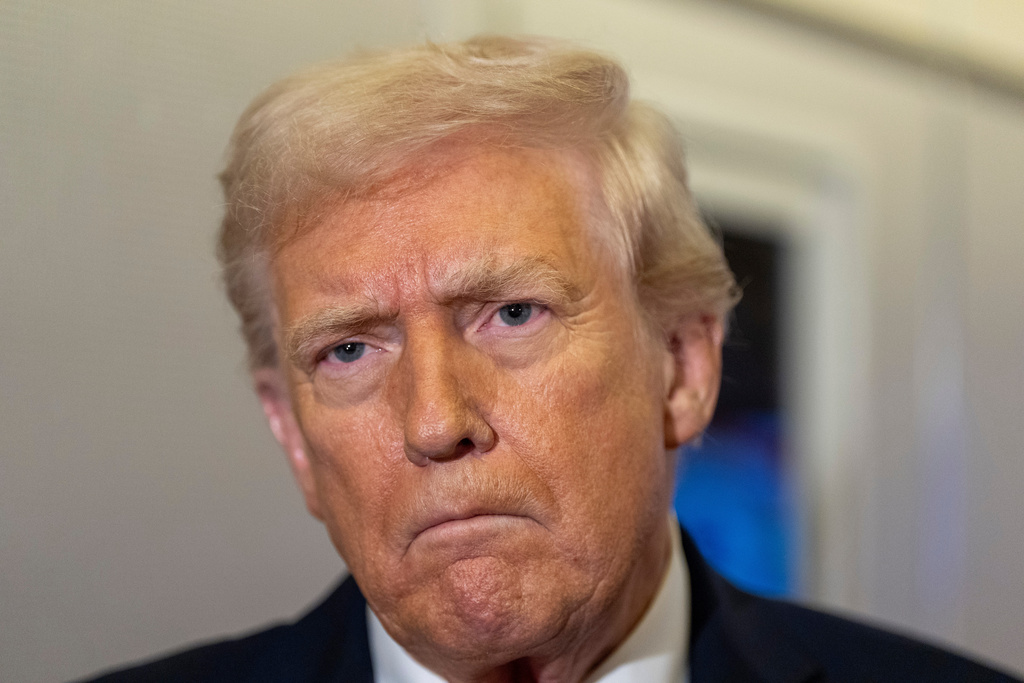
AP Photo/Alex Brandon
National Review senior editor Charles C.W. Cooke offered a stark warning to President Donald Trump about his plan to impose a cap on credit card interest rates, predicting that in the unlikely event he did manage to get it implemented, it would backfire disastrously.
Trump has been talking about a cap on credit card interest rates for a while, including it in some of his campaign rhetoric. Last Friday, he again called for an interest rate cap in a Truth Social post, saying it should be limited to 10% for a year.
Despite several White House tweets promoting his proposal, it is not something the president can do on his own. Although several members of Congress on both sides of the aisle have voiced support for this sort of cap over the years, any bill seeking to impose such a cap faces a very uphill climb to become law — not to mention the likely lawsuits that would be filed by lenders challenging the disruption of millions of existing credit card contracts.
Trump should “hope” Congress doesn’t ever send this bill to his desk, because “[i]t is difficult to overstate how badly this idea would backfire,” wrote Cooke in a column Monday.
The proposal “would likely prove extremely popular” if an opinion poll were taken, wrote Cooke, predicting an overwhelming majority would favor it, “80–20 in favor of the move — perhaps even more.”
However, Cooke continued, if Trump managed to get Congress to pass a law and this cap “were to be implemented, it would provoke a populist backlash on a scale that we have not seen in the United States for a while.”
It is “absurd” to expect that lenders would continue to operate under the “current system, unchanged but for that small detail” of the 10% interest rate cap, he wrote, because “[t]here is a reason that unsecured loans carry high rates when granted to risky debtors, and that reason does not evaporate in the face of good intentions or disgruntled rhetoric.”
“The result of this would not be some lofty 10-percent-for-everyone paradise, but an extremely selective universe in which only the most secure candidates were accepted,” he wrote, pointing out that 10% APR amounted to a limit of “no more than 0.83 percent interest per month.” As a result, “most new applicants would be turned down, longstanding credit limits would be lowered, and existing customers who exhibited even a modest pattern of delinquency would have their accounts canceled on the spot.”
That 80-20 approval Cooke thought the proposal would get in a poll would flip to 20-80 in “a matter of weeks.”
“One does not have to try too hard to imagine how this would play out on social media, in the press, or in November’s midterm elections,” he warned.
Recalling his own personal history as an immigrant from England who had no U.S. credit history, Cooke touted the benefits of a system that could offer credit to him even though he was “a considerable risk” as “a guy with no track record, no assets, a tiny income, and a visa that I could renounce at any moment.”
Capping credit card interest rates won’t eliminate the need for credit by people with less-than-stellar credit ratings, and the end result is likely to be pushing more of them towards worse options like payday lenders, he argued.
Cooke concluded with a somber prediction that this was “a terrible idea, but it is a terrible idea that is now being advanced by politicians on both sides of the aisle.”
New: The Mediaite One-Sheet "Newsletter of Newsletters"
Your daily summary and analysis of what the many, many media newsletters are saying and reporting. Subscribe now!









Comments
↓ Scroll down for comments ↓