
WSJ Warns Against Massive Cost of Trump’s Trade Policies, Days After He Touted Them In The Paper

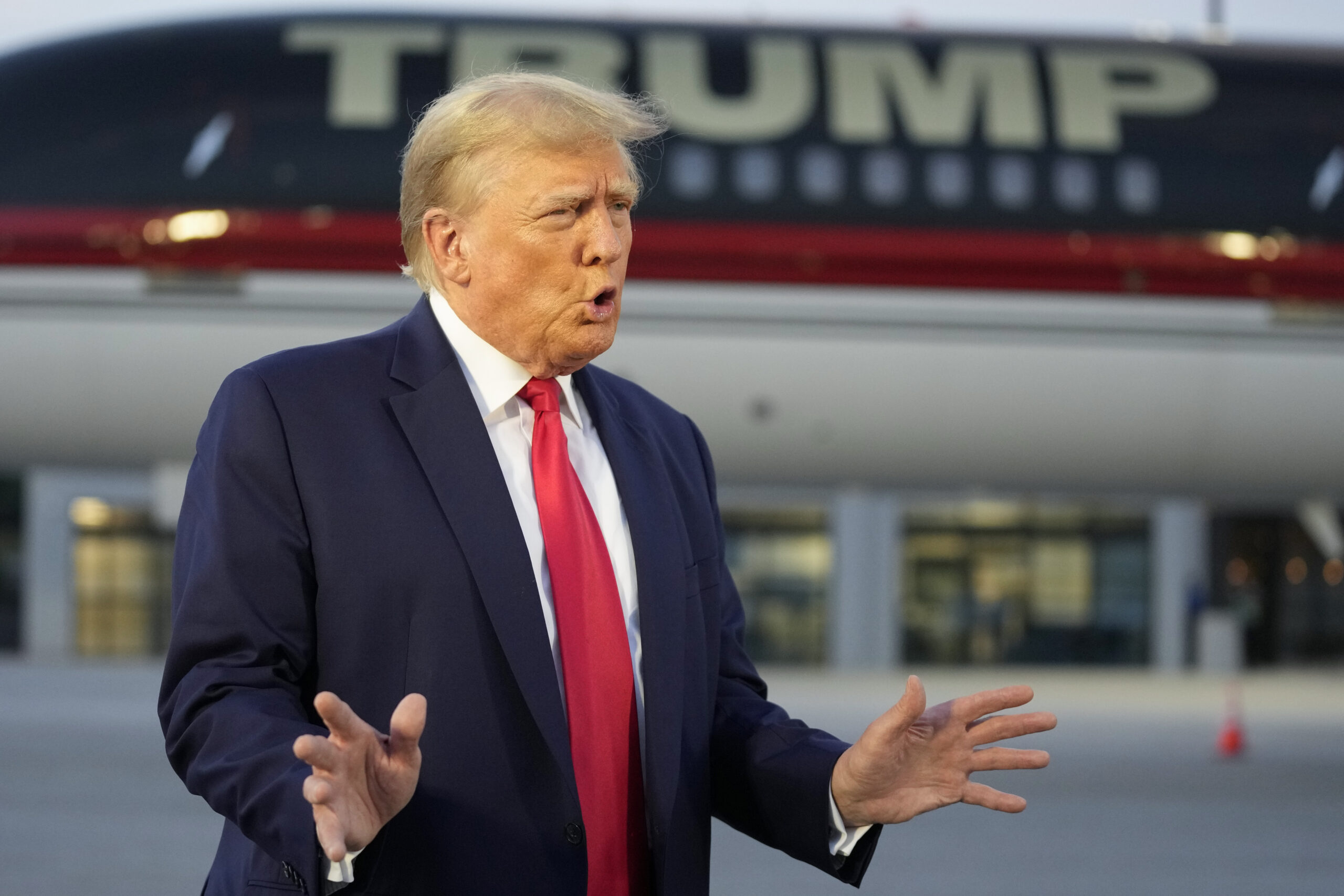
AP Photo/Alex Brandon, File
The Wall Street Journal pulled no punches on Wednesday night in responding to a recent letter to the editor from former President Donald Trump defending his trade tariffs and “economic nationalism.”
The Journal published an editorial on August 24th titled, “Trump Courts a Global Trade War,” which blasted the GOP frontrunner for announcing he would impose a sweeping 10 percent tariff on all foreign goods if returned to the White House.
The editorial blasted the policy proposal noting that Trump’s past tariffs ended up costing American consumers tens of billions of dollars in price hikes and hundreds of thousands of jobs. The Journal explained the last president to propose such a drastic protectionist policy was Herbert Hoover ahead of the Great Depression.
Trump responded and accused the Journal of repeating “debunked talking points from corporate-funded studies about our tariffs’ alleged impact on American consumers.”
“Price increases for consumers were virtually nonexistent and there was effectively no inflation when I was president. The trade deficit with China was down year-over-year for five straight quarters before Covid hit in 2020,” Trump wrote before blasting the economy under President Joe Biden.
A week later, the editorial board responded to Trump’s letter and made clear they stand behind their insistence that a sweeping ten percent tariff would be absolutely devastating to both the U.S. and global economy.
“The economic evidence is unambiguous that border taxes are passed on to consumers, and Mr. Trump’s tariffs have cost Americans tens of billions of dollars. Readers can look at the analyses and make up their own minds,” wrote the board in direct response to Trump’s claim they were parroting “debunked talking points.”
The board went further and argued that Trump’s trade tariffs not only passed costs on to U.S. consumers but also achieved nothing material. The Journal explained that while the trade deficit with China is indeed down, all Trump’s policies did was shift the deficit to other parts of the world, which would have happened regardless.
“Since 2017, when Mr. Trump entered the Oval Office, goods imports to the U.S. in nominal dollars have increased 174% from Vietnam, 116% from Taiwan, 96% from Bangladesh, 89% from Thailand, 76% from India, and 62% from South Korea. Maybe Mr. Trump should start giving out campaign hats that say ‘Make Vietnam Great Again,’” wrote the board.
The Journal made the case that U.S. investors are shifting away from China, not because of the tariffs but because of the instability within the country. Furthermore, the board added that Trump could have achieved the same result faster by having stayed in the “Trans-Pacific Partnership trade agreement that excluded China.” They also make the point that Trump’s tariffs cut off American farmers from key markets resulting in billion-dollar tax-payer bailouts that were both wasteful and achieved nothing.
Looking to the future, the board doubled down on its criticism of Trump’s new proposed tariffs and argued he simply doesn’t understand the realities of global trade:
Mr. Trump’s answer, as usual, is to quintuple down in a second term. A universal 10% tariff would “raise taxes on American consumers by more than $300 billion a year—a tax increase rivaling the ones proposed by President Biden,” the Tax Foundation says. Including expected retaliation, it would “shrink the U.S. economy by 1.1 percent and threaten more than 825,000 U.S. jobs.”
Slapping 10% tariffs on everything made by Vietnam, South Korea and other U.S. partners would have the effect of abandoning them to China’s economic sphere, which is the opposite of America’s geostrategic interests.
The editorial ends by calling out Trump’s “great mistake” in his handling of the economy: “his belief that trade is a zero-sum exercise.” The board argues, instead, that global trade offers a “mutual advantage” to both trading partners and is a benefit to the American consumer.
New: The Mediaite One-Sheet "Newsletter of Newsletters"
Your daily summary and analysis of what the many, many media newsletters are saying and reporting. Subscribe now!










Comments
↓ Scroll down for comments ↓