David Hearn Files Motion to Permanently Block Reflecting Pool Charges as Trump Rants About Case

Rahmat Gul/AP Photo
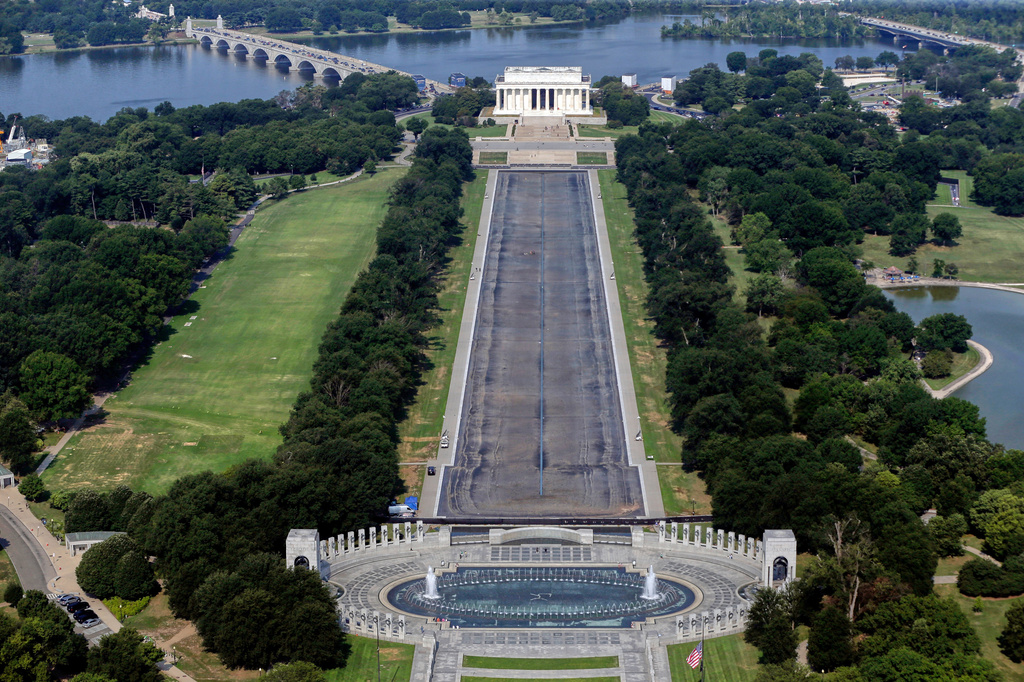
David Hearn, the former Olympic canoeist charged with vandalizing the Lincoln Memorial Reflecting Pool, has filed a motion seeking to make the dismissal of the charges permanent as President Donald Trump continues to rant about the case and publicly make inaccurate claims about the evidence.
The president’s attempts to renovate the Reflecting Pool have been a months-long source of frustration for him, as the project has been plagued by bright green algae and peeling paint, which Trump and others in his administration have claimed were caused by vandals.
These claims were swiftly met with a high level of skepticism, but Trump’s Department of Justice made several arrests nonetheless, including Hearn, who was facing a felony charge for destruction of government property.
In a motion filed on July 27, Hearn’s attorneys had argued that “the Government’s sole grand-jury witness on damages testified that the property was already damaged before Mr. Hearn allegedly touched it; that the same repairs would have been required regardless of Mr. Hearn’s conduct; and that he could not quantify any loss attributable to that conduct.”
The U.S. Attorney’s Office for the District of Columbia, led by Jeanine Pirro, threw in the towel a few days later. In a July 31 motion to dismiss without prejudice, the prosecution admitted that it had relied on claims from the Department of the Interior that “the damage was caused entirely by vandals, including [Hearn],” but after the indictment, DOI then “provided additional documents” that revealed “the damage was the result of a botched installation and not vandalism as initially represented by DOI.”
In addition to dropping the felony charge against Hearn, Pirro’s office moved to dismiss three other misdemeanor cases charging people with similar accusations of vandalizing the Reflecting Pool.
The problem is that Pirro’s office filed for dismissal without prejudice, meaning Hearn and the other defendants can legally be charged again.
Meanwhile, Trump has vociferously blasted Pirro for dismissing the case against Hearn and has continued to insist the damage to the Reflecting Pool was due to vandalism, even falsely claiming there was video evidence of people “cutting it with a box knife.” No such video exists of anyone vandalizing the Reflecting Pool in this way — certainly not of Hearn doing so.
Tuesday evening, Hearn’s legal team (Norm Eisen with the nonprofit Democracy Defenders Fund, Mary Dohrmann with the Washington Litigation Group, and Steve Levin from Steptoe LLC) filed a motion responding to the dismissal of the case, seeking to have the court order that it be treated as a dismissal with prejudice.
In the 28-page motion, the attorneys sharply denounced the case as a “politically motivated prosecution” of their client that was “motivated by political considerations and devoid of adequate factual support.”
The “risk of harassment and bad faith” was very real, the attorneys continued, because of how Trump and Interior Secretary Doug Burgum had “publicly attacked” the dismissal of the case and the DOJ “has repeatedly demonstrated its willingness to seek or reinstate criminal charges to satisfy the President, irrespective of the law or facts.”
The court should “not ignore the public record,” the motion implored, citing “crucial facts” Pirro’s office had left out of its motion to dismiss:
Here, amid extraordinary political pressure and public pronouncements from President Trump demanding action, and in apparent disregard for their special duties as prosecutors, USAO-DC rushed to obtain a public felony indictment. It did so without a meaningful investigation into the central and obvious question in this case: whether Mr. Hearn caused, or even could have caused, any damage to the Reflecting Pool (hereinafter, “Pool”) at all. Instead, the government relied on unsworn statements and grand jury testimony riddled with uncertainties and inconsistencies, and disregarded readily available evidence (subsequently provided directly to the prosecutors in filings by Mr. Hear’s counsel) that the liner that had been applied to the Pool was already failing because of installation defects. Defying both decency and common sense, the government proceeded to indict Mr. Hearn before it had obtained or evaluated the information necessary to establish a good-faith basis for the charge.
The initial indictment was obtained “through an unusual haste, inadequate investigation, and a factual theory it now acknowledges was unsupported, and “[a]llowing the government to dismiss the case without foreclosing future prosecution would leave Mr. Hearn open to continued harassment based on the same discredited allegations,” the motion argued.
Multiple pages of the motion delve deeply into the factual background of the work done on the Reflecting Pool, including the problems the government knew about early on, photos and videos showing damage before the day Hearn was arrested at the site, and publicly reported comments by experts in this type of waterproofing material and installation.
Moreover, the evidence in the case included a National Parks Service engineer who told investigators “that he had personally cut loose liner or coating with a knife to prevent the peeling from worsening,” the attorneys wrote. “The government’s own engineer determined that it was better to cut off the peeling sections than to let them flap around.”
“The risk of future prosecution is not merely hypothetical. Even after the government finally admitted that the evidence exculpated Mr. Hearn and moved to dismiss the case, senior Executive Branch officials publicly repudiated that determination (without any specific evidence or other grounds to do so) and continued to assert that Mr. Hearn had committed vandalism,” the motion argued, citing the comments by Trump and Burgum.
The present record in the case should be enough to grant dismissal with prejudice, Hearn’s attorneys argued, but if the court disagreed, then they were asking for their prior motion seeking the disclosure of the grand jury materials and legal instructions, or for the judge to conduct an in camera review of that material, to support the defense’s argument that the government “obtained the indictment through legally deficient instructions, improper practices, or a misleading presentation — deliberate or inadvertent — concerning the central issues of causation and loss.”
Several legal commentators have observed that Pirro and others involved in the case could face disciplinary actions by the DC bar association if it is found that misrepresentations were made to the grand jury or to the court.
Read Defendant’s Response to Government’s Motion to Dismiss the Indictment here.
The Mediaite One-Sheet "Newsletter of Newsletters"
The single summary and analysis of what the many, many media newsletters are saying and reporting from both sides of the aisle. Subscribe now!







Comments
↓ Scroll down for comments ↓