Dean Obeidallah on Being an Arab American Comedian in New York on 9/11: ‘It Changed the Trajectory of My Life’

Slaven Vlasic/Getty Images
September 11, 2001 “changed the trajectory” of Dean Obeidallah’s life.
Obeidallah was in Lower Manhattan when two planes hit the tallest buildings in New York City. When he closes his eyes, he still sees the “crystal blue sky” on that September morning. He also remembers standing on the corner of 8th Street and 6th Avenue, “watching the towers burn.”
While he experienced the tragedy as both an American and a New Yorker, it was impossible not to consider how the attacks would affect the Arab community as well. Obeidallah even remembers wondering if Arabs or Muslims were behind the attack as he watched the towers collapse. “Where do we go from here?” he thought to himself.
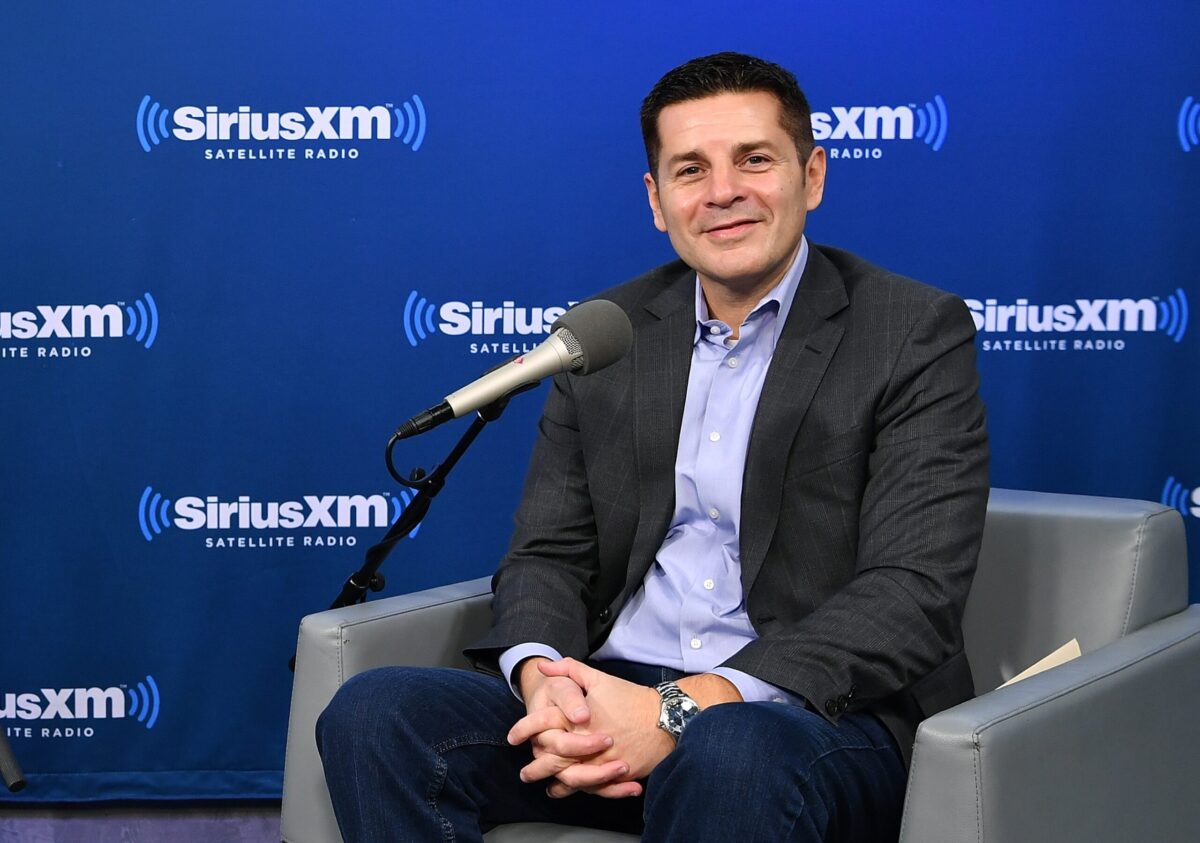
Obeidallah worked at Saturday Night Live then. Now a journalist and host of The Dean Obeidallah Show on SiriusXM Progress, he spoke to Mediaite on the 20th anniversary of the attacks about what it was like being an Arab American comedian in New York on that day, and in the years that followed.
What do you remember about being in New York City on September 11, 2001?
I can remember watching the burning, and then [the tower] buckled and collapsed, and it was like everything just froze. Everything was silent. I wasn’t close enough to get ash on me, but I was still in Lower Manhattan, and I recall seeing NYPD cars speed by with rubble on them, and people just screaming and running. Not that they weren’t fleeing the debris, we were not close enough. They were just fleeing from something they couldn’t process and there were people running by in tears. I just stood there. I couldn’t move. I felt like I was frozen, because you’re dealing with and processing something that is impossible to process.
The first thing was just processing this tragedy, but I couldn’t escape the fact that this thought came to my mind: was this done by someone of my heritage?
It changed the trajectory of my life. As I’ve talked about, on September 10th, I went to sleep a White guy, on September 11th I woke up an Arab. That’s overly simplistic, but it was the beginning of the change of my life. I was a reluctant minority, but now I’m fully, unapologetically a minority, and I view myself as a minority, and I find a kinship with other minorities that I didn’t find pre-9/11. I know what it’s like to be demonized now for things you didn’t do, and I know what it’s like when politicians gin up hate crimes and hate against your community for something you didn’t do. I remember that day vividly and I also remember the journey it set me out on.
Did you feel a similar spike in Islamophobia after Donald Trump won the presidential election in 2016?
It’s actually quantified — there were more hate crimes in 2015 and 2016 when Trump was spewing his anti-Muslim hatred, than there were after 9/11. If you think about that, [nearly] 3,000 Americans were killed on 9/11 and there was a spike in hate crimes, but it was worse when Donald Trump was spewing his own bigotry against Arabs and Muslims. The result was an uptick in hate crimes. In my personal life, I had more hate directed at me post-Trump’s run for office than I did post-9/11 because he gave people license to be as despicable and hateful as he is.
The irony — it’s a twisted, sick irony — is that, Donald Trump denounced us as people not turning the terrorists in, while he’s literally defending the terrorists who attacked our Capitol on January 6th, and he literally incited a terrorist attack on our Capitol on January 6th. Trump is a terrorist. This is what he is, and that’s why it’s even more personal for me, because I saw what he did and what the Republicans did to Muslims, saying we were soft on terrorism and didn’t denounce it. They are literally defending the terrorists, and the guy who incited a terrorist attack, so my anger is actually growing now more than ever against the bigotry and hypocrisy of the GOP.
What was it like working at Saturday Night Live so quickly after the September 11th attacks?
When we went back to work, it was very similar to everywhere in New York. It was like a zombie situation — people were not smiling or joking around. I was on the production staff, but we all worked together on the 17th floor. It was a nonstop improv comedy show on the floor, generally. It was not like that at all after 9/11. It was like a walking through a wake on the 17th floor of SNL and it continued that way for days. I remember it being very palpable.
At the time, pre-9/11, I really identified as White. People weren’t going, ‘Let’s go talk to Arab Dean about what’s going on.’ It was more that we were all in this together and we were trying to process it together.
No one understood what comedy would be appropriate or what to do. Were people ready to laugh at all? It was a few weeks after 9/11, the first show, and it was very cathartic to watch the opening of the show. I watched it standing on the floor of Studio 8H. If you worked there you could walk around, and I stood on the floor and watched it, and it was moving. Like everyone else, it was moving for us to see it and hear the audience laugh and it really, in a way, paved the way for healing.
You were also doing standup at the time, did you talk about 9/11 during your shows? Did you ever address your Arab heritage?
It was impossible not to acknowledge what was going on, but I didn’t talk about being of Arab heritage on stage for six or seven months after 9/11. The first few times I went on stage after 9/11, a comedy club manager at a club on the Upper West Side actually suggested that I use my middle name, Joseph, instead of using my last name because it could spark some discussions or anger.
At the time, there was a big backlash of hate crimes against Arabs — even a Sikh man was killed. People didn’t care. People were angry, just attacking people, and so I actually did go up on stage as Dean Joseph just for the first few times. I only did it for a few weeks and went back to Dean Obeidallah, but I didn’t talk about being of Arab heritage for a while, and part of it was that I was not that in touch with my Arab heritage. As I began to get more in touch with my heritage, it began to show up in my comedy a lot more, and that’s the natural progression of truthful comics. They talk about what they’re dealing with or what society is dealing with. In my case, I was dealing with two things, what society was dealing with and what I was dealing with, at the very same time.
Did you see a shift in how Arabs were depicted on screen, both in the media and in entertainment, post-9/11?
There is a really good book, by a professor who passed away a couple of years ago, Dr. Jack Shaheen, called Reel Bad Arabs. He quantified that between the mid-70s up to 9/11 — the book came out right before 9/11 — there were about three hundred movies that showed Arabs in a bad light. So it wasn’t as if Hollywood was doing us any favors, they were depicting us as bombers, as terrorists, as sinister oilmen for decades.
Hollywood has evolved to allow more and more of us to tell our own stories, but very slowly. We’re 20 years after 9/11 and Ramy is the first series that shows an Arab American family telling their story in a way that’s not related to terrorism. I was on this Comedy Central special in 2007, Axis of Evil, and that was the first time on American TV that we had a special feature for Middle Eastern American comedians. That was groundbreaking, but a lot of it was all comedy in response to bigotry and accusations. Ramy is much more just a story about a family who lives in New Jersey and happens to be Muslim, and you learn a little bit about everything, so I’m hopeful in the future you’ll see more of that. I was pitching shows for years, not exactly like Ramy but the idea of a comedy showing an Arab American family, but no one bit. But thankfully now there are all these other platforms, such as Hulu. If it was still only NBC, ABC, CBS, and Fox, I don’t think Ramy would have happened.
New: The Mediaite One-Sheet "Newsletter of Newsletters"
Your daily summary and analysis of what the many, many media newsletters are saying and reporting. Subscribe now!




Comments
↓ Scroll down for comments ↓