
Mediaite One Sheet: White House vs. CNN, Paramount’s Debt, and Bari’s Big Week!

The Big Picture
The war in Iran is doing what wars do to media ecosystems — it’s sorting everyone into camps and exposing the fault lines. The White House declared open season on reporters covering American troop deaths, and CNN shot back hard. The Paramount-Warner Bros. Discovery merger is already generating its first round of dread from industry insiders, with one veteran telling The Ankler it’s going to be “worse than you think.” Bari Weiss is having a genuinely good week at CBS News, which almost nobody saw coming. And Donald Trump has agreed to attend the White House Correspondents’ Dinner — a decision that has the press corps equal parts curious, relieved, and deeply unsettled.
Today’s sources: CNN Reliable Sources | Status | Politico Playbook | Puck | The Ankler | Racket News | Simon Owens | Newsbusters | CJR | Poynter | Semafor | The Washington Post
Top Story
WHITE HOUSE ATTACKS CNN OVER FALLEN SOLDIER COVERAGE — CNN HITS BACK
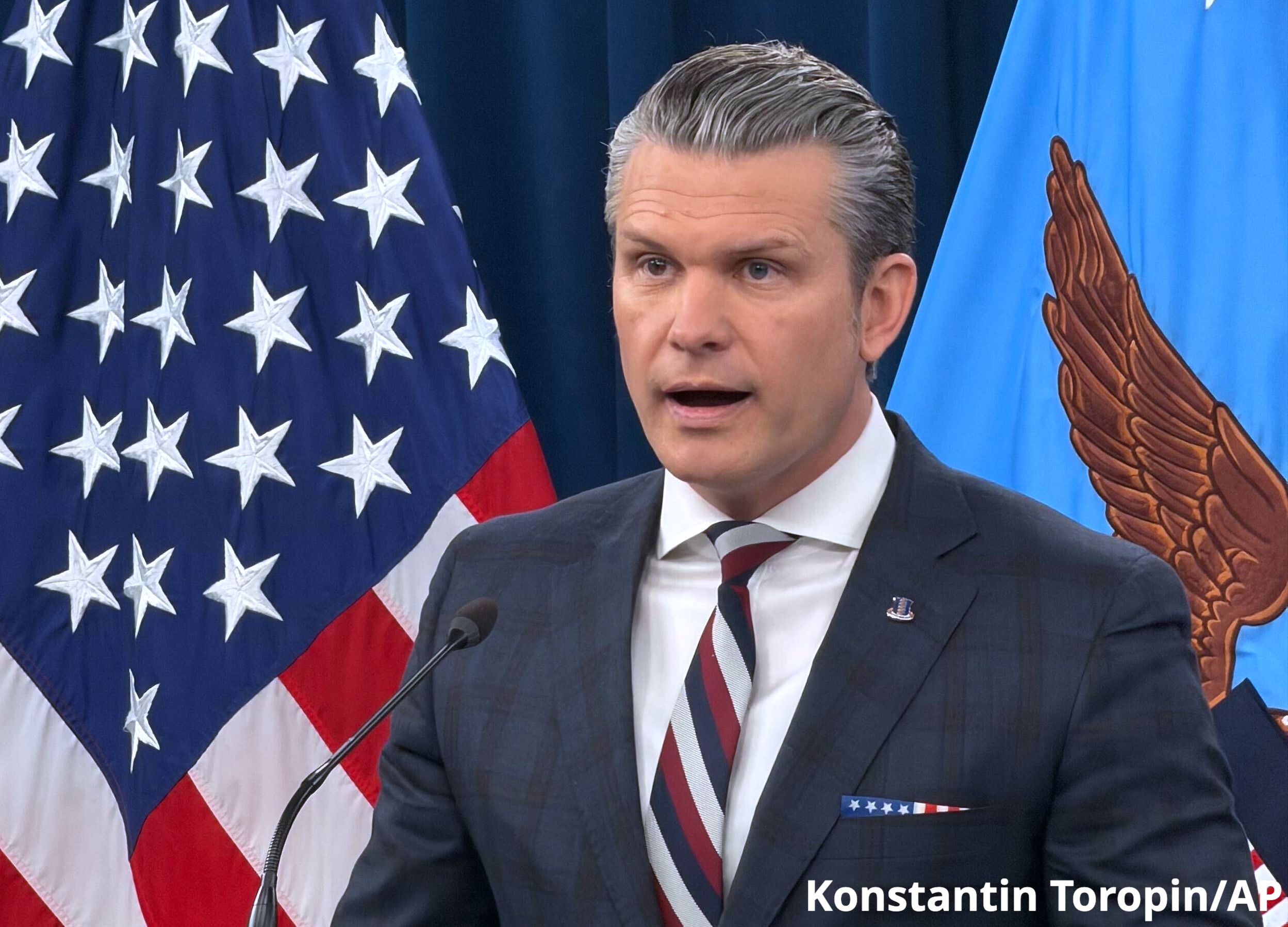
It started at the Pentagon. Defense Secretary Pete Hegseth, at Wednesday’s briefing alongside Gen. Dan Caine, accused the American press of covering U.S. service member deaths in Iran for one reason only: “to make the president look bad.” The comment landed like a grenade in a briefing room that was already a stage — with One America News Network and The Daily Wire called on first, and the BBC only summoned, per CNN’s Brian Stelter, because Hegseth apparently liked anchor Tom Bateman‘s tie.
But the real confrontation came later, at the White House. CNN’s Kaitlan Collins pressed press secretary Karoline Leavitt on Hegseth’s remarks. Leavitt initially denied he’d said what he said. Collins produced the transcript. Cornered, Leavitt pivoted — declaring it a “fact” that CNN “does only want to make the president look bad,” taking a swipe at the network’s ratings for good measure. Status’s Natalie Korach captured the full exchange, noting that Leavitt’s response amounted to a remarkable smear: treating the coverage of fallen service members as a partisan act.
Back at CNN, Jake Tapper wasn’t having it. “It really is the height of solipsism and narcissism,” Tapper said on air, “to think that our coverage of fallen warriors has anything to do with how we cover a president.” He called the remarks “offensive” — not to CNN, but to the families of the dead. “There should be more coverage, not less,” he said, “whoever’s in the building behind you.” Mediaite owner and publisher Dan Abrams was far more succinct on his SiriusXM show: “WTF?”
The pushback from the press corps was swift and pointed. Washington Post military affairs reporter Dan Lamothe noted on social media that the Pentagon press corps has covered casualties “under Bush, under Obama, under Biden, and yes, under Trump” — and would continue to do so. Former CNN Pentagon correspondent Barbara Starr was more blunt, writing that the press “will continue to cover every military casualty” and suggesting Hegseth “get a grip.” Poynter’s Tom Jones flagged another damaging detail from the same briefing: press secretary Leavitt’s admission that Trump launched the Iran operation based partly on a “feeling” — a line that, as Jones noted, did little to clean up Secretary of State Marco Rubio‘s earlier acknowledgment that Israel had pressured the U.S. into striking.
The most interesting pushback, though, came from inside the house. Fox News’s Dana Perino said administration officials are “getting really hung up” and “focusing way too narrowly” on media criticism — a quiet but notable breach from a network that has otherwise given the war favorable coverage.
Stelter, meanwhile, went deeper on the structural problem. Six veteran Pentagon beat reporters — all anonymous — described a military information apparatus that has essentially gone dark. “In ordinary war times,” one said, “we would be getting briefings once or twice a day going into minute details about how the war was evolving.” Instead, details trickle out via tweet and video, with no ability to follow up. “Virtually everything gets referred to the White House,” another said. “Most of what we gather is through leaks and Signal messaging, off the books.” The result, as one reporter put it: “the war has become something of a black box.”
Newsbusters, for its part, framed Collins as a “former conservative reporter-turned-CNN liberal” and described her Iran question as “vile” — a reminder that the press freedom debate is happening in an entirely different register on the right, where the administration’s posture toward the media is not a scandal but a feature.
TAKEAWAY: When the White House attacks the press for covering dead soldiers, it’s usually a sign the war isn’t going quite as well as the briefings suggest. The chattering class noticed — and this time, even Fox News didn’t join Hegseth and Leavitt in the CNN pile-on, which might be the biggest tell.
Three Takes
THE PARAMOUNT-WBD MERGER: EVERYONE’S SMILING, NOBODY’S HAPPY
The deal is done, the press releases are celebratory, and the insiders are quietly terrified. The $110 billion Paramount-Warner Bros. Discovery combination cleared another milestone this week — but the newsletter class is focused on what comes after the confetti.
The Ankler’s Lesley Goldberg has the most reported take, framing the merger as an org chart from hell burdened by $79 billion in combined debt. “It’s going to be worse than you think,” one veteran exec familiar with both companies told her. The cuts will come fast once regulatory approval lands, Goldberg reports — and the combined company will have “two massive film studios, three TV studios, two sizable streaming platforms and a list of cable networks longer than a CVS receipt.” Someone is going to win this merger, she writes, and a lot of people are going to lose it.
Puck’s Dylan Byers, on his Grill Room podcast with Matt Belloni and Bill Cohan, zeroed in on the debt question and what it reveals about the difference between David Zaslav‘s WBD and David Ellison‘s new empire. Cohan noted that unlike the publicly traded WBD, Paramount Skydance is Ellison-controlled — meaning minority shareholders are essentially along for the ride. Belloni questioned whether the company can invest enough to grow while cutting enough to service the debt. And Byers raised the Zaslav lesson: if debt reduction becomes your North Star, you can cut your way into irrelevance. Notably, Zaslav sold $114 million of WBD stock ahead of the close.
CNN Reliable Sources’ Brian Stelter added the Wall Street reality check: Fitch has downgraded Paramount’s debt to junk status, warning that leverage and free cash flow “may remain outside negative rating sensitivities longer than we anticipated.” Not the headline David Ellison and Skydance were hoping for in week one.
TAKEAWAY: The gap between the merger press releases and the actual industry mood is a story in itself. The chattering class isn’t buying the synergy math — and the Fitch downgrade gave them permission to say so out loud.
📰 Top Reads 📰
Status, Natalie Korach
TRUMP RSVPS TO NERD PROM — AND THE PRESS CORPS IS NOT EXACTLY THRILLED: After skipping the White House Correspondents’ Dinner throughout his first term, Trump has accepted the WHCA’s invitation to attend this year’s dinner — and the organization publicly celebrated. Behind the scenes, it’s a different story. Status spoke with more than a half-dozen WHCA members, most of whom voiced deep unease. The booking of mentalist Oz Pearlman as headliner — rather than a comedian who might roast the president — drew particular scorn. WHCA president and CBS News correspondent Weijia Jiang said the organization was “happy” Trump accepted. … QUOTE (anonymous Washington correspondent): “I do think it’s weird that there’s a mentalist performing, not a regular comedian who would have actually made jokes at Trump’s expense.” … QUICK TAKE: The WHCA invited a president who arrested a journalist, exiled outlets from the Pentagon, and waged legal warfare on the press — then celebrated when he said yes. The reporters in the room know exactly what that looks like.
Puck, Dylan Byers
BARI GOES TO WAR — AND IS ACTUALLY WINNING, FOR NOW: CBS News chief Bari Weiss is having an unexpectedly strong week, dispatching anchor Tony Dokoupil to the Middle East as the only U.S. network news anchor broadcasting from the region, landing interviews with Israeli president Isaac Herzog and IDF spokesman Effie Defrin, and re-signing Gayle King — at a steep discount, per Byers, far below her previous $15 million per year. King’s contract language, notably, leaves open a possible future transition away from the daily morning grind. Meanwhile, Weiss is eyeing former Good Morning America anchor Josh Elliott for a CBS Mornings co-host slot, with an on-camera audition already completed. Some staffers say Weiss’s pro-Israel views are influencing coverage; most, Byers reports, seem reassured by her passion. The Ellisons, licking their chops over CNN, are watching all of this closely. … QUOTE (CBS News insider): “Bari is finding her sea legs. She’s into it. She knows the staff more. She’s starting to wrap her hands around CBS culture and newsgathering.” … QUICK TAKE: One good news cycle doesn’t erase the CECOT debacle or losing Anderson Cooper — but the Ellisons didn’t hire Bari for her track record. They hired her for moments like this one.
Politico Playbook, Jack Blanchard
SUSIE WILES IS SOUNDING THE ALARM ON GAS PRICES: White House chief of staff Susie Wiles is scrambling behind the scenes as Iran war fallout sends crude oil up more than $10 a barrel and gas prices leaping more than 20 cents a gallon in a week. Energy Secretary Chris Wright and other advisers are “getting screamed at to find some good news,” one energy industry executive told Playbook. Ideas under discussion include a temporary gasoline tax holiday — though that would require Congress. The political danger is straightforward: Trump has made falling gas prices a central promise at virtually every major event this year, and a war-driven price spike directly undermines his core economic message heading into the midterms. … QUOTE (energy industry executive): “The faction of the White House that would care about $80-90 oil [was] being silenced. There [were] louder voices winning.” … QUICK TAKE: Starting a war in the Middle East and then being surprised it affected oil prices is the kind of thing that would be almost funny if the midterms weren’t coming.
Racket News, Matt Taibbi
TAIBBI LAUNCHES “WHO’S THAT SOURCE?” — A SHILL-OMETER FOR QUOTED EXPERTS: Racket’s new feature promises to track the money and track records behind the sources routinely quoted in major outlets — computing what Matt Taibbi calls a “shill factor,” the percentage chance that an “expert opinion” is a politically predetermined conclusion. The debut installment scrutinizes Climate Power, a Democratic-aligned strategic communications outfit cited as an “environmental advocacy group” by ABC, Fast Company, and others — without disclosure of its origins as an $80 million Biden-era political operation founded by John Podesta. A second entry examines China Labor Watch, a legitimate investigative NGO with undisclosed U.S. government funding ties. … QUOTE (Taibbi): “A large portion of what’s consumed as journalism is a pure partisan product, with ex-politicians reading out ‘news’ stuffed with ‘facts’ produced by de facto political action committees.” … QUICK TAKE: Taibbi is doing something genuinely useful here, even if the ideological application will predictably skew toward Democratic-aligned targets. The concept is sound. The execution will be the tell.
Media Newsletter, Simon Owens
AI HAS TAKEN A CHAINSAW TO TECH PUBLICATION TRAFFIC: Ten major tech publications have lost 58 percent of their combined Google traffic since 2024 — dropping from 112 million organic monthly visits to 47 million — as Google’s AI Overviews answer informational queries directly, eliminating the click. The outlets hit hardest are those most dependent on how-to and product review content. The Verge and Wired, which doubled down on original reporting and paid subscriptions, have fared better. The lesson, Simon Owens argues, is brutal and simple: outlets that aggregated press releases are getting what they deserved. … QUOTE (Owens): “The publications with the most tech-savvy audiences are the ones that saw the largest impact from AI chatbots.” … QUICK TAKE: The Google traffic collapse is the slow-motion version of what happened to print advertising. The outlets that saw it coming built direct relationships with readers. The ones that didn’t are now learning what “existential” actually means.
CJR, Liz Skalka
PATCH IS RUNNING AI NEWSLETTERS IN 14,000 COMMUNITIES — AND ALMOST NOBODY NOTICED: Patch has quietly activated AI-generated local newsletters in fourteen thousand communities, accruing nearly a million subscribers, with plans to scale to thirty thousand. The newsletters — heavy on aggregation, automated event calendars, and Nextdoor posts — are designed less as journalism and more as a community relationship tool. CEO Warren St. John is candid about the tradeoffs: the AI pulls from the wrong city occasionally, avoids local politics deliberately, and doesn’t always surface the most important local news. But Patch has been profitable since 2014 and St. John sees AI as the only viable path to sustainable hyperlocal news at scale. “We’ve never really taken the nonprofit route of shaking a tin can with a nickel in it,” he told CJR. A Reuters Institute report offers a cautionary note: readers can identify AI-generated content and like it less than human writing. … QUOTE (St. John): “This is a utility. This is not the high church of journalism. This is about creating a foothold in a relationship and meeting a need.” … QUICK TAKE: Patch isn’t trying to save local journalism. It’s trying to make local newsletters financially sustainable — which may be the more honest version of the same mission. Whether the two things are compatible is a question nobody in the chattering class is asking.
Puck, Dylan Byers
JEFF ZUCKER’S BANIJAY DEAL IS HIS BIGGEST SINCE TAKING OVER REDBIRD IMI: Jeff Zucker‘s RedBird IMI has completed a merger between All3Media and France’s Banijay Entertainment, creating an $8 billion independent production giant — the largest of its kind in the world by catalog, hours, and production, per Zucker. The combined company will operate under the Banijay banner and includes Traitors, Peaky Blinders, MasterChef, Survivor, and Fleabag, plus films including Hamnet and 1917. Zucker will serve as executive chairman. Banijay CEO Marco Bassetti remains as chief executive. … QUOTE (Zucker): “The media world is continuing to evolve and consolidate. These deals bring efficiencies and scale and greater strength as media changes.” … QUICK TAKE: Zucker keeps landing on his feet in ways that would embarrass lesser survivors. RedBird IMI bought All3Media for a fraction of what it’s now worth inside a global content giant. Whatever else you say about the man, he knows how to work a room.
CNN Reliable Sources, Brian Stelter
META AND NEWS CORP INK $50M/YEAR AI LICENSING DEAL: Meta and News Corp have signed a multi-year content licensing deal worth $50 million annually, allowing Meta to use News Corp’s U.S. and U.K. content — including The Wall Street Journal, The Times of London, and The Australian — to train its AI models. The deal will run at least three years. News Corp CEO Robert Thomson described his company as an “input company” in the AI age — comparing breaking news to semiconductors and data centers as foundational raw material. … QUOTE (Thomson): “We’re essentially an input company. The great threat in the age of A.I. is going to be to what you might call ‘output companies.'” … QUICK TAKE: Thomson’s framing is clever, but Simon Owens raises the uncomfortable question the deal sidesteps: if Meta is now paying for content, isn’t it implicitly acknowledging it didn’t have the right to scrape it in the first place?
🎬 SHOWBIZ 🎬
Status, Natalie Korach
TRUMP WAS QUIETLY BUYING NETFLIX BONDS WHILE NETFLIX WALKED AWAY WITH $2.8 BILLION: According to Trump’s latest financial disclosures, the president bought between $600,000 and $1.25 million in Netflix debt in January — on top of $500,000 to $1 million in Netflix bonds purchased in December — all while Netflix was locked in a high-stakes bidding war with Paramount for Warner Bros. Discovery. The White House maintains that independent financial managers control all investment decisions. Netflix ultimately withdrew from the WBD deal and pocketed a $2.8 billion breakup fee. Whether or not Trump’s portfolio managers knew something, whoever was buying those bonds had confidence in Netflix’s prospects — and the timing is, at minimum, eyebrow-raising. … QUOTE (Netflix CFO Spencer Neumann): Netflix is moving forward after dropping its Warner Bros. Discovery bid “with $2.8 billion in our pocket that we didn’t have a few weeks ago.” … QUICK TAKE: The president’s financial disclosures are always entertaining. This one is something else entirely.
CNN Reliable Sources, Brian Stelter
PEACOCK WON’T GO GLOBAL — AND PUCK’S JULIA ALEXANDER ISN’T BUYING IT: Comcast co-president Mike Cavanagh confirmed at the Morgan Stanley Investors Conference that Peacock has no plans to expand internationally, arguing domestic is the right path for the streamer. Puck’s Julia Alexander called that argument dead on arrival — arguing Peacock isn’t differentiated enough to compete, sports rights are overpriced, and the smarter move would be to acquire Roku and build from there. Semafor’s Rohan Goswami put it more simply: “Comcast for years said scale, scale, scale. Now they’re just giving up on it altogether?” … QUOTE (Alexander): “Peacock is not differentiated enough to compete, it’s not compelling enough to reduce churn or grow subscriptions.” … QUICK TAKE: Staying domestic isn’t a strategy. It’s a concession. The question is whether Comcast knows the difference.
WSJ, Isabella Simonetti and Joe Flint
GAYLE KING RENEWS WITH CBS — BUT READ THE FINE PRINT: Gayle King has signed a new deal with CBS News, ending months of speculation about her future at the network. “Rumors of my demise were inaccurate and greatly exaggerated,” King said in a statement. Her language about being “open to new adventures” caught the eye of television veterans as a possible signal of an eventual transition away from the daily morning show grind. … QUOTE (King): “Rumors of my demise were inaccurate and greatly exaggerated.” … QUICK TAKE: Gayle stays — on her own timeline, with one foot possibly already pointed toward the door. For CBS, that’s still a win compared to the alternative.
👀 What Got Missed? 👀
The newsletter class spent a lot of energy this week defending the press’s right to cover the war — and almost none asking whether the press is actually covering it well. Hegseth’s attacks on casualty coverage generated wall-to-wall outrage. What didn’t generate any: the near-total absence of skeptical or independent American reporting from inside the conflict. Most of what’s reaching audiences is either Pentagon-approved statements, Israeli military briefings, or visually arresting footage — ship sinkings, precision strikes, targets destroyed — that tells only one side of a very complicated story. The images are real. The selectivity isn’t accidental. Nobody is calling it propaganda, exactly. But the chattering class, busy defending press freedom in the abstract, mostly skipped the more uncomfortable question: when your sourcing runs through the Pentagon and the IDF, and the visuals are curated by the people running the war, what are you actually covering? Access journalism dressed up as war correspondence is still access journalism.
🏆 Newsletter of the Day 🏆
CNN Reliable Sources, Brian Stelter — While much of the chattering class spent Wednesday chasing viral primary results, Stelter delivered the most essential explanation and analysis of the Pentagon’s “black box” war. By going behind the scenes with six veteran military reporters, he illuminated the structural shift from traditional background briefings to the current era of Signal leaks and “random” web videos. The edition managed to provide crucial analysis across four major topics: it provided a deep dive into the Hegseth transparency crisis, a clear breakdown of X’s new revenue penalties for AI misinformation, a look at Peacock’s domestic-only retreat, and the media’s reaction to Talarico’s win.
The Bottom Line
The Hegseth-Leavitt-Collins confrontation generated a lot of righteous heat in the newsletter class today — and it deserved it. But the more revealing detail is buried in Stelter’s Pentagon reporting: beat reporters are now gathering war information primarily through leaks and encrypted Signal messages, with “virtually everything” else referred back to the White House. The press is loudly defending its right to cover the war while quietly acknowledging it can barely see it. The administration hasn’t silenced the press. It’s done something more effective — it’s made the press dependent on the very sources it’s criticizing, while the official record goes dark. That’s not a press freedom crisis. That’s a press access crisis. And those are harder to solve with a strongly worded segment on The Lead.
Get full access to premium content with a Mediaite+ subscription.







Comments
↓ Scroll down for comments ↓