‘Nobody Wants to Believe Their Country is Capable of Killing Babies’: CNN’s Matthew Chance on How Russian Media Spins War Crimes

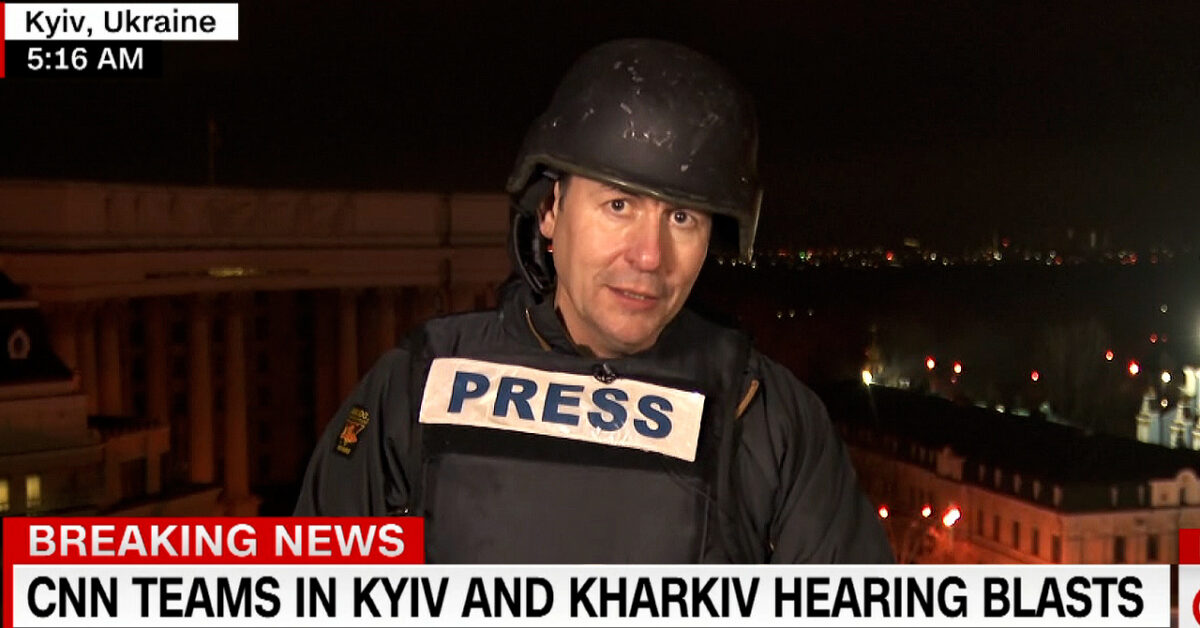
Matthew Chance has covered all of Vladimir Putin’s wars. From Chechnya to Georgia, Syria to Ukraine, CNN’s senior international correspondent has reported for years on the bloody consequences of Russian aggression.
On this week’s episode of The Interview, he told me there’s a through line in how Putin wages war, and why.
“When you look back on it, you see a progression of Putin using violence to assert his power and to reclaim Russia’s place as he would see it on the global stage as a great power,” Chance said.
The extent of that violence is often astonishing. In the two months since the invasion began, Russia has relentlessly and indiscriminately bombed cities and towns across Ukraine. In Bucha and elsewhere, Russian troops left behind evidence of horrific war crimes, including the rape and mass murder of civilians.
Despite that evidence, the Kremlin and its media propagandists maintain these atrocities have all been staged.
Those claims are obviously absurd. As Chance points out: “When you’ve got so many thousands of people dead already at the hands of Russia, which is not in dispute, why would you massacre a few more people to try to make the Russians look bad? It makes no sense.”
Beyond common sense, there is evidence proving the Russian military is responsible for the killings, and the Russian state media’s denial of that is “astonishingly cynical,” said Chance.
Despite the crude absurdity of the propaganda, however, the Kremlin’s iron grip on information in Russia has allowed conspiracy theories to flourish.
“One of the functions that propaganda serves is that it’s a tool which allows people to avoid the reality,” Chance said. “Nobody wants to believe that their country is capable of killing babies, and intentional rape and murder of civilians. Crude Russian propaganda provides people with a means of rationalizing those dead bodies they’re seeing on their screen. They they believe it because they want to believe it, because if you don’t believe it, you have to accept there’s something fundamentally wrong with your state.”
This crackdown on information has “been happening for some time,” Chance said, and is one reason he believes “we’re not seeing wide-scale protests, wide-scale dissent when it comes to what Russia is doing in Ukraine.”
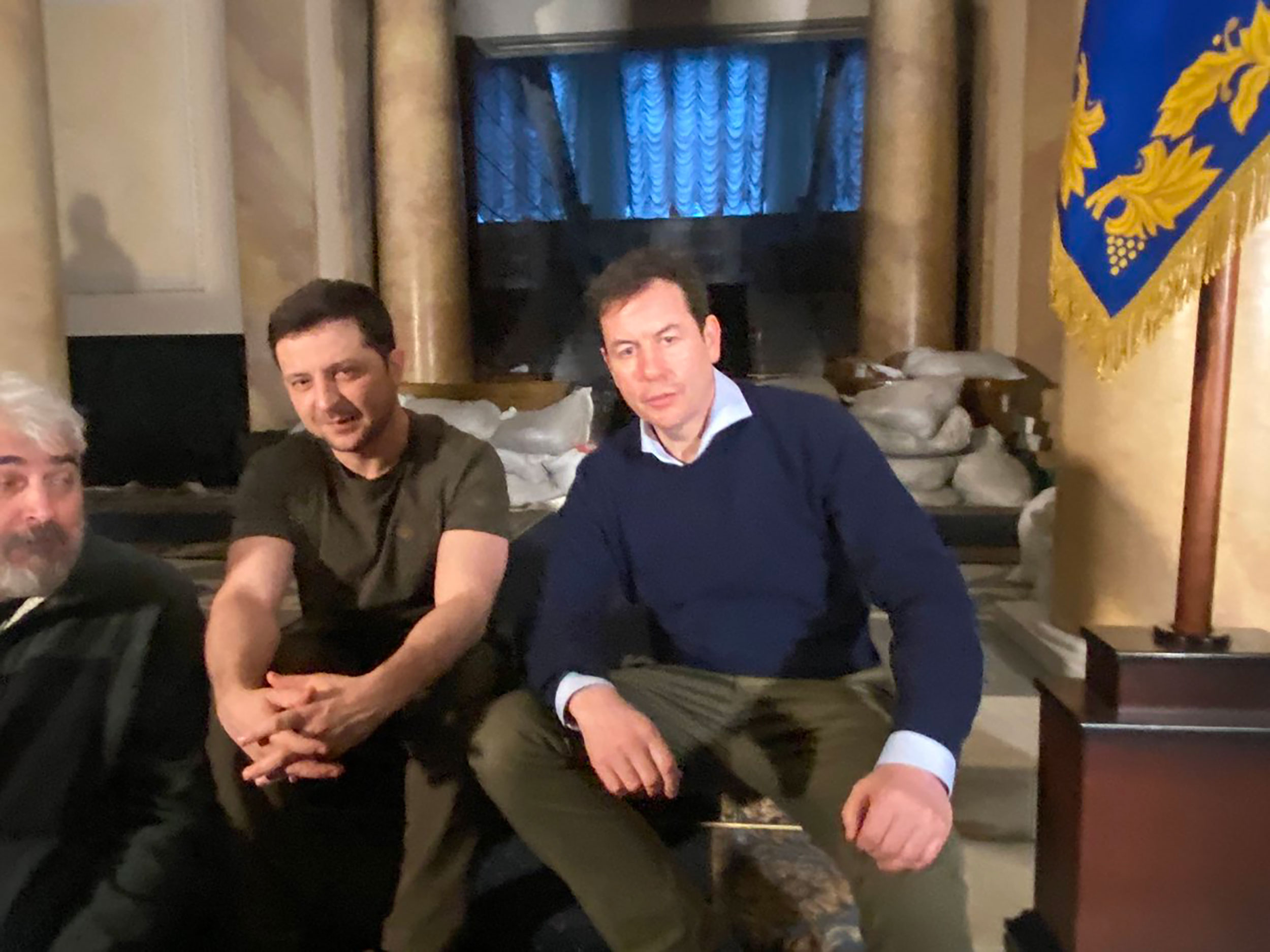
Matthew Chance interviewed Ukrainian President Volodymyr Zelensky in a bunker in Kyiv.
Chance had been reporting from Ukraine for several months when Putin shocked the world by launching a large-scale invasion. In the first few weeks of war, the CNN correspondent established himself as the face of reporting on the conflict.
The day the invasion began, Chance’s live hit with Don Lemon was interrupted by explosions, prompting him to put on a flak jacket and helmet. He also interviewed Ukrainian President Volodymyr Zelensky in a bunker, reported live while crouching next to a grenade, and went live on CNN moments after getting caught in a firefight between Russian and Ukrainian forces.
In mid-March, Chance was rotated out of Ukraine for a much-needed break. He returned to London, and then spent some time in the United States working out of CNN’s D.C. and New York bureaus.
Chance said it’s vital to limit your exposure to conflict zones to a few weeks.
“There’s a certain amount of stress associated with living and working in a war zone, where you have to dodge dangers in the way that you do in Ukraine, and when you’re under constant threat of injury or death, of course,” he said. “That constant exposure to danger has an impact.”
Beyond exhaustion, reporting on war is of course dangerous. The invasion of Ukraine has been a particularly deadly one for journalists, with seven killed so far.
“Whenever you’re covering a violent situation, there is a high degree of unpredictability,” Chance said. “And no matter how much planning you put into mitigating the dangers, you can’t really ever completely avoid them. It is a dangerous occupation, covering a unpredictable and volatile, violent situation, and you could get caught up in it.”
“That is inevitably inherently dangerous because when you’ve gone too far up the road, it’s already too late,” he said. “You only know you’ve gone too far because you get opened fire on.”
The toll includes the Fox News crew that came under Russian fire last month, leaving two journalists dead and Benjamin Hall, the network’s Pentagon correspondent, horrifically wounded. Chance was staying at the same hotel in Kyiv as the Fox News crew — along with the rest of the foreign correspondents bracing for a Russian assault on the capital — and had breakfast with them the day before the attack.
“That atmosphere of pressure brought us all together in quite a close way,” he said of the hotel. “We were only having two meals a day. Food was in short supply. We would all congregate at meal times and have a chat and exchange stories, and it brought us quite close together in a short period of time. And so it was all the more shocking for me that somebody I just had friendly relations with had gone out in a car the following day and been killed.”
Chance is now preparing to return to Ukraine, to a war that is entering a new phase.
“We’re no longer looking at an imminent capture or an imminent assault on the capital,” he said. Now, there is “a battle brewing in the east of the country” that will involve artillery being fired across large swaths of open ground.
That kind of warfare poses a new challenge for reporters.
“Artillery fire, indirect fire as they call it, is very, very nerve-wracking to cover,” Chance said. “It’s bone-shaking. You feel this sense that you’ve got no control over what happens as you hear that shell whistling through the air and exploding close by, but hopefully not close enough for it to have an impact on you.”
“I find that terrifying,” he continued. “You can’t see the faces of the people that are shooting, which means you can’t connect with them, which means you can’t negotiate with them. You could just be killed. And the people who fired the shot wouldn’t even know they killed you. I hate that so I’m going to try and stay away from that as much as I can, but inevitably that’s where the war is going, it seems. And so I’ll have to find a way of covering it safely.”
The withdrawal of Russian troops from cities like Bucha will also allow journalists to “see the human impact of this invasion and to hear about the stories of people who have been so appallingly affected by this conflict,” Chance said.
“It’s hard to watch the killings, the rapes, the murders,” he said. “I mean, it’s just, it’s sickening, but you just have to. Those are the stories we have to tell because they illustrate the horror of this war. It’s not just about a land grab, it’s about the destruction of lives.”
As for what Putin does next, Chance said it’s anyone’s guess. But he hopes the Russian leader declares victory and calls off the “special military operation” soon.
I don’t see what a win looks like for him. Look, in these kinds of situations though, when you are involved in a war that you can’t win — and surely by now, President Putin understands he’s not going be able to win this in the way that he perhaps thought he might be able to win it from the outset — all you can do is declare victory and leave.
And so I’m sort of hoping that at some point very soon, perhaps when Mariupol, if Mariupol falls, when it falls into Russian hands, perhaps that would be a moment for Putin to draw a line and say, okay, we have succeeded in our military tasks. Now it’s time for this to to be put on hold or for us to pause or for us to stop this special military operation, as he calls it.
I hope he’ll do that because the alternative is just the continuation of the bloodshed, which is heartbreaking and appalling.
Download the full episode here, and subscribe to The Interview on Apple Podcasts or Spotify. Read more coverage of The Interview on Mediaite.
New: The Mediaite One-Sheet "Newsletter of Newsletters"
Your daily summary and analysis of what the many, many media newsletters are saying and reporting. Subscribe now!


Comments
↓ Scroll down for comments ↓