Florida News Site Shuts Down After Getting Busted for Fake AI Reporters, Stolen Content — Even a Fake Editor-in-Chief

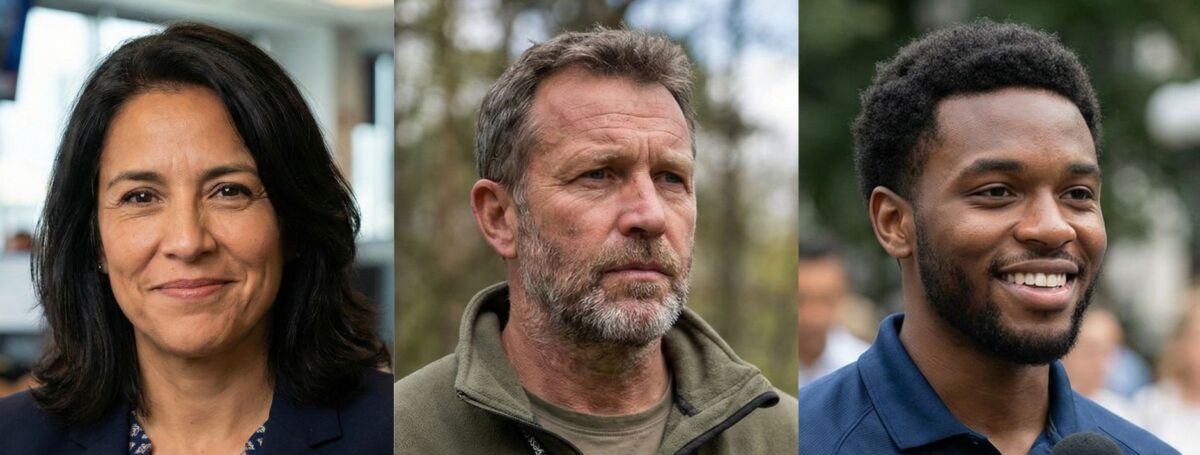
Screenshots from South Florida Standard via Internet Archive.
The “South Florida Standard” was, until recently, a website offering regularly updated local news stories in the Sunshine State, covering topics ranging from politics, economics, sports, tourism, environmental issues, and tech. It was also, according to a report by The Florida Trib, merely a “digital mirage masquerading as local news,” with AI-generated reporters and stolen content.
Trib reporter Kate Payne reported on Thursday how the site, now offline but partially preserved on the Internet Archive, featured work it claimed was by “local journalists,” but who were actually “creations of artificial intelligence – complete with fake headshots and made-up biographies peppered with South Florida cliches, their bylines plastered on articles that were lifted from actual news outlets, recycled through AI and republished.”
For example, “Sofia Delgado,” who was identified as the editor-in-chief of the South Florida Standard, had a bio that described her as a bilingual mother of two who was raised in Hialeah and a pleasantly smiling profile photo (the woman in the far left of the image at the top of this article).
But Sofia Delgado, reporter, editor-in-chief, and happy Hialeah mom, does not exist.
Virtually none of the reporters listed on the site did, including the other two photos above, business and real estate reporter “Grant Hollister” (middle photo) or sports reporter “DJ Lattimore.” Searching for any online record of these “reporters” finds a scattering of online profiles with copy-and-pasted bios across a variety of social media platforms but no posts, updates, or proof of any actual human life behind the stock-photo-esque images.
When Trib reporters began investigating the South Florida Standard, they soon noticed that the site administrators “began tinkering with its contents and removing staff bios – before taking the site offline entirely,” wrote Payne.
“A digital mirage masquerading as local news, the South Florida Standard underscores just how easy it has become to corrupt one of the country’s core institutions: independent journalism,” she continued. “At a time when trust in the media has eroded to a historic low, sham news sites like this one are increasingly common in Florida and across the country, a dangerous development for American democracy, experts told The Florida Trib,” and it “also shows how easy it is for the real people behind these digital doppelgangers to remain in the shadows – evidence of the staggering capabilities of AI and the threat it can pose to an unsuspecting public in a damaged democracy.”
“Much of the content published by the South Florida Standard appears to have been lifted from Florida Politics, a website run by publisher Peter Schorsch, whose coverage has become a must-read for many political insiders and journalists,” Payne noted, and she reached out to Schorsch for his take:
In an email, Schorsch said the Standard is one of a number of sites he’s aware of that are “plAIgiarising” his content. AI bots pose a “definite threat” to his outlet, Schorsch said, because they scrape so much content at once that they can temporarily overwhelm his website and block his readers’ access.
Still, Schorsch remains confident in the viability of his publication.
“AI and these sham sites capture none of the nuance of real-world politics,” Schorsch said.
“My real fear is that if the next generation of bots scrape info from these scammy sites to build their [large language models], the answers people will get about political news will be of the lowest common denominator,” he added. “It will be a copy of a copy of a copy of a fax sent to your phone.”
The investigation, conducted in partnership with media and tech podcast Question Everything, found “digital fingerprints in the source code of the site” that connected it to other websites claiming to be “local news,” Payne wrote, including the Charleston Sentinel in South Carolina and the San Francisco Download in California.
These “three purportedly local news outlets” not only “share the same source code,” they also had at least nine “reporters” on their mastheads who “have the same names as people who have been accused of or convicted of fraud or conspiracy in recent years” — and therefore motivation to clean up their online reputations.
The Trib’s research found connections from these sits to “a Philadelphia-based online reputation management firm called The Discoverability Company, founded by tech executive Drew Chapin,” himself a “former startup CEO who pleaded guilty to defrauding investors in 2021” and now is in the business of “helping individual clients and businesses build their online reputations and bury their unwanted search results,” wrote Payne.
When the South Florida Standard was originally contacted, they admitted using AI:
“All names on our site are randomly-generated by artificial intelligence” and any apparent connections to real people “are coincidental,” they said in a statement.
“South Florida Standard has no corporate owner. It is a website we’re developing with the intent of building search engine authority and selling to a domain investor who may use it to develop a news property or newsletter or similar digital property. This is common in the SEO community,” the statement reads.
…In all, Chapin said he stood up 17 similar AI-driven news sites across the country, producing more than 3,500 URLs and drawing more than 44,000 visitors. Chapin wouldn’t disclose a full list, but the portfolio included sites purporting to cover state politics in New York and New Jersey, local news in Philadelphia, and even a Hawaii-based medical journal.
With a $10 domain name and a brief prompt, an AI assistant can pump out a new “local news” site, complete with a mission statement and masthead, a team of fake reporters with phony bios and email addresses, and a bevy of articles – all in just 15 minutes, as Chapin demonstrated for a reporter in real time.
But unfortunately for Chapin’s clients, this sort of AI-wizardry seems to be of little use for online reputation rehab, because the algorithms on Google and other search engines can, in fact, differentiate between The New York Times and his AI-generated sites, he admitted to the Trib.
This specific site may have been an ill-managed attempt at SEO manipulation and online reputation boosting, but there is a real danger posed by this technology, Payne points out, especially with an election looming this November and media companies slashing staff or shutting down completely, leaving a vacuum in local news coverage where they risk being “replaced by pseudo-sites designed to deceive rather than inform.”
Read the report at The Florida Trib.
New: The Mediaite One-Sheet "Newsletter of Newsletters"
Your daily summary and analysis of what the many, many media newsletters are saying and reporting. Subscribe now!









Comments
↓ Scroll down for comments ↓