Democratic Congresswoman 17 Points Ahead of GOP Lt. Gov. in Virginia Governor’s Race: ‘A Clear Edge’

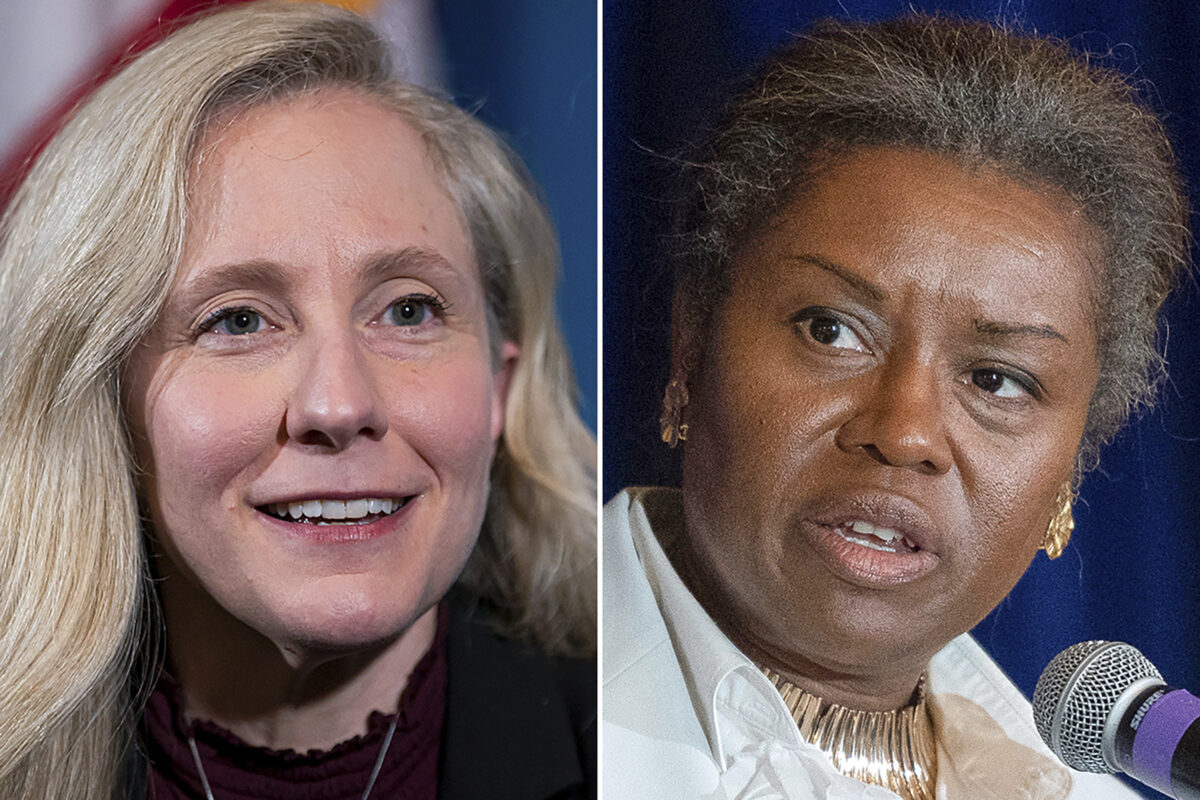
AP Photo, File (U.S. Rep. Abigail Spanberger, left, and Republican Virginia Lt. Gov. Winsome Earle-Sears, right)
Rep. Abigail Spanberger (D-VA) has “a clear edge” over her Republican opponent, Virginia Lt. Gov. Winsome Earle-Sears, in the battle for who will be Virginia’s next governor, reported WJLA, Arlington’s ABC affiliate.
Both candidates coasted through their primaries after other challengers dropped out or failed to qualify for the ballot, but simply winning over their own partisan voters won’t win the race in November. Being able to appeal to independent and moderate voters is key in a state where former Vice President Kamala Harris, a Democrat, won by about six points but Gov. Glenn Youngkin is a Republican. Youngkin is barred from running again by the state constitution.
Spanberger’s reputation as a moderate Democrat who has been willing to criticize fellow Democrats is likely helping her. The analysis by WJLA described her as having “a clear edge” over Earle-Sears due to “her lead among independent voters and stronger favorability ratings.”
The latest poll in the race was conducted by Roanoke College’s Institute for Policy and Opinion Research (IPOR), between May 12 and May 19 using landline, cell phone, and online polling of 658 Virginia residents, statistically weighted for gender, race, age, geographic location, and political affiliation. The weighted margin of error was 5.25%.
In this poll, Spanberger was the choice of 43% of likely voters, Earle-Sears 26%, 3% said someone else, and 28% were undecided — a noteworthy opportunity for Earle-Sears to possibly regain some ground.
Among Democrat respondents, 83% said they would vote for Spanberger, and 0% said Earle-Sears, leaving 17% undecided or backing an independent candidate. The Republican did not hold on to her voter base as well; 70% of Republicans said they would vote for Earle-Sears and 1% picked Spanberger, leaving a larger 29% not on board.
Spanberger dominated with independents, taking 33% to Earle-Sears’ 19%. The WJLA report noted that another poll taken earlier this month by a business advocacy organization showed Spanberger strongly favored by independent voters, 53% to 47%.
Also likely dragging down Earle-Sears are the polling numbers for the Republican governor, Youngkin, and President Donald Trump.
The Roanoke poll found that Youngkin had his lowest recorded approval rating so far in their poll, dropping seven points from November to 46% in this May survey, and also his worst ever unfavorable numbers at 50%. Trump’s disapproval rating was “the worst it has been, including during his first term,” at 65%, and his 31% approval rating was also “low” but at least “not his worst.”
Earle-Sears’ numbers (32% favorable and 48% unfavorable) represented a drop from last November, while Spanberger’s (41% favorable and 40% unfavorable) were holding steady. Both the Democratic Party and Republican Party are poorly viewed by Virginia voters, but the GOP comes out noticeably worse, 63% unfavorable to the Democrats’ 51% unfavorable.
Dr. Harry Wilson, a professor emeritus of political science at Roanoke and the interim IPOR director, commented that the six months until the gubernatorial election in November was “an eternity in politics, but one would prefer to be ahead by 17 points.”
“More than a quarter of Virginians are undecided,” he continued, “and there is good news for both candidates. Spanberger is obviously leading at this point, and she leads among independents, but a large number of Republicans are undecided, and they will most likely end up voting for Earle-Sears. The favorable rating for Earle-Sears, however, should be cause for concern.”
Read the poll analysis here and full questions and toplines here.