Stacey Abrams, Ahead of SOTU Response Speech: Americans Must Pursue ‘Expanded, Identity-Conscious Politics’

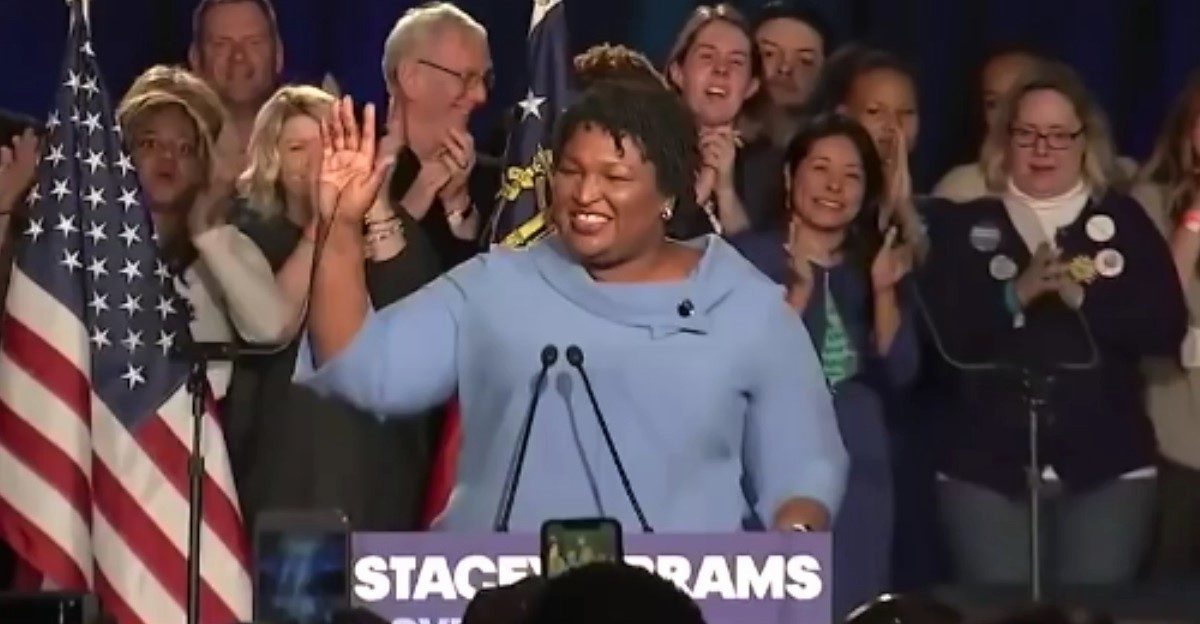
Stacey Abrams will deliver the Democratic response to President Donald Trump‘s State of the Union speech next week. But before she does, she’s decided to come out in support of expanded identity politics.
Abrams, the Democratic nominee for governor of Georgia who was defeated by Brian Kemp, penned an essay for Foreign Affairs in which she offers a rebuttal to those who say marginalized groups shouldn’t use ethnic identity as the driving point for opposition to various forms of discrimination. The essay is especially directed at Francis Fukuyama — a political critic who argues that identity politics causes society to divide “into segments based on ever-narrower identities, threatening the possibility of deliberation and collective action by society as a whole.”
“What Fukuyama laments as ‘fracturing’ is in reality the result of marginalized groups finally overcoming centuries-long efforts to erase them from the American polity—activism that will strengthen democratic rule, not threaten it,” Abrams says.
Abrams goes on to reject Fukuyama’s “facile advice” for Democrats to focus on class, saying that approach fails to properly address racial issues that underlie various aspects of America’s social dynamic. Referencing the nation’s history and her own sociopolitical experiences, Abrams challenges the idea that marginalized groups segregate themselves by highlighting their differences — saying inclusive identity politics can help various peoples figure out areas where they can work towards common goals.
From the essay:
The current demographic and social evolution toward diversity in the United States has played out alongside a trend toward greater economic and social inequality. These parallel but distinct developments are inextricably bound together. The entrance of the marginalized into the workplace, the commons, and the body politic—achieved through litigation and legislation—spawned reactionary limits on their legal standing and restrictions meant to block their complaints and prevent remedies. The natural antidote to this condition is not a retrenchment to amorphous, universal descriptors devoid of context or nuance. Instead, Americans must thoughtfully pursue an expanded, identity-conscious politics. New, vibrant, noisy voices represent the strongest tool to manage the growing pains of multicultural coexistence. By embracing identity and its prickly, uncomfortable contours, Americans will become more likely to grow as one.
— —
>> Follow Ken Meyer (@KenMeyer91) on Twitter
New: The Mediaite One-Sheet "Newsletter of Newsletters"
Your daily summary and analysis of what the many, many media newsletters are saying and reporting. Subscribe now!






Comments
↓ Scroll down for comments ↓